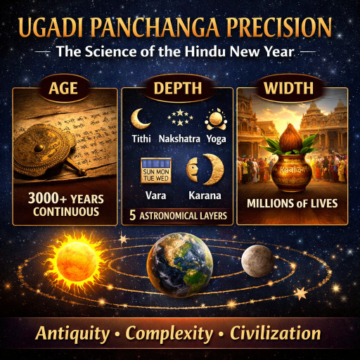

Ugadi Panchanga Precision: Hindu New Year Scientific Facts भारत / GB / US Celebration Series Ugadi Panchanga Precision: The Astronomical New Year Ugadi Panchanga Precision is not a phrase of cultural pride — it is a statement of astronomical fact. Today, Chaitra Shukla Pratipada, the first tithi of the bright fortnight of Chaitra, marks the...
Category: Science
ईश्वर प्रभुत्व सिद्धान्त: पतंजलि योग सूत्र 1.24-II
यह लेख योगसूत्र एक बिंदु चौबीस के आधार पर ईश्वर सार्वभौमिकता सिद्धान्त का दार्शनिक विश्लेषण प्रस्तुत करता है। पातञ्जल योग प्रदीप की टीका के अनुसार चार प्रमुख आपत्तियों का परीक्षण किया गया है, जिसमें बीज–अंकुर उदाहरण, तीन प्रकार के चित्त का तुलनात्मक विवेचन और प्रकृति के साथ चेतन निर्देशक की आवश्यकता स्पष्ट की गई है।
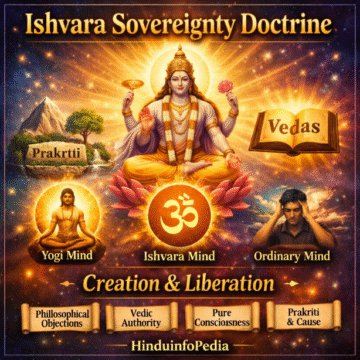
Ishvara Sovereignty Doctrine: The Philosophical Defense of Supreme Consciousness (Yoga Sutra 1.24)-II
This analysis of Yoga Sutra one point twenty four explains the Ishvara Sovereignty Doctrine through the commentary of Patanjal Yog Pradip by Swami Omanand. It examines four philosophical objections, clarifies the distinction between ordinary, yogic, and Ishvara’s mind, and explains why conscious direction is necessary alongside prakriti to understand creation and liberation.
Protection Verses From Rigveda: Indra’s Battle Invocation and the Sage-Forged Weapon RV 1.81, 1.84
Protection Verses from the Rigveda explore hymns from Mandala one that portray Indra as the guardian of order and the destroyer of obstruction. Through verses describing battles great and small, wealth restoration, and the sage Dadhyach’s sacrifice, the hymns present a vision of divine strength, knowledge, and courage working together to defend civilization.
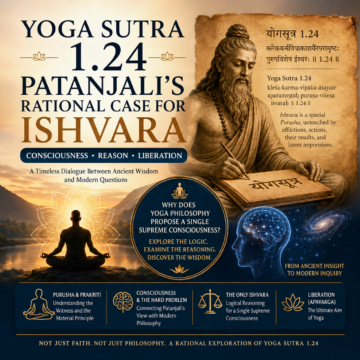
Purusha Vishesha Ishvara: The Supreme Consciousness Beyond All Afflictions (Yoga Sutra 1.24)
Patanjali's Yoga Sutra 1.24 defines Purusha Vishesha Ishvara as the special consciousness eternally untouched by kleshas, karma, vipaka, and ashaya—the four chains binding all beings to samsara. Distinct from ordinary and even liberated purushas, Ishvara holds a pure sattvic chitta out of sovereign compassion, singular in sovereignty, and serves as the ultimate object of Ishvara Pranidhana surrender for swift samadhi. This operational definition bridges ancient philosophy with practical yoga. (58 words)
Ishvara Pranidhana In Practice: Path to Samadhi Beyond All Gradations (Yoga Sutra 1.23)-II
Ishvara Pranidhana in practice examines how the yogic principle of surrender operates in real life beyond textual explanation. Moving from doctrine to lived orientation, the article explores daily discipline, psychological effects, modern challenges, misconceptions, and contemporary relevance, showing how surrender matures through practice, guidance, and sustained alignment rather than belief or technique alone.
Ishvara Pranidhana: Path to Samadhi Beyond All Gradations (Yoga Sutra 1.23)-I
This article examines Yoga Sutra 1.23, where Patanjali introduces Ishvara Pranidhana as a means to accelerate samadhi. After outlining graded paths based on effort, the sutra presents surrender as a stabilizing and intensifying orientation. The study interprets Ishvara Pranidhana through classical commentary, psychology, and lived yogic tradition.
Beyond Liberation: Videha, Prakriti-laya (Yoga Sutras 1.18-1.19)
Even the most sublime yogic states—Videha and Prakriti-laya—are revealed to be subtle forms of bondage in Patanjali’s Yoga Sutra. This blog explores how these states, while appearing like liberation, still bind the yogi through attachment. It introduces three authentic post-death paths—Sadyo-mukti, Krama-mukti, and Avatāra—and explains the deeper role of Viveka-khyāti and Bhava-pratyaya.
Patanjali Yoga Sutra Glossary: Understanding Yoga Sutra Terms-I
Struggling with complex Sanskrit in the Yoga Sutras? This glossary simplifies 36 key terms from Patanjali’s Yoga Sutras 1.18–1.19, focusing on Samadhi, samskaras, kleshas, and Sankhya philosophy. Gain clarity on Nirbija, Viveka-khyati, and Purusha-Prakriti to unlock Asamprajnata Samadhi and deepen your spiritual understanding. Ideal companion for beginners and advanced yoga practitioners alike.
Practice of Para Vairagya – Yoga Sutra
Patanjali’s Yoga Sutra 1.18 reveals the Practice of Para Vairagya—the supreme detachment that leads the yogi beyond all cognition into Asamprajnata Samadhi. Through Neti-Neti and repeated practice, the mind’s fluctuations cease, leaving only the subtle impressions of stillness. This process culminates in freedom, where consciousness rests in its own radiant nature.
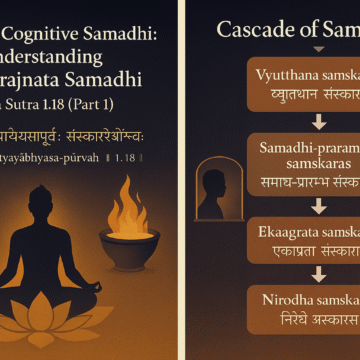
Beyond Cognitive Samadhi: Understanding Asamprajnata Samadhi
Asamprajnata Samadhi, described in Patanjali’s Yoga Sutra 1.18, is the transcendence of even the most refined meditative cognition. Through Para Vairagya—supreme detachment—every mental modification ceases, leaving only subtle impressions of cessation (Saṁskāra-Śeṣa). It marks a categorical shift from knowing to being, where pure consciousness abides in its own nature, beyond all thought.
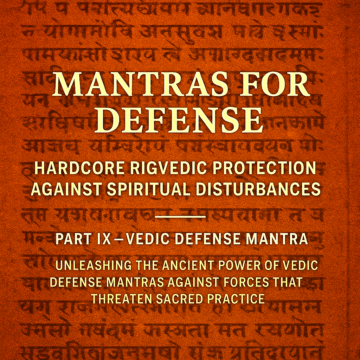
Mantras for Defense: Hardcore Rigvedic Protection Against Spiritual Disturbances
The Rigveda preserves powerful protection verses—ṛcas that shield sacred practice against hostility and disruption. These mantras for defense, invoking Pushan, Agni, Surya, Varuna, and Uṣā, are not mere prayers but cosmic commands. They promise spiritual resilience, divine guardianship, and strength for seekers, ensuring yajñas remain unbroken even in the face of powerful opposing forces.
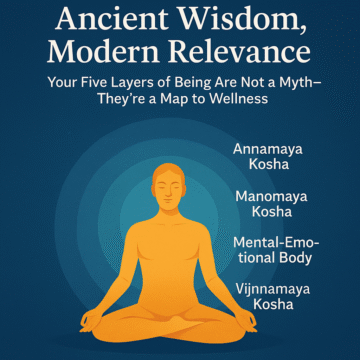
Pancha Koshas: Ancient Wisdom, Modern Relevance
Modern science is slowly validating what ancient rishis already mapped millennia ago: the five koshas are not metaphors, but layers of lived experience. From breath to bliss, each kosha influences health, emotion, and insight. This blog bridges ancient yogic wisdom with today’s neuroscience, epigenetics, and trauma therapy—revealing a timeless framework for holistic well-being and spiritual evolution.
Encounter with Pancha Koshas: A Personal Journey of Healing
While most seek healing from outside, my journey unfolded through strange, deeply personal encounters within—through breath, pain, awareness, and discipline. The Pancha Koshas weren’t ideas for me—they were lived realities. From a 43-year-old eczema cure to a cough healed through silence, these experiences revealed a quiet science waiting to be rediscovered from within.
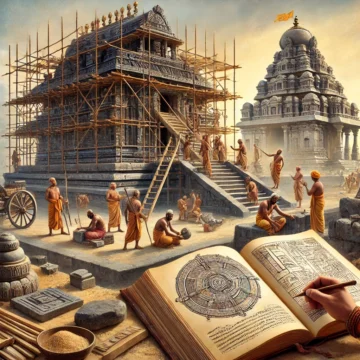
Vedic Varna System: Unveiling its Impact on Architecture
The Vedic varna system, rooted in ancient Indian scriptures, shaped society by aligning talents with roles. This collaborative framework profoundly influenced Indian architecture, with each varna contributing specialized skills. From Brahmins designing temples to Shudras mastering intricate craftsmanship, the varna system fostered unity, innovation, and excellence, resulting in architectural marvels that reflect cultural resilience and spiritual harmony.
Vedic Science Building Techniques: Synthesizing Tradition and Modernity-III
Vedic Science Building Techniques encompasses a rich array of ancient Indian texts and architectural marvels. This blog explores the Brihat Samhita, Vastu Shastra, and the Ajanta Caves, revealing timeless principles of sustainability, resilience, and harmony with nature.
Vedic Science Building Technology: Additional Texts and Evidence-II
Excerpt Explore the ancient wisdom of Vedic Science Building Technology through a deep dive into the Brihat Samhita and Vastu Shastra, and marvel at the sophisticated rock-cut architecture of the Ajanta Caves. Discover sustainable and resilient building practices that have stood the test of time, emphasizing harmony with nature.
Diwali Celebrations in Delhi and Pollution
Diwali celebrations in Delhi often face criticism for contributing to air pollution. However, a detailed analysis of Air Quality Index (AQI) data reveals that the festival’s impact is overstated. The real issues lie in year-round pollution sources like road dust, vehicle emissions, and industrial activities. This blog explores sustainable solutions to balance cultural traditions with environmental concerns.
Vedic Science Building: Ancient Indian Texts on Construction-I
Delve into the world of Vedic Science Building, an ancient Indian construction philosophy that integrates sustainability with spiritual wisdom. This blog series explores foundational texts like the Arthashastra and Manasara Shilpa Shastra, offering insights into their enduring techniques and the relevance to modern sustainable architecture.
Vedic Science Cultural Relevance in Architecture and Modern Applications II
Vedic Science and Architecture reveal a legacy of sustainable and spiritually uplifting construction. From intricate carvings symbolizing cosmic harmony to ingenious waterproofing techniques, ancient builders created structures that resonate with the environment. The cultural relevance of these principles influenced Indian dynasties like the Cholas and Vijayanagara Empire, inspiring modern eco-friendly designs and architectural philosophies worldwide.