
Tag: Education

Home » Education
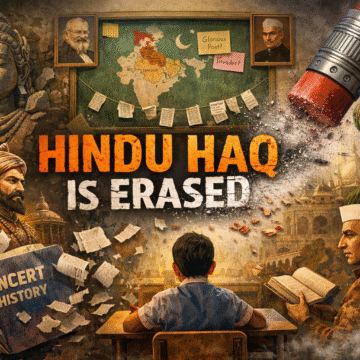
NCERT textbook, Indian history education, civilizational narrative, Gupta Empire scholar, Mughal emperor throne, classroom symbolism, historical memory, Aurangzeb debate, Shivaji representation, educational conditioning, India map chalkboard, narrative contrast digital art, Haq Film Sparks Query
Post

Haq Film Sparks Query: Where Did This Contempt for Hindus Get Manufactured?

This analysis examines how educational narratives shape civilizational perception. Using the Haq film as an entry point, it reviews NCERT textbook patterns, representation of the Gupta and Mughal empires, portrayal of Shivaji and Aurangzeb, Nehru’s historiography, and theological debates—arguing that institutional structures influence how generations understand Hindu civilizational identity.
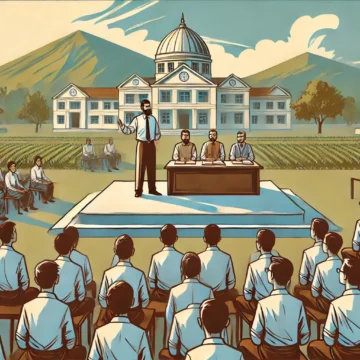
disciplined education, teacher authority, character building, structured learning, educational hierarchy, value-based schooling, social discipline, institutional order, youth formation, civilizational education, RSS Character Manufacturing Model
Post

RSS Character Manufacturing Model: Global Export Possibility

The article explains why the RSS Character Manufacturing Model: Global Export Possibility is not theory but a civilizational necessity. It traces the global human manufacturing crisis to the collapse of discipline and hierarchy, and shows how the RSS shakha system—rooted in authority, service, and structured correction—offers a scalable solution beginning with schools and families.

character formation, education contrast, discipline and routine, traditional training, modern schooling crisis, leadership development, cultural continuity, human development, authority and learning, social resilience
Post

Building Without Master Craftsman: Compare with RSS Assembly

Modern education processes children but fails to form humans. This blog contrasts institutional schooling with the RSS shakha system, showing how authority, discipline, repetition, and structured pressure create resilient character. While schools abandon formative authority, shakhas preserve the master craftsman model that produces stability, responsibility, and civilizational continuity.

guru, disciple, digital transformation, Indian philosophy, clay sculpture, social media, spiritual awakening, KBC, Amitabh Bachchan, mentorship, guru-shishya tradition, glowing figure, symbolic art, futuristic spirituality, potter's wheel, ancient-modern fusion, Indian culture, consciousness, teacher and student, traditional knowledge, KBC Guru to Guide
Post

KBC Guru to Guide: Not Just a Teacher

When the Guru became a teacher, and the teacher a tutor, the sacred science of human construction collapsed into content delivery. This blog analyzes how ancient traditions shaped character with friction and force, while modern systems fear discipline. The guru was a potter — today’s tutor is a performer. The result? Bricks without buildings.

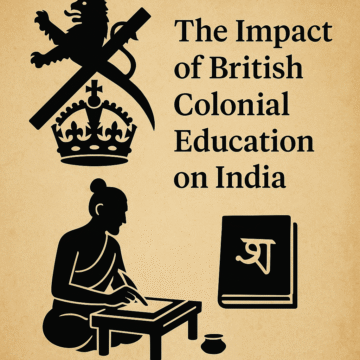
British colonialism, Indian education, Macaulay, Gurukul, cultural genocide, HinduinfoPedia, history
Post

Cultural Genocide by British: India’s Civilizational Soul Destroyed

British rule in India was more than economic exploitation—it was cultural genocide. Through Macaulay’s education policy, caste codification, missionary propaganda, and historical distortion, the British dismantled India’s civilizational memory. This blog uncovers how they replaced Gurukuls with colonial schools, suppressed Ayurveda, and divided society—leaving a legacy of mental colonization that still lingers.

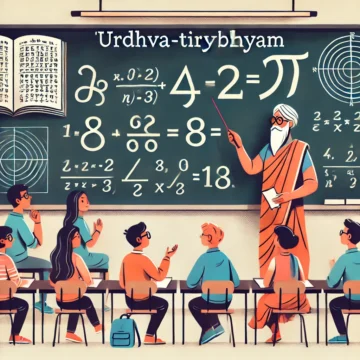
Vedic Mathematics, classroom, education, teaching, students, Urdhva-Tiryagbhyam, mathematics, interactive learning, modern classroom, educational technology
Post

Vedic Mathematics: A Comparison with Conventional Methods

Explore the transformative power of Vedic Mathematics, an ancient system that simplifies complex calculations. This blog delves into its origins, compares it with conventional methods, and illuminates its modern applications in education and professional settings, demonstrating how it enhances mental agility and problem-solving capabilities.

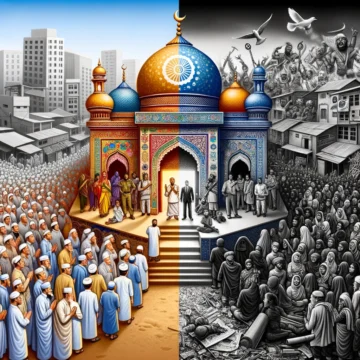
Muslim Population Growth, Global Population Dynamics, Religious Demographics, Cultural Coexistence, Radicalization in Society, Peaceful Communities, Religious Harmony, Social Dynamics, Cultural Contrast, Grayscale vs. Color Imagery
Post

Muslim Population Growth and Its Global Impact

On May 11, 2000, India's population officially reached a significant milestone, hitting the 1 billion mark. This historic event was symbolized by the birth of Astha Arora, named India's billionth baby. The demographic landscape of India, particularly the rapid growth of the Muslim population compared to the Hindu population, has been a topic of considerable interest and debate. Reports project that by 2050, India will have the largest Muslim population globally, with significant implications for political dynamics and societal structures. This blog explores the broader socio-political implications of India's population growth, the factors driving these demographic shifts, and the complex interplay between religious identity and modern societal challenges. It challenges the notion that socioeconomic factors alone dictate population growth, highlighting the significant role of cultural and religious values. The analysis extends to demographic trends in Europe and the United States, where higher fertility rates and migration patterns contribute to the growing Muslim population. Understanding these trends is crucial for developing informed policies that address the diverse needs of growing populations, ensuring sustainable development and social harmony.