

Haq Movie Raises Question: Daily Drumbeat Denies Hindu Haq
भारत/ GB
Part 3: The Hindu Haq Movie Analysis Series
The Question the Haq Movie Never Asked
Haq Movie Raises Question raises questions that every third person in India has been asking since 1986, the year the Muslim Women (Protection of Rights on Divorce) Act, 1986 was passed by the Indian Parliament. No movie has raised more relevant questions: Haq of Hindus suppressed for about 1000 years, ever since Islamic invaders began attacking Hindu temples.
The Haq movie showed Shazia Bano fighting for her maintenance rights—reading the Quran, challenging Abbas’s advocate, and enduring marketplace humiliation. But the film never asked: Why does an entire society consider her subordination normal?
Not through violence. Not through legislation. Through daily repetition.
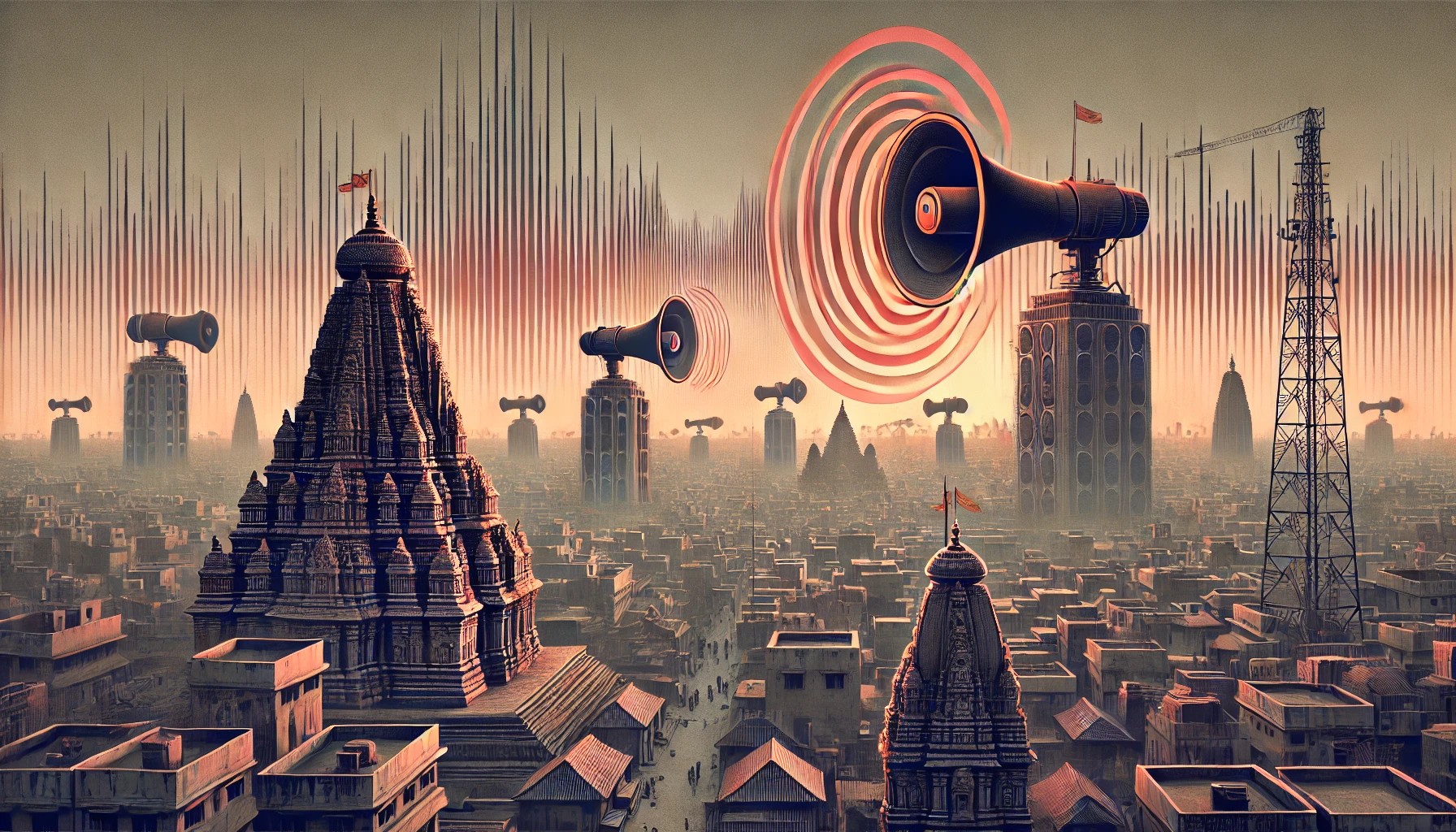
Daily Drumbeat Denies Hindu Haq through mechanisms the film didn’t examine: the five-times-daily Azaan proclaiming Islamic supremacy, the public Namaz asserting territorial dominance, the Surah Tawbah verses labeling polytheists as targets. What Shazia experienced in her marriage—systematic denial of rights normalized through daily assertion—Hindus experience civilizationally.
The theological classification we explored in Hindu Haq Is Denied doesn’t remain abstract doctrine. It becomes lived reality through daily religious practice that conditions minds to accept Hindu inferiority as natural law.
Daily Drumbeat Denies Hindu Haq not through occasional violence, but through relentless, normalized assertion—five times daily, 365 days yearly, generation after generation—until subordination becomes unquestioned reality.

The Azaan: Five-Times-Daily Assertion of Supremacy
The Islamic call to prayer (Adhan) is not merely a religious practice—it is a theological proclamation broadcast to entire neighborhoods:
“Allah is the greatest” (Allahu Akbar)
Not “a” god among equals. The greatest—asserting superiority over all other deities.
This declaration places all other beliefs and deities in a subordinate position, a hierarchy that functions as an affront to non-Islamic faiths. The assertion is reinforced by the next proclamation:
“There is no god but Allah, and Muhammad is His messenger”
Not theological diversity. An exclusive truth claim—rendering all other worship invalid.
As if this were not sufficient, the Azaan further invites believers to “pray and succeed,” implying that submission to Islam alone is the path to success:
“Come to prayer, come to success”
Success defined solely through Islamic submission—other paths inherently inferior.
This message is broadcast five times daily—before dawn (Fajr), midday (Dhuhr), afternoon (Asr), sunset (Maghrib), and night (Isha)—from loudspeaker-equipped mosques that have proliferated across India since the 1960s.
The Haq Movie Parallel
Remember how Shazia served tea to Abbas’s friends while they discussed her case as if she did not exist? The Azaan functions similarly—Hindus are compelled to hear proclamations of Islamic supremacy in their own neighborhoods five times daily, with no reciprocal recognition of Hindu sacred space.
When Abbas’s advocate argued, “Muslim Personal Law supersedes secular law,” he verbalized what the Azaan declares hourly: Islamic authority transcends all other frameworks. He was, in effect, challenging the law of the land.
Daily Drumbeat Denies Hindu Haq through this form of acoustic domination—where Hindu-majority neighborhoods repeatedly hear assertions of Islamic supremacy, while Hindu temple bells remain legally restricted, festival music faces constant objection, and religious processions require police permission.
The Conditioning Mechanism
Psychological research on mere-exposure effect shows repeated exposure to stimuli increases familiarity and acceptance—even when consciously disagreeing with content.
Five-times-daily exposure to “Allahu Akbar” conditions minds to accept:
- Islamic theological superiority as background reality
- Muslim religious practice as publicly dominant
- Hindu accommodation of Islamic assertion as natural state
The Azaan doesn’t seek conversion—it establishes hierarchy. Just as Shazia’s daily humiliations (serving tea, enduring gossip, broken bangles symbolism) conditioned her to accept subordination, Daily Drumbeat Denies Hindu Haq by making Hindu second-class status feel like normal background noise.
Public Namaz: Territorial Assertion Through Prayer
Beyond Religious Worship
Public Namaz (Islamic prayer) in open spaces—roads, parks, sidewalks—represents more than religious devotion. It’s territorial assertion through physical occupation.
[Note: Although India has one of the largest Muslim populations among stable democracies where Muslims are a minority, sustained pushback from the majority community—demanding equal application of civic rules—has met with only limited success. In the late 1990s and early 2000s, for instance, large parts of Mumbai routinely saw major and minor roads blocked every Friday for public Namaz, severely disrupting civic life. This resistance, however constrained, has since helped restrict such unchecked occupation of public spaces.]
Unlike Hindu temples (fixed locations under government control) or Sikh gurdwaras (community-managed but stationary), public Namaz claims any space as Islamic prayer ground—sidewalks during Jummah (Friday prayers), roads during Eid, public parks during Ramadan.
The message: Islamic religious practice supersedes civic space management.
The Asymmetry That Matters
Muslim practice:
- Mosques autonomous, no government control
- Public Namaz acceptable civic disruption
- Eid prayers block roads—normal occurrence
- Loudspeaker Azaan—protected religious expression
Hindu reality:
- Temples under government control, revenue stolen
- Ganesh processions require police permission, route restrictions
- Durga immersion faces timing limits, noise complaints
- Diwali fireworks banned under pollution concerns
- Hindu Religious Processions repeatedly attacked
Daily Drumbeat Denies Hindu Haq through this normalized asymmetry—where Muslim public religious expression faces minimal restriction while Hindu festivals navigate constant legal and social obstacles.
The Haq Movie Connection
The film showed Abbas weaponizing shame against Shazia: “A true Muslim wife wouldn’t question her husband publicly.”
Similarly, when Hindus question public Namaz blocking traffic or Azaan noise violations, they face social shaming: “Don’t be communal,” “Respect religious freedom,” “You’re being intolerant.”
The mechanism is identical: normalize subordination, then shame resistance.
Surah Tawbah: The Theological Text That Legitimizes Othering
The Verses That Define the Other
Surah Tawbah (Chapter 9) is unique in the Quran—the only chapter without Bismillah (the opening “In the name of Allah, the Most Gracious, the Most Merciful”). Classical Islamic scholars explain: mercy doesn’t apply when addressing polytheists (mushrikūn).
Key verses recited publicly:
Verse 9:5 (Sword Verse):
“Kill the polytheists wherever you find them, capture them, besiege them, and lie in wait for them on every way.”
Verse 9:28:
“The polytheists are impure, so they should not approach the Sacred Mosque.”
Verse 9:29:
“Fight those who do not believe in Allah… until they give the jizyah willingly while they are humbled.”
These aren’t obscure texts—they’re recited in mosques, taught in madrasas, memorized by students across India.
Modern Recitation, Historical Application
When Rubika Liyaquat publicly read Surah Tawbah verses in 2024, the controversy wasn’t that she mistranslated—it’s that she revealed what’s routinely recited but rarely translated for non-Muslim audiences.
Nazia’s theological analysis documents how these verses have historically legitimized:
- Aurangzeb’s temple destructions (mushrikūn don’t deserve sacred sites)
- Jizya tax on non-Muslims (verse 9:29 explicit instruction)
- Guru Tegh Bahadur’s execution (refusing conversion = legitimate target)
- Kashmir genocide patterns (polytheists deserving elimination)
Daily Drumbeat Denies Hindu Haq when these verses remain publicly recited—conditioning generations to view Hindu subordination as divinely mandated rather than human injustice.
The Haq Movie Would Never Show This
Imagine if the film depicted Abbas’s mosque reciting Surah Tawbah verses while Shazia stood outside—understanding her husband’s contempt flows not from personal cruelty but theological conviction that women like her, questioning religious authority, embody corruption needing correction.
The movie couldn’t show this without making Islamic theology the antagonist—so it individualized Abbas’s behavior, missing the systemic religious infrastructure that produces countless Abbases.
Why No Corrective Voice Challenges the Daily Drumbeat
The Sufi Exception That No Longer Exists
A reasonable question emerges: If daily Azaan, public Namaz, and Surah Tawbah recitation normalize Hindu subordination, why don’t moderate Muslim voices challenge them?
Answer: Those voices have been effectively eliminated from Indian soil.
The Sufi tradition that once offered theological flexibility—saints like Mazhar Jan-i-Janan who argued Hindus shouldn’t be called kafirs because they worship formless God (nirankar)—no longer functions as theological authority in Indian Islam.
Test this yourself:
Search social media, Islamic forums, or academic platforms for contemporary Indian Sufi voices challenging:
- Kafir classification of Hindus
- Shirk doctrine applied to polytheism
- Mushrikūn theological hierarchy
- Daily Azaan supremacy proclamations
You won’t find any.
Not because they’re practicing taqiyya (concealment)—but because speaking such positions invites immediate excommunication. Any Sufi questioning orthodox doctrine faces disavowal as “deviant,” “bid’ati,” or “outside Islam” by Deobandi, Salafi, and mainstream Sunni institutions that now control Indian Islamic authority.
What Remains Visible
Shrine tourism: Dargahs, urs festivals, custodians—but no theological authority
Cultural heritage pages: Rumi quotes, poetry—but zero doctrinal challenges
NGO-approved “interfaith” accounts: State-tolerated symbolism—but no jurisprudential influence
Barelvi devotional content: Staying safely within Sunni orthodoxy—but no corrective voice
None function as theological actors capable of moderating anti-Hindu classification.
This Is Structural Silence
The space for Islamic voices that might question Hindu subordination has been closed—not through argument, but through institutional elimination. Nazia’s educational analysis documents how madrasas systematically produce theological certainty while purging dissent.
Daily Drumbeat Denies Hindu Haq not just through orthodox theology, but through the elimination of heterodox voices that might have challenged it. When even internal Islamic dissent gets purged, Hindus face monolithic theological hostility with no moderating force.
The five-times-daily Azaan, the public Namaz, the Surah Tawbah recitations—all proceed unchallenged because the tradition that once questioned orthodox rigidity no longer exists in any institutional sense.
The Normalization Cascade: From Theology to Daily Life
Stage 1: Theological Conditioning (Childhood)
Madrasa education begins early:
- Memorize Quran (including Surah Tawbah) before age 10
- Learn mushrikūn classification before understanding nuance [Ref_1 Ref_2 Ref_3 Ref_4 Ref_5]
- Hear Azaan five times daily from birth—Islamic supremacy as background reality
- Observe public Namaz—territorial assertion normalized
By adolescence, Hindu inferiority isn’t argued—it’s axiomatic.
Stage 2: Social Reinforcement (Adulthood)
Daily religious practice reinforces hierarchy:
- Morning Azaan: Begin day with Islamic supremacy reminder
- Public Namaz: Assert spatial dominance through civic disruption
- Evening Azaan: Close day with renewed theological certainty
- Friday sermons: Weekly doctrinal reinforcement
Hindu accommodation becomes expected norm—push back gets labeled “communal.”
Stage 3: Political Expression (Collective Action)
The individually conditioned mind becomes collectively organized:
- Wakf Board property claims proceed without proof—theological certainty overrides legal evidence
- Temple disputes drag decades while mosque violations get instant protection
- Festival restrictions increase while Azaan amplification continues
- Ram Janmabhoomi judgment takes 27 years post-demolition—Muslim sentiment protected immediately (Shah Bano reversal: 1 year)
Daily Drumbeat Denies Hindu Haq by transforming individual theological conditioning into collective political reality—where millions believing Hindu subordination is divinely mandated produce democratic outcomes that institutionalize discrimination.
The Haq Movie Parallel
Shazia’s suffering wasn’t just Abbas’s individual cruelty—it was societal consensus built through daily reinforcement:
- His friends’ casual contempt (serving tea scene)
- The marketplace gossip (broken bangles symbolism)
- The advocate’s legal confidence (Muslim Personal Law supersedes)
- The government’s political calculation (Rajiv Gandhi’s reversal)
Each individual interaction reflected broader conditioning that normalized her subordination.
Similarly, Hindu discrimination isn’t isolated incidents—it’s civilizational consensus built through:
- Five-times-daily Azaan (acoustic dominance)
- Public Namaz (territorial assertion)
- Surah Tawbah recitation (theological legitimization)
- Absent corrective voices (Sufi elimination)
Daily Drumbeat Denies Hindu Haq by making subordination feel like natural order rather than systematic injustice.
When Secular India Protects the Drumbeat
The Asymmetry Written Into Law
India’s secular framework theoretically treats all religions equally. Practice reveals hierarchy:
Azaan amplification: Protected religious expression despite noise pollution laws routinely enforced against Hindu festivals
Mosque autonomy: Complete independence while Hindu temples under government control, revenue appropriated
Public Namaz: Civic disruption tolerated while Hindu processions require extensive permissions, police escort
Religious education: Madrasas receive government funding while NCERT curriculum manufactures Hindu historical shame
The Political Calculation
Why does secular state protect Daily Drumbeat Denies Hindu Haq mechanisms?
Vote bank mathematics: Muslim community votes consolidate behind candidates protecting religious privileges. Hindu votes fragment across parties, castes, regional identities.
“Minority protection” rhetoric: Any challenge to Islamic public dominance gets labeled “majority tyranny,” even when requesting equal treatment under law.
British colonial legacy: Divide-and-rule strategy embedded Muslim appeasement into governance structure—post-Independence politicians inherited playbook.
International pressure: Global Islamic advocacy networks frame Hindu assertion as “extremism” while Islamic dominance gets protected as “minority rights.”
Global institutions manipulations and International Law Under Siege: Global institutions convert Islamic dominance into “minority rights,” pressuring states to preserve the daily drumbeat.
The Result
Secular framework theoretically neutral becomes functionally asymmetric—protecting mechanisms that normalize Hindu subordination while restricting Hindu religious expression.
Daily Drumbeat Denies Hindu Haq not despite secular democracy, but through secular democracy weaponized by political calculation.
The Manufacturing of Consent to Subordination
How Normalization Works
Nazia’s technological analysis documents the scale:
Azaan reach:
- 300,000+ mosques in India
- Average 1km radius per loudspeaker
- 5 times daily = 1,825 annual assertions per location
- Conservative estimate: 500 million exposures daily across population
Public Namaz visibility:
- Every Friday (Jummah), major cities
- Every Eid (roads blocked, hours)
- Ramadan (public spaces occupied, month)
Surah Tawbah recitation:
- Taught in madrasas nationwide
- Recited in mosques during prayers
- Memorized by millions
Absent counter-narrative:
- Sufi moderation eliminated
- Hindu response labeled “communal”
- Secular intellectuals defend Islamic practice
- Media amplifies Muslim grievance, minimizes Hindu concern
The manufactured consent: Hindu subordination becomes default state—resistance requires extraordinary effort against normalized tide.
Why the Haq Movie Couldn’t Show This
The film individualized Shazia’s struggle—one woman versus one man, legal rights versus personal law. Showing the systemic religious infrastructure producing her subordination would require acknowledging:
- Islamic theological classification creates hierarchy
- Daily religious practice reinforces subordination
- Absent corrective voices enable perpetuation
- Political structures protect the system
That film doesn’t get made in contemporary India—not because of censorship, but because secular consensus protects Daily Drumbeat Denies Hindu Haq mechanisms as “religious freedom.”
Haq Movie Raises Question That Demands Answering
The Haq movie asked: Can one woman challenge Personal Law and win maintenance rights?
Part 3 asks the question the film avoided:
How does an entire civilization become conditioned to accept subordination as normal?
Answer:
Through five-times-daily Azaan proclaiming Islamic supremacy
Through public Namaz asserting territorial dominance
Through Surah Tawbah labeling polytheists as legitimate targets
Through Sufi elimination removing corrective voices
Through secular protection of discriminatory mechanisms
Through political calculation prioritizing vote banks over equality
Daily Drumbeat Denies Hindu Haq not through occasional violence—but through relentless normalization that makes subordination feel like natural order.
Shazia fought for maintenance rights and won—then Rajiv Gandhi’s government reversed the victory within one year.
Hindus fight for civilizational equality—and the drumbeat continues, five times daily, denying recognition.
In Part 4, we’ll examine where this drumbeat gets amplified into permanent conviction: the classroom.
Feature Image: Click here to view the image.
Glossary of Terms
- Daily Drumbeat Denies Hindu Haq: The central thesis of the blog, describing how repetitive daily religious practices normalize the denial of Hindu civilizational rights over time.
- Haq: A term meaning “right” or “entitlement,” used in the blog to contrast individual legal rights with long-term civilizational rights.
- Haq Movie: A Hindi film depicting a Muslim woman’s struggle for maintenance rights, used as a narrative entry point for broader civilizational analysis.
- Muslim Women (Protection of Rights on Divorce) Act, 1986: Indian legislation passed after the Shah Bano case, often cited as a turning point in minority appeasement politics.
- Azaan (Adhan): The Islamic call to prayer broadcast publicly five times daily, analyzed in the blog as a mechanism of repeated ideological assertion.
- Public Namaz: Collective Islamic prayer performed in open civic spaces, examined as a form of territorial and symbolic dominance.
- Surah Tawbah (Chapter 9 of the Quran): A Quranic chapter frequently referenced for its verses on non-believers, discussed for its theological and historical implications.
- Mushrikūn: A theological classification referring to polytheists, central to the blog’s analysis of Hindu positioning within Islamic doctrine.
- Jizya: A historical tax imposed on non-Muslims under Islamic rule, explicitly mentioned in Surah Tawbah 9:29.
- Mere-Exposure Effect: A psychological principle stating that repeated exposure to an idea increases acceptance, applied to religious auditory and visual repetition.
- Normalization Cascade: A conceptual framework describing how theology translates into habit, habit into social acceptance, and acceptance into political reality.
- Structural Silence: The systematic absence or elimination of dissenting or reformist voices within a religious or institutional system.
- Sufi Tradition (India): A historical Islamic tradition known for spiritual pluralism, cited in the blog as having lost theological influence in contemporary India.
- Waqf Board: A statutory body managing Islamic endowments in India, referenced in the context of property claims and legal asymmetry.
- Ram Janmabhoomi Judgment: A landmark Indian Supreme Court decision referenced to illustrate judicial delay and asymmetry in religious disputes.
- Vote Bank Politics: Electoral behavior where political parties prioritize consolidated community voting blocs over uniform application of law.
- Global Institutions Manipulation: The use of international legal and human-rights frameworks to recast religious dominance as minority protection.
- Human Rights Paradox: A concept describing how human-rights discourse is selectively applied, often shielding dominant practices under minority narratives.
- International Law Under Siege: A framework examining how legal norms are weakened by ideological reinterpretation at global forums.
- Civilizational Consensus: A condition where long-term social conditioning produces collective acceptance of hierarchy without overt coercion.
#HinduHaq #Azaan #Namaz #IslamicDominance #HinduHaq #IslamicDoctrine #CivilizationalRights #Theology #HaqMovie #HinduHaqIs #HaqFilm #HinduRights #EqualityNotSupremacy #BreakTheSilence #CivilizationalDefense #TheHinduHaqMovieAnalysisSeries
Previous Blog of the Series
- https://hinduinfopedia.in/haq-movie-raises-question-hindu-haq-is-the-answer/
- https://hinduinfopedia.org/hindu-haq-is-denied-the-theological-foundation-that-normalizes-discrimination/ https://hinduinfopedia.in/%e0%a4%b9%e0%a4%bf%e0%a4%82%e0%a4%a6%e0%a5%82-%e0%a4%b9%e0%a4%95%e0%a4%bc-%e0%a4%95%e0%a4%be-%e0%a4%a8%e0%a4%bf%e0%a4%b7%e0%a5%87%e0%a4%a7-%e0%a4%ad%e0%a5%87%e0%a4%a6%e0%a4%ad%e0%a4%be%e0%a4%b5/ https://hinduinfopedia.in/%e0%a4%b9%e0%a4%bf%e0%a4%82%e0%a4%a6%e0%a5%82-%e0%a4%b9%e0%a4%95%e0%a4%bc-%e0%a4%a8%e0%a4%bf%e0%a4%b7%e0%a5%87%e0%a4%a7-%e0%a4%ad%e0%a5%87%e0%a4%a6%e0%a4%ad%e0%a4%be%e0%a4%b5-%e0%a4%aa%e0%a5%82/
Related Content:
- Part 1: Hindu Haq Is the Answer – Introduction to the series examining what Haq movie reveals about Hindu rights denial
- Part 2: The Theological Foundation – Islamic classification of Hindus as mushrikūn and why “People of the Book” exception doesn’t apply
- Nazia’s Classification Analysis – Muslim woman’s theological exposition of how Islamic doctrine creates Hindu subordination hierarchy
- Guru Tegh Bahadur’s Martyrdom – Historical case study: Sikh Guru executed for defending Hindu religious freedom against Aurangzeb’s conversion demands
- Aurangzeb’s Religious Persecution – Documented patterns of temple destruction, jizya tax, forced conversions under orthodox Islamic rule
- Kashmir Pandit Exodus Patterns – How demographic tipping points enable systematic Hindu elimination—comparing 1924 Kohat to 1989 Kashmir
Follow us:
- English YouTube: https://www.youtube.com/@Hinduofficialstation
- Hindi YouTube: https://www.youtube.com/@HinduinfopediaIn
- X: https://x.com/HinduInfopedia
- Instagram: https://www.instagram.com/hinduinfopedia/
- Facebook: https://www.facebook.com/Hinduinfopediaofficial
- Threads: https://www.threads.com/@hinduinfopedia
Leave a Reply