
Category: Bharat

Home » Bharat » Page 9
Ambedkar, Manusmriti, social reform, Indian Constitution, caste system, equality, justice, Hinduism, societal change, tradition vs modernity, Ambedkar's criticism of Manusmriti
Post

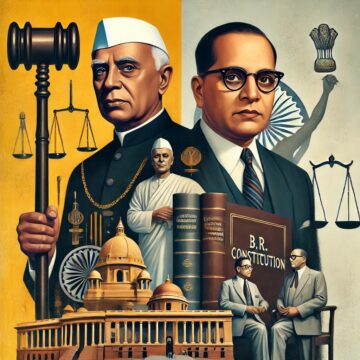
Ambedkar’s Criticism of Manusmriti: A Modern Review

Dr. B.R. Ambedkar's critique of Manusmriti sheds light on its historical role in institutionalizing caste and gender disparities. This blog explores his viewpoints, contextualizes the Manusmriti within Hindu traditions, and examines its evolving relevance. By addressing these complexities, we reflect on Ambedkar's enduring impact on India's legal and societal frameworks, fostering equality and justice.

honeybee, garden, nectar, flowers, biodiversity, sustainability, peacefulness, nature, Dattatreya and Gurus Bhonra
Post

Dattatreya and Guru Bhonra: Lessons on Wisdom and Harmony from the Honeybee

In our latest exploration 'Dattatreya and Guru Bhonra,' we delve into how the honeybee, or Bhonra, teaches profound lessons in sustainable living and wisdom gathering. This blog reveals how Dattatreya's natural guru exemplifies moderation and non-violence, offering insights that resonate deeply with our modern challenges of consumption and ethical living.

yoga, meditation, guru, tranquility, spiritual, nature, mindfulness, Yoga Rupe Vritti
Post

Yoga Rupe Vritti – Managing Mind Modifications through Yoga

Dive into the world of Patanjali’s Yoga Sutras to explore "Yoga Rupe Vritti," a phenomenon where the mind, outside its meditative state, entangles with transient mental modifications. This blog discusses how recognizing and managing these fluctuations can lead to profound spiritual clarity and inner peace.

Battle of Tughlaqabad, Hemu, Akbar, Mughal Empire, Indian history, elephant warfare, historical battle, 16th-century India, military armor, ancient warfare, Akbar & Mughal Challenges
Post

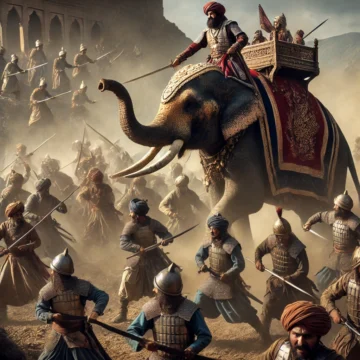
Akbar & Mughal Challenges: Battle of Tughlaqabad and Hemu’s Stand

Explore the pivotal Battle of Tughlaqabad where Hemu, a visionary Hindu king, remarkably challenged the burgeoning Mughal forces under Akbar. This blog delves into the tactical genius of Hemu and the broader socio-political implications of his stand against the Mughal expansionist agenda in 1556.

moth, diya, flame, attraction, night, fatal attraction, oil lamp, danger, nature, temptation, Dattatreya and Guru Patang
Post

Dattatreya and Guru Patang: Navigating Desire and Destruction

In "Dattatreya and Guru Patang," we explore the teachings of Bhagwan Dattatreya who learns from nature's simplest creatures. This post delves into the stark lessons imparted by Patang, the insect, illustrating the dangers of unchecked desires with a narrative that resonates deeply in today’s materialistic world.

group meditation, outdoor meditation, serene setting, spiritual guru, traditional attire, tranquil garden, sunlight filtering, peaceful atmosphere, diverse participants, meditation session, Yoga Mindfulness Practices
Post

Yoga Mindfulness Practices: Settling Within to Discover True Self

Explore the profound teachings of Patanjali's Yoga Sutras in our latest blog, where we delve into the ancient wisdom that guides mindfulness and self-awareness. Discover how Sutra 1.3 emphasizes the importance of calming the mind to reveal our true nature, offering deep insights for a serene and spiritually fulfilled life.

Post

Rashtriya Swayamsevak Sangh: A Pillar in Modern Hindu Society

Founded in 1925 by Dr. Keshav Baliram Hedgewar, the Rashtriya Swayamsevak Sangh (RSS) has significantly influenced India's cultural and political landscapes. Its commitment to Hindu philosophy and its extensive social services have been pivotal in shaping contemporary Hindu identity and nationalistic fervor in India's evolving socio-political fabric.

Jyotirao Phule, Indian social reform, 19th-century India, historical scene, education reform, caste equality, traditional Indian architecture, village setting, diverse crowd, period attire
Post

Jyotirao Phule and the Dawn of Social Reform

Jyotirao Phule, born in 1827 and founder of the Satyashodhak Samaj, challenged the entrenched norms of 19th-century society. Through the lens of "Dharma and Ethics," this blog explores Phule's profound moral and spiritual reforms that transcended caste and gender discrimination, advocating for a practical application of Dharma in social reform.

Mahatma Gandhi, B.R. Ambedkar, Poona Pact, colonial India, Indian leaders, historical negotiations, cultural motifs, Indian constitution, independence, British colonialism
Post

Poona Pact: Colonial Legacies and Enduring Divisions in Hindu Society

The Poona Pact of 1932, brokered amidst India's freedom struggle, was a crucial agreement between Gandhi and Ambedkar under British colonial influence. It aimed to preserve Hindu unity while addressing caste disparities, setting a stage for future social reforms and the ongoing discourse on affirmative action and equality in modern India.

Bhagat Singh, Sankardev, Guru Nanak Dev Ji, Indo-Pakistani War, Indian culture, historical figures, peace symbols, national flags, Indian heritage, educational collage, India
Post

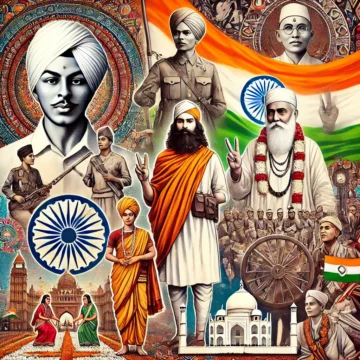
India: Historical Events of the 39th Week

Explore the transformative events of India's 39th week across centuries. From Bhagat Singh's revolutionary zeal and Sankardev's spiritual contributions to Guru Nanak's enduring teachings and the ceasefire of the 1965 Indo-Pak War, this blog illuminates how these moments have significantly shaped India's cultural and political landscapes.

python, barren landscape, solitary tree, patience, strategic stillness, minimalism, wildlife, natural scene, isolation, dry terrain, Dattatreya and His Guru Python
Post

Dattatreya and His Guru Python

Explore the ancient wisdom of Bhagwan Dattatreya and his teachings through the python, Ajgar. This series delves into how minimalism, patience, and strategic inaction can address modern challenges and promote a sustainable lifestyle, transcending the traditional boundaries of spirituality and offering practical insights for today’s fast-paced world.

ancient Sanskrit, Indian scholar, palm leaves, modern leaders, global business, traditional Indian architecture, leadership, cognitive skills, cultural heritage, corporate imagery
Post

Sanskrit: The Intelligence Accelerator

Explore how the ancient language of Sanskrit, with its complex grammatical structures and rigorous cognitive demands, shapes superior leadership skills and enhances cognitive abilities. Discover the profound impact of Sanskrit on modern global leadership, bridging ancient practices with contemporary strategic needs.

vintage map, historic icons, Nuremberg Laws, 1857 Uprising, Bombay Plague, Uri attack, military helmet, ancient cannon, gavel, medical symbol, Struggles and Triumphs
Post

Struggles and Triumphs: A Week of Historic Events in September

This week in history reveals the profound resilience of humanity against oppression and injustice, from the Nuremberg Laws' enactment to India’s strategic military responses in the Uri attack. Reflect on how these events shaped not only the course of history but also the enduring human spirit.

Guru Arjan Dev, Adi Granth, Sikh Guru, historical scene, Sikh architecture, scholarly pursuit, traditional Indian room, serene atmosphere, natural light, devotion
Post

Guru Arjan Dev: Ji Architect of Faith and Martyrdom

Discover the life of Guru Arjan Dev, the fifth Sikh Guru, whose teachings and martyrdom significantly shaped Sikhism. Delve into his contributions like the Adi Granth and the Harmandir Sahib, and his resilient leadership during Mughal oppression, reflecting the enduring legacy of his spiritual and communal insights in our latest entry.

Sanatan Dharma, caste system, Mughal era, British colonial rule, Mahatma Gandhi, B.R. Ambedkar, ancient scriptures, modern society, social justice, inclusivity, digital illustration, historical influence, Sanatan Dharma and Caste Evolution
Post

Sanatan Dharma and Caste Evolution: Navigating the Pros and Cons

Explore the intricate layers of caste evolution within Sanatan Dharma through historical periods like the Mughal era and British colonial rule. Witness how figures like Mahatma Gandhi and B.R. Ambedkar shaped the modern perceptions and roles within the caste system, and delve into the ongoing debates over nepotism and caste-based privileges.

Mahatma Gandhi, nonviolence, Satyagraha, Indian history, peace, controversy, Mahatma Gandhi and Nonviolence
Post

Mahatma Gandhi and Nonviolence

Explore the complexities of Mahatma Gandhi's legacy in our detailed discussion on his principle of nonviolence and its modern-day implications. This blog delves into Gandhi's interpretations, historical actions, and their impacts on today's social and political movements, inviting readers to reflect on the dynamic nature of his enduring philosophies.

historical illustration, Kohat riots, Kashmiri Pandits, emotional aftermath, abandoned homes, desolate landscape, muted colors, historical reflection, somber mood, symbolic elements, Riots in Kohat
Post

Riots in Kohat and Forgotten Exodus: Kashmir Exodus 1.0

The riots in Kohat of 1924 and the 1989 exodus of Kashmiri Pandits share a legacy of communal violence under differing political regimes. This blog explores the catalysts, impacts, and enduring lessons of these events, shedding light on the complexities of Hindu-Muslim relations in India's fraught historical landscape.