

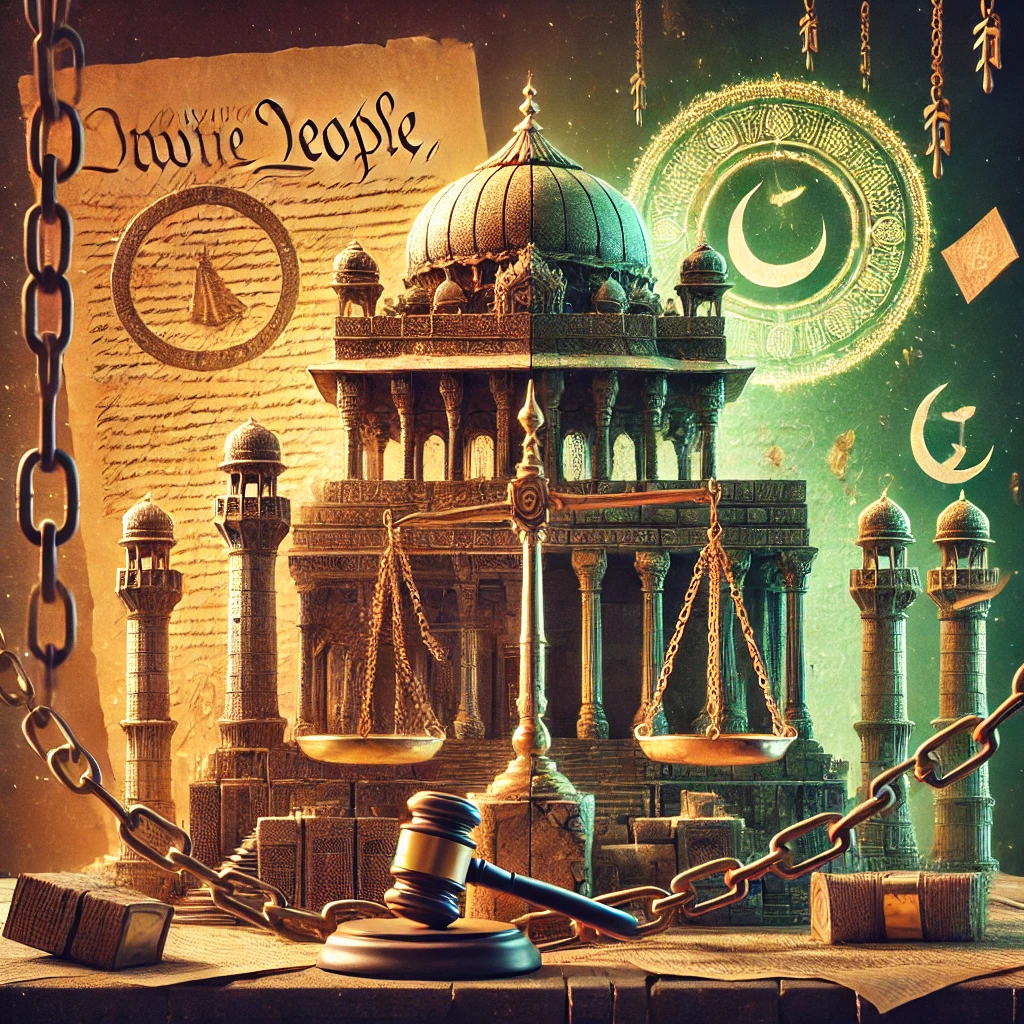
Legal Asymmetry Against Hindus represents the most devastating betrayal of Hindu civilization in independent India. While the Constitution promises equality before law, its actual implementation has produced a two-tier system in which Islamic practices receive state protection while Hindu traditions face systematic restriction. This asymmetry is visible not only in legislation but in lived reality—as seen in the Kota Garba incident, where Hindu organizers enforcing the same religious boundaries routinely practiced in Islamic spaces were subjected to vilification, legal pressure, and threats of state action. This is not an accidental drift from constitutional ideals; it is a deliberate architecture—exemplified by instruments such as the Waqf Act—designed to facilitate Islamic institutional expansion while preventing Hindu self-defense.
As we established through our examination of Islamic doctrinal history from Ridda Wars to Love Jihad, Islamic doctrine mandates elimination of polytheism through conversion, subjugation, or force. Now we document how India’s “secular” legal framework enables this doctrinal imperative by creating Legal Asymmetry Against Hindus that systematically favors Islamic interests while criminalizing Hindu resistance.
The Kota Garba case perfectly illustrates this asymmetry: when Hindus protect sacred boundaries using the same exclusivity Islam practices at Mecca, they face media vilification and legal threats. This double standard isn’t judicial error—it’s institutional design.
The Dual Legal System: Shariat Protected, Hindu Codes Imposed
Personal Law Asymmetry: Islamic Autonomy vs Hindu State Control
India operates under fundamentally different legal frameworks for Muslims versus Hindus, creating Legal and Constitutional Asymmetry that would be unconstitutional in any genuinely secular democracy:
Islamic Personal Law (Shariat):
- Protected Under Article 25: Muslim personal law governing marriage, divorce, inheritance, and succession remains untouched by uniform civil code requirements
- Polygamy Legal: Muslim men can marry up to four wives legally, while Hindu polygamy is criminal offense
- Unilateral Divorce: Triple talaq (instant divorce by pronouncement) was only recently criminalized after Supreme Court intervention—but Muslim men still retain easier divorce access than Hindu men
- Inheritance Discrimination: Muslim women receive half the inheritance of Muslim men under Shariat law, yet this gender discrimination receives constitutional protection; this creates a double asymmetry where a Hindu woman marrying a Muslim transfers ancestral property into the Muslim clan, while the reverse transfer is neither reciprocal nor structurally possible.
- Child Marriage Loopholes: Muslim personal law permits marriage after puberty, creating legal ambiguity that enables underage marriages
Constitutional Anchoring Note
While this analysis focuses on structural outcomes rather than legal technicalities, the asymmetries described flow directly from specific constitutional provisions. Article 25 (freedom of religion), Article 26 (religious denomination autonomy), and Article 30 (minority educational rights) have been interpreted expansively to shield Islamic and Christian institutions, while Article 44 (Uniform Civil Code) has remained unenforced, perpetuating personal-law asymmetry. The cumulative effect of selective invocation and judicial interpretation of these Articles underpins the legal imbalance examined throughout this blog.
As we document in our analysis of Waqf Amendment Act debates, any attempt to reform Islamic practices triggers accusations of “minority persecution,” while Hindu practices face continuous legal assault.
Hindu Personal Law (State-Codified):
- Hindu Code Bills (1955-1956): Parliament codified and reformed Hindu marriage, succession, adoption, and guardianship laws
- Polygamy Criminalized: Hindu Marriage Act prohibits polygamy, making it criminal offense
- Equal Inheritance: Hindu Succession Act mandates equal inheritance for daughters (after 2005 amendment)
- Temple Control: Hindu temples under state control through Hindu Religious Endowments Acts
- Festival Restrictions: Courts routinely restrict Hindu festivals (Dahi Handi heights, Diwali crackers, Ganesh visarjan timings) while rarely interfering with Islamic practices
The Asymmetry: Hindus underwent comprehensive legal reform imposed by the state, while Muslims retained Shariat autonomy. This creates Legal Asymmetry Against Hindus where Hindu practices evolve under state coercion while Islamic Practices Remain Frozen in 7th-Century Arabia.
Comparative Secular Benchmark
In most established secular democracies, religious law is permitted only within private belief and ritual, never as a parallel legal system. Countries such as France, Germany, the United States, and the United Kingdom uniformly apply a single civil code governing marriage, inheritance, education, and property, regardless of religious identity. No community is allowed permanent legal exemptions that override gender equality, property law, or constitutional supremacy. India’s divergence lies not in recognizing religious freedom, but in sustaining legally enforceable religious asymmetry—an arrangement that would be constitutionally untenable in any other secular democracy.

The Shah Bano Case: When Courts Bow to Shariat
The 1985 Shah Bano case perfectly demonstrates how Legal Asymmetry Against Hindus operates:
The Facts:
- Shah Bano, divorced Muslim woman, sought maintenance from her husband under Section 125 CrPC (secular law)
- Supreme Court ruled in her favor, granting maintenance
- Muslim religious leaders erupted in protest, claiming violation of Shariat
- Rajiv Gandhi’s government passed Muslim Women (Protection of Rights on Divorce) Act, 1986 specifically to override the Supreme Court judgment
The Asymmetry:
- Islamic Law Supersedes Constitutional Rights: Parliament explicitly legislated to deny Muslim women the same maintenance rights Hindu women possess
- Vote Bank Politics: Government prioritized Muslim clerical demands over women’s constitutional rights
- Judicial Capitulation: Supreme Court’s secular judgment was nullified by Shariat-protecting legislation
This case established precedent: whenever secular law conflicts with Islamic demands, the state capitulates. As documented in our series on Yogi Adityanath’s analysis of Hindu-Muslim safety asymmetry, this pattern reflects deeper civilizational dynamics.
Triple Talaq: Three Decades of Judicial Cowardice
Despite being declared “un-Islamic” by several Muslim-majority countries, triple talaq (instant divorce by pronouncement) remained legal in India until 2017:
Timeline of Failure:
- 1985: Shah Bano case reveals Shariat’s gender discrimination
- 1986: Parliament passes law protecting triple talaq
- 2002: Daniel Latifi case—Supreme Court upholds Muslim Women’s Act
- 2017: Shayara Bano case—Supreme Court finally declares triple talaq unconstitutional (3-2 decision)
- 2019: Parliament criminalizes triple talaq (Muslim Women Protection Act)
The PILs filed against the Triple Talaq law are more telling than the practice itself. While Muslim women waited decades for relief, the moment Parliament criminalized instant divorce in 2019, multiple petitions were rushed to the Supreme Court and High Courts challenging the law’s constitutionality. By 2024–25, the Supreme Court had clubbed over a dozen petitions questioning the statute, reflecting how quickly institutional energy mobilizes to protect Islamic personal law, even after a practice has been declared unconstitutional.
The 32-Year Gap: From 1985 to 2017, thousands of Muslim women suffered instant divorce without recourse, while judiciary and legislature protected this practice in the name of “minority rights.” Meanwhile, Hindu practices faced immediate judicial intervention.
Contemporary Reality: Even after criminalization, Muslim men continue practicing instant divorce with minimal enforcement, while Hindu men face immediate legal consequences for any violation of Hindu Marriage Act.

Institutional Asymmetry: Waqf Power vs Temple Subjugation
Waqf Board Autonomy: Unprecedented Legal Privileges
Waqf Boards operate under legal frameworks that grant powers no Hindu institution possesses, creating Legal Asymmetry Against Hindus of staggering proportions:
Waqf Powers:
- Self-Declaring Land: Waqf Boards can declare any property as “waqf property” based solely on internal claims
- No Statute of Limitations: Claims can be made on properties centuries after alleged waqf establishment
- Reverse Burden of Proof: Property owners must prove their ownership; Waqf Board’s claim is presumed valid
- Separate Tribunal System: Waqf Tribunals operate outside normal civil court jurisdiction
- Third-Largest Landowner: Waqf controls approximately 860,000 acres (some estimates over 1 million acres) across India—making it potentially the third-largest landowner after government and railways
- No Accountability: Minimal state oversight despite massive land holdings and questionable claims
As documented in our analysis of selective judgment regarding Waqf Act, courts consistently rule in favor of Waqf claims while requiring Hindu institutions to meet impossible evidentiary standards.
Recent Controversies:
- Farmers in Karnataka discovering their ancestral agricultural land suddenly claimed by Waqf Board
- Entire villages in Tamil Nadu claimed as waqf property
- Temple lands in multiple states claimed by Waqf despite centuries of Hindu religious use
- Government buildings, roads, and infrastructure claimed as waqf property
Hindu Temple Control: State Subjugation
Hindu temples face the opposite treatment—comprehensive state control that amounts to civilizational theft:
Hindu Religious Endowments Acts:
- State governments directly control Hindu temple administration
- Government-appointed officers manage temple funds, properties, and rituals
- Temple revenues diverted to state coffers and redistributed
- Hindu devotees have no say in temple administration
- Hereditary priests replaced by government-appointed bureaucrats
- Blatant violation of Dharmic Principles of within temple rituals
The Financial Drain: According to various estimates, government-controlled Hindu temples generate thousands of crores annually, with significant portions:
- Diverted to government general revenue
- Allocated to non-Hindu welfare schemes
- Used for salaries of government bureaucrats
- Spent on state programs having nothing to do with Hindu religious purposes
- Allegations of rampant corruption by enduement department officials
Examples of Exploitation:
- Tirupati Balaji: Generates thousands of crores, significant revenue diverted
- Sabarimala: Government control led to controversial court interventions
- Tamil Nadu: Hundreds of temples
Has the belief of Sai Baba as a Muslim and Muslim participation in the shrine, insulated Shirdi from the level of state control imposed on Hindu temples?
The Asymmetry: While mosques and churches retain complete autonomy over their properties and finances, Hindu temples serve as state-controlled revenue sources. This is Legal Asymmetry Against Hindus designed to weaken Hindu institutions while strengthening Islamic ones.
As explored in our examination of Political Islam vs Sanatan Dharma through Mughal-era governance, this pattern mirrors historical Islamic subjugation of Hindu institutions.
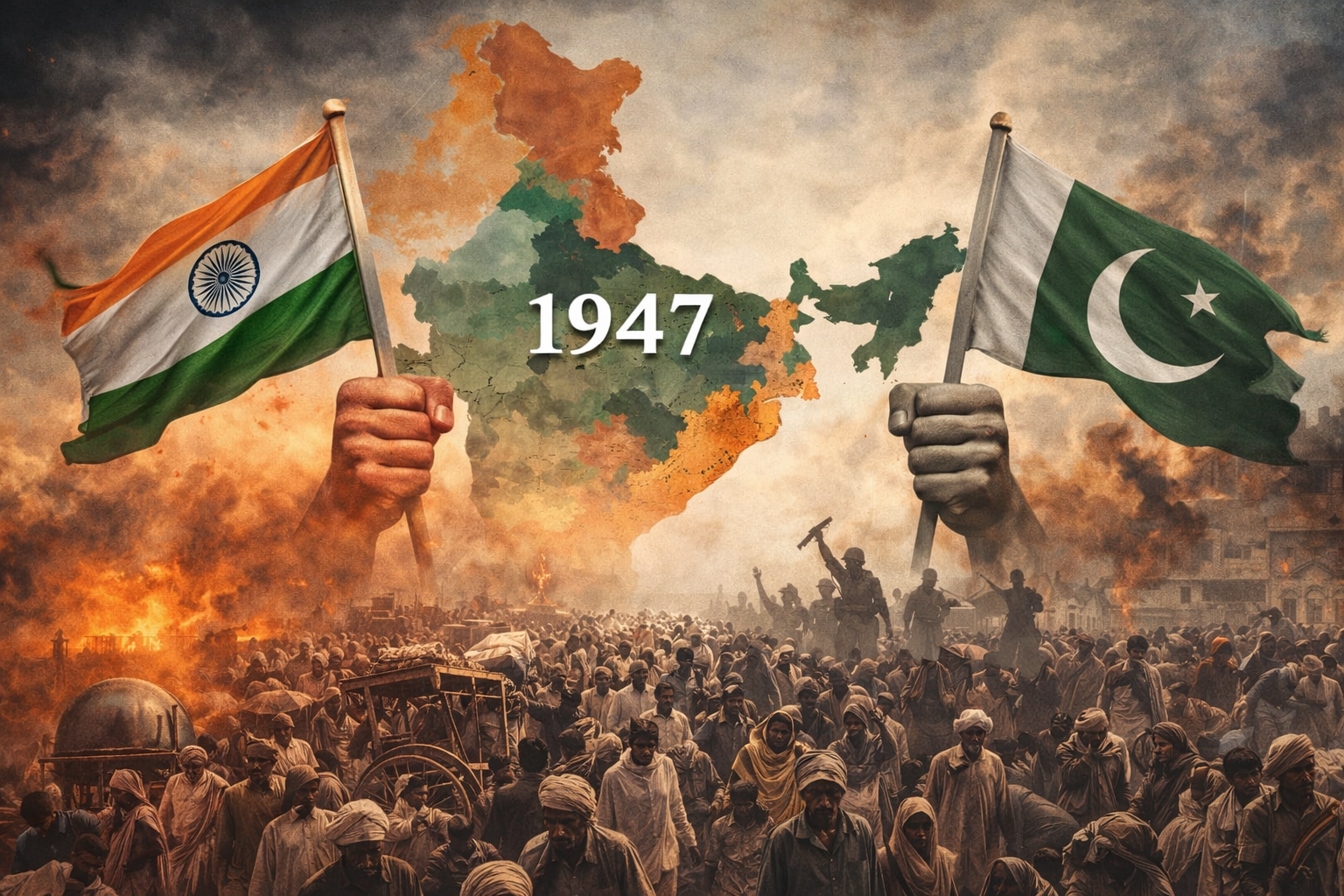
Partition Demographic Catastrophe
Case Studies in Judicial Bias: Pattern Recognition
Sabarimala: Judicial Assault on Hindu Tradition
The 2018 Sabarimala judgment exemplifies how Legal Asymmetry Against Hindus enables judicial activism against Hindu practices:
The Facts:
- Sabarimala Temple traditionally restricted entry for women aged 10-50 (menstruating age)
- Restriction based on temple deity Ayyappa being celibate brahmachari
- Supreme Court ruled this restriction violates gender equality (4-1 decision)
- Massive Hindu protests erupted across Kerala
- Review petitions pending before 9-judge bench since 2020
The Asymmetry:
- No Judicial Scrutiny: Women are routinely denied entry or equal participation in mosques, yet no PILs, constitutional challenges, or sustained judicial interventions have ever been initiated on grounds of gender equality.
- Selective Application: Courts hardly question mosques denying women entry or Christian churches restricting female priesthood
- Religious Autonomy Ignored: Temple’s theological basis dismissed as “superstition”
- Devotee Consent Irrelevant: Millions of Hindu women supporting tradition ignored
- State Violence: Kerala government used police force against Hindu devotees protecting temple tradition
Contrast with Islamic Practices:
- No court challenges Mecca/Medina’s total exclusion of non-Muslims
- No judicial intervention in mosque gender segregation
- No questioning of Islamic face-covering requirements for women
- Courts defer to Islamic “religious autonomy” while denying same to Hindus
As documented in our series examining how Nazia Ilmi’s revelations exposed Islamic doctrine, Islamic texts explicitly mandate gender segregation and exclusionary practices—yet these face no judicial scrutiny.
Jallikattu Ban: Cultural Assault Disguised as Animal Welfare
The 2014 Supreme Court ban on Jallikattu (Tamil Nadu’s traditional bull-taming sport) revealed judicial contempt for Hindu cultural practices:
The Pattern:
- Sport practiced for centuries as part of Pongal celebrations
- Supreme Court banned it citing animal cruelty (despite lack of systematic evidence)
- Tamil Nadu erupted in massive protests (2017)
- State government passed law protecting Jallikattu
- Similar judicial threats continue against other Hindu festivals
The Asymmetry:
- Halal Slaughter: No judicial scrutiny despite arguably greater animal suffering
- Bakr-Eid Mass Slaughter: Courts never question animal welfare during Islamic sacrificial festival and pollution concerns
- Selective Activism: Only Hindu practices face animal rights interventions
This pattern demonstrates Legal Asymmetry Against Hindus where Hindu traditions must justify their existence while Islamic practices receive presumptive legitimacy.
Festival Restrictions: Criminalizing Hindu Joy
Courts routinely restrict Hindu festivals while Islamic observances remain untouched:
Hindu Festivals Restricted:
- Dahi Handi: Height restrictions imposed, insurance requirements
- Ganesh Visarjan: Time limits, route restrictions, water body bans
- Diwali Crackers: Near-total bans in multiple cities
- Holi: Water use restrictions
- Durga Visarjan: Noise and timing regulations
Islamic Practices Protected:
- Azaan (Prayer Call): No noise restrictions despite 5 daily loudspeaker broadcasts starting at dawn
- Friday Namaz: Streets regularly blocked for prayers without permits
- Muharram Processions: Minimal restrictions despite similar public gathering concerns as Hindu festivals
- Bakr-Eid: Animal slaughter in public spaces without environmental scrutiny applied to Ganesh visarjan
As documented in our analysis of how daily Islamic practices normalize Hindu othering, this asymmetry isn’t accidental—it reflects systematic privileging of Islamic assertion while restricting Hindu expression.

Yogi Adityanath on Coexistence
The Nupur Sharma Case: When Truth Becomes Crime
The 2022 Nupur Sharma controversy represents the apex of Legal Asymmetry Against Hindus in modern India:
What Happened:
- During TV debate, Nupur Sharma cited authentic Hadith regarding Prophet Muhammad’s marriage to Aisha
- Massive Islamic outrage erupted globally
- Riots in Ranchi, murders in Udaipur (Kanhaiya Lal beheaded for supporting Sharma)
-
Supreme Court blamed Sharma for “setting entire country on fire”
- Sharma received death threats, went into hiding
- No legal protection provided despite assassination attempts
The Facts She Cited:
- Sahih Bukhari (most authentic Hadith collection) records Aisha’s age at marriage as 6, consummation at 9
- These are mainstream Islamic sources accepted by traditional Islamic scholars
- Sharma was responding to insults against Hindu deities by Muslim panelist
The Asymmetry:
- Citing Islamic Sources Becomes Blasphemy: Quoting authentic Hadith treated as criminal act
- Hindu Victims, Muslim Aggressors—Yet Hindu Blamed: SC blamed Sharma, not the murderers
- No Protection for Truth-Tellers: State abandoned Sharma to mob violence
- Islamic Sensitivity Privileged: Hindu religious feelings routinely mocked without consequences
As explored in our detailed examination of the Qur’an quote that sparked firestorm around Nazia Ilmi, the pattern is clear: quoting Islamic texts accurately triggers accusations of “Islamophobia” while direct insults to Hindu dharma face no legal or social consequences.
Contrast:
- Films depicting Hindu gods negatively: Protected as “artistic freedom”
- Books insulting Hindu traditions: Defended as “academic freedom”
- Social media mockery of Hindu practices: Ignored or justified
- Citing Islamic sources accurately: Treated as incitement to violence
This pattern has historical roots. During British India, Rangila Rasul, a book citing Islamic sources, triggered such sustained outrage that the colonial state introduced Section 295A to criminalize religious “offence.” Notably, the book was written in response to earlier publications mocking Hindu deities, which attracted no comparable protection. The precedent endures: mockery of Hindu beliefs is defended as expression, while accurate citation of Islamic sources is treated as provocation.
This represents Legal Asymmetry Against Hindus taken to its logical extreme: Hindu civilization cannot even quote Islamic sources without facing death threats and judicial condemnation.
Kanhaiya Lal Murder: When Islamic Doctrine Becomes Action
The beheading of Kanhaiya Lal in Udaipur (June 2022) for supporting Nupur Sharma demonstrates how Legal Asymmetry Against Hindus enables Islamic violence:
The Facts:
- Kanhaiya Lal, Hindu tailor, shared social media post supporting Sharma
- Two Muslims (Riyaz Akhtari and Ghouse Mohammad) entered his shop
- Beheaded him on video, citing Prophet Muhammad’s honor
- Posted beheading video online as warning to others
- Investigation revealed ISIS-style radicalization and planning
Institutional Response:
- Minimal mainstream media coverage compared to alleged “anti-Muslim” incidents
- No sustained national outrage or “Not In My Name” protests
- Murderers’ families not ostracized by Muslim community
- Pattern continues: targeted killings of Hindus who “offend” Islam
The Asymmetry:
- Hindu violence immediately labeled “communal”
- Islamic violence rationalized as “reaction to provocation”
- State machinery mobilizes instantly for alleged “anti-Muslim” crimes
- Hindu victims receive delayed, reluctant justice (if any)
While no organisation formally defended the act of murder, Jamiat Ulema-e-Hind’s legal interventions focused on managing the religious narrative rather than condemning the crime, seeking to restrict public portrayal of the incident on grounds of religious sensitivity. This selective intervention itself constitutes a display of asymmetry—where protection of religious image takes precedence over moral clarity and victim justice.
As documented throughout our series decoding Surah Tawbah’s verses that Nazia Ilmi explained, this violence follows Qur’anic prescriptions for dealing with those who “insult” Islam—yet the legal system treats it as isolated “radicalization” rather than doctrinal implementation.

Nazia’s Educational Expose: Institutional Capture
Electoral Dynamics: How Asymmetry Becomes Policy
Vote Bank Politics: The Engine of Asymmetry
Legal Asymmetry Against Hindus persists because it delivers Muslim votes to secular parties:
The Transaction:
- Muslim Leadership Demands: Protection of Shariat, Waqf privileges, restrictions on Hindu assertions
- Secular Parties Deliver: Legislation, judicial appointments, policy exemptions
- Muslim Votes Concentrated: In crucial constituencies, Muslim voting bloc determines outcomes
- Hindu Votes Fragmented: Divided by caste, region, ideology—never consolidated
Examples:
- Shah Bano Reversal: Rajiv Gandhi’s Congress secured Muslim votes by overturning SC judgment
- Waqf Protection: All governments maintain Waqf privileges despite massive land grab concerns
- Minority Institutions: Christian/Muslim institutions get autonomy denied to Hindu institutions
- Hajj Subsidies: Continued for decades despite Supreme Court questioning constitutionality
As documented in our analysis of how Nazia’s doctrine statement gets technological and electoral amplification, this electoral calculation creates systemic incentives for perpetuating asymmetry.
Minority Status Fraud: Constitutional Loophole
Article 30 grants minorities rights to establish and administer educational institutions, creating Legal Asymmetry Against Hindus:
How It Works:
- Christian/Muslim Institutions: Get “minority” status even in states where they’re majority
- Exemptions from RTE Act: Don’t need to implement 25% reservation for economically weaker sections
- Admission Autonomy: Can select students based on religion
- Curriculum Freedom: Can teach religious content without restrictions
- Financial Benefits: Receive government grants while maintaining autonomy
Hindu Institutions:
- No Special Status: Even when Hindus are minority (Kashmir, Northeast states, Kerala)
- RTE Compliance Mandatory: Must implement 25% EWS quota
- No Admission Autonomy: Cannot prioritize Hindu students
- State Interference: Curriculum, administration subject to government control
- Financial Burden: Government regulations without corresponding support
The Absurdity: In states like Punjab (Sikhs plurality), Kerala (high Christian population), Christian/Muslim institutions still claim “minority” status at national level to escape RTE obligations. Hindu institutions get no reciprocal protection.
The Rohingya Crisis: When Illegal Immigration Becomes “Minority Rights”
The treatment of illegal Rohingya immigrants versus persecuted Hindu refugees demonstrates Legal Asymmetry Against Hindus:
Rohingya (Illegal Muslim Immigrants from Myanmar):
- Settled illegally in India over past decade
- Provided UNHCR refugee cards
- Multiple NGOs and political parties advocate for their “rights”
- Courts intervene to prevent deportation
- Settled in strategic locations across India
- Provided housing, ration cards, voting rights in some states
Hindu/Sikh Refugees from Pakistan/Afghanistan/Bangladesh:
- Legally persecuted in Muslim-majority countries
- Face bureaucratic obstacles for Indian citizenship
- Minimal advocacy from “human rights” organizations
- No systematic settlement support
- CAA (Citizenship Amendment Act) providing fast-track citizenship for persecuted minorities faced massive opposition, labeled “anti-Muslim”
The Message: Illegal Muslim immigrants receive more institutional support than legally persecuted Hindu refugees. This asymmetry reflects deliberate policy preference for Islamic demographic expansion.
Reservation Asymmetry: Buddhist Paradox Exposed
The Constitutional Betrayal of Schedule Castes
The Scheduled Caste reservation system reveals perhaps the most cynical Legal Asymmetry Against Hindus:
Constitutional Logic:
- SC/ST reservations created to address historical caste-based discrimination
- Discrimination rooted in Hindu social structure
- Benefits intended for those disadvantaged within Hindu community
Current Reality:
- Buddhist Converts: Retain full SC reservation benefits despite rejecting Hinduism
- Buddhist Doctrine: Explicitly rejects caste system and Hindu social hierarchy
- Institutional Ingratitude: Benefits derived from Hindu-majority society while denouncing Hindu civilization
As the Hindi proverb warns: “जिस थाली में खाते हैं उसी में छेद करते हैं” (They drill holes in the plate from which they eat)
The Asymmetry:
- Christian/Muslim SC Converts: Lose SC status (Presidential Order 1950, Para 3)
- Buddhist SC Converts: Retain full SC benefits
- Rationale: Buddhism considered “Indian religion” while Christianity/Islam are “foreign”
The Hypocrisy:
- Historical Fact: Buddhism became minority religion in India, largely absorbed back into Hindu fold
- Contemporary Reality: Buddhist conversion used as strategy to retain reservation benefits while escaping “Hindu” label
- Doctrinal Rejection: Buddhism explicitly denies core Hindu concepts (atman, Vedic authority, caste system)
- Financial Exploitation: Hindu-majority taxpayers fund benefits for those who ideologically reject Hinduism
Questions Unasked:
- If Buddhism’s rejection of caste system is celebrated, why do Buddhist converts need caste-based reservations?
- If Christianity/Islam also claim to reject caste discrimination, why different treatment?
- If the goal is eliminating caste discrimination, why reward those who’ve escaped the system entirely?
This represents Legal Asymmetry Against Hindus where anti-Hindu conversion receives state financial support while Hindu identity becomes legal liability.
The Academic and Legal Capture
Law Commission Bias: Who Drafts the Asymmetry?
India’s Law Commission has consistently produced recommendations that perpetuate Legal Asymmetry Against Hindus:
Pattern of Recommendations:
- Uniform Civil Code: Delayed for decades despite constitutional directive (Article 44)
- Triple Talaq: Took 30+ years to address despite obvious gender discrimination
- Waqf Reform: Minimal recommendations despite massive property irregularities
- Temple Freedom: No recommendations to free Hindu temples from state control
Composition Matters: Recent Law Commissions have included members with clear ideological biases favoring Islamic interests, while Hindu concerns receive minimal representation.
Legal Education: Manufacturing Anti-Hindu Lawyers
India’s elite law schools systematically produce lawyers hostile to Hindu interests:
Curriculum Bias:
- “Secularism” taught as synonym for “restraining majority religion”
- Hindu practices analyzed through lens of “harmful traditions”
- Islamic/Christian practices presented as “minority rights” requiring protection
- Constitutional law courses emphasize “protecting minorities” without examining asymmetric implementation
[Refer: https://www.cambridge.org/core/journals/law-and-social-inquiry/article/secularism-in-the-indian-context/54DC764998B762B94326B7F8035ECB85
https://www.drishtiias.com/daily-news-editorials/secularism-in-india-and-ucc-part-1
https://forumias.com/blog/secularism-in-india-explained-pointwise/
https://stophindudvesha.org/secular-in-name-anti-hindu-in-practice-indias-legal-double-standards/]
Faculty Composition: Elite National Law Universities dominated by faculty trained in Western liberal frameworks that view Hindu civilization as obstacle to “progress.”
Outcome: Generations of lawyers, judges, and legal academics who view Legal Asymmetry Against Hindus not as problem to solve, but as feature to perpetuate.
As explored in our examination of how academic credentials enable institutional capture, this educational asymmetry produces the legal professionals who maintain systemic bias.
International Law: Exported Asymmetry
The Geneva Refugee Framework: Strategic Weaponization
International refugee law creates asymmetry that disadvantages Hindu-majority India:
How It Works:
- Muslims fleeing Muslim-majority countries can claim persecution
- Settle in non-Muslim countries claiming “religious persecution”
- Receive refugee status, citizenship, benefits
- Original Muslim countries face minimal pressure to reform
India’s Position:
- Cannot deport illegal Muslim immigrants due to “international obligations”
- Persecuted Hindus from Pakistan/Bangladesh/Afghanistan face bureaucratic obstacles
- CAA attempt to address this asymmetry branded “discriminatory” internationally
The Pattern: As we document in our series on Maha Kumbha Mela analyzing Hindu civilizational resurgence, Hindu civilization faces unique international pressures that no Islamic country endures.
Counter-Argument: Minority Protection
- Minority safeguards were necessary to prevent Hindu majoritarian dominance after Independence.
- Differential religious laws were intended to correct historical power imbalance, not confer privilege.
- Partition violence created enduring insecurity among Muslims, requiring permanent constitutional reassurance.
- A Uniform Civil Code could enable cultural assimilation under a Hindu-majority state.
- India’s civilizational complexity makes Western secular models inapplicable.
Counter-Argument Fact Check
- A 24% population coerced the British administration and a 76% majority into conceding a separate Muslim state.
- That concession effectively transferred nearly 30% of British India’s landmass, including parts of Jammu & Kashmir and Gilgit–Baltistan, to a 24% population.
- The Partition trauma, created by Muslim political demands, was borne primarily by Hindus and Sikhs, through genocide, mass displacement, and civilizational rupture.
- A community that successfully reshaped borders through sustained political pressure cannot be framed as permanently powerless, especially in light of Islamic doctrinal teachings that treat political expansionism and legal separation as continuing obligations, not historical accidents.
- Using Partition selectively to justify legal asymmetry ignores recurrent doctrinal calls for renewed territorial claims (e.g., Ghazwa-e-Hind).
- Permanent legal asymmetry thus reflects political leverage and doctrinal continuity, not minority vulnerability.
Conclusion: Asymmetry as Architecture, Not Accident
Legal Asymmetry Against Hindus isn’t judicial error or administrative oversight—it is deliberate constitutional architecture designed to achieve specific outcomes:
The Goals of Asymmetry:
-
Prevent Hindu Consolidation: Keep Hindus divided by caste, region, ideology while allowing Muslim identity politics
- Enable Islamic Expansion: Protect Islamic institutions, practices, and demographics from Hindu resistance
-
Criminalize Hindu Self-Defense: Label any Hindu assertion of boundaries as “communalism”
- Normalize Double Standards: Train population to accept that “secularism” means restraining Hindus while privileging Muslims
-
Prepare Demographic Transition: Create legal framework that facilitates eventual Islamic demographic dominance
The Evidence:
From Shah Bano to Sabarimala, from Waqf privileges to temple subjugation, from Nupur Sharma to Kanhaiya Lal, the pattern is consistent: Legal Asymmetry Against Hindus systematically weakens Hindu civilization while strengthening Islamic assertion.
As we established in our foundational analysis of sacred exclusion, every civilization has the right to protect its boundaries. But India’s legal system denies this right to Hindu civilization while granting it comprehensively to Islamic institutions.
The Kota Garba case isn’t an isolated incident—it’s a flashpoint that reveals the systemic Legal Asymmetry Against Hindus that makes Hindu sacred boundaries legally indefensible while Islamic exclusivity remains constitutionally protected.
What Must Change:
- Uniform Civil Code: End personal law asymmetry
- Temple Freedom: Free Hindu temples from state control
- Waqf Reform: Subject Waqf to same legal standards as other property claims
- Educational Equality: End minority institution exemptions from RTE
- Reservation Reform: Address Buddhist SC retention paradox
- Judicial Accountability: Expose and correct systemic anti-Hindu bias in judiciary
Without addressing Legal Asymmetry Against Hindus, Indian “secularism” will continue to mean what it has always meant: Hindu subjugation dressed as equality.
Next in this series: Blog 5 – Trojan Tactics: The Role of Muslim Girls in Civilizational Infiltration — How innocuous participation becomes strategic wedge for demographic transformation.
Feature Image: Click here to view the image.
Videos
Glossary of Terms
- Legal Asymmetry Against Hindus: A systemic condition where Hindu religious practices face state control while Islamic practices receive constitutional and legal protection.
- Waqf Act: Indian legislation governing Islamic charitable endowments that grants Waqf Boards extraordinary land, legal, and tribunal powers.
- Shariat Personal Law: Islamic religious law governing marriage, divorce, inheritance, and succession for Muslims in India.
- Uniform Civil Code (Article 44): A constitutional directive advocating one common civil law for all citizens regardless of religion.
- Article 25: Constitutional provision guaranteeing freedom of religion, often expansively interpreted to protect Islamic practices.
- Article 26: Grants religious denominations autonomy over religious affairs and institutions.
- Article 30: Constitutional provision granting minorities special rights to establish and administer educational institutions.
- Shah Bano Case (1985): Supreme Court judgment granting maintenance to a Muslim woman, later overturned by Parliament under clerical pressure.
- Triple Talaq: Instant Islamic divorce practice criminalized in India only in 2019 after decades of judicial hesitation.
- Waqf Board: Statutory Islamic body empowered to manage, claim, and litigate properties declared as waqf.
- Reverse Burden of Proof: Legal principle under the Waqf Act where property owners must prove ownership against Waqf claims.
- Sabarimala Judgment: 2018 Supreme Court ruling overriding Hindu temple tradition on women’s entry.
- Kota Garba Incident: Event where Hindu organizers enforcing religious boundaries faced legal and media pressure.
- Section 295A: Colonial-era law criminalizing religious offense, introduced after the Rangila Rasul controversy.
- Ghazwa-e-Hind: Islamic eschatological concept referencing conquest of India, cited in doctrinal discussions.
#LegalAsymmetry #WaqfAct #IndianSecularism #HinduRights #IslamicHistory #HinduCivilization #LoveJihad #Garba #HinduRights #DharmicSecurity #SacredBoundaries #DemographicWarfare #HinduinfoPedia #SecularPrinciples
Further Reading
Islamic Practices Remain Frozen in 7th-Century Arabia
Comprehensive Documentation Series:
- Islamic Doctrinal History: From Ridda Wars to Love Jihad
- Islamic Texts and Polytheist Verdict on Hindu–Muslim Interactions
- Yogi Adityanath on Coexistence: Historical Evidence – Early Islamic Encounters
- Nazia’s Classification Crisis: Why Hindus Are ‘Kafir,’ Not ‘People of the Book’
- Nazia’s Bombshell: Decoding Surah Tawbah’s 26 Verses
- Nazia’s Daily Doctrine: How Azaan and Namaz Normalize Hindu Othering
- Nazia’s Educational Expose: Classroom Manufacturing of Hindu Contempt
- Nazia’s Educational Expose: Institutional Capture Through Academic Credentials
- Political Islam vs Sanatan Dharma: Yogi Adityanath’s Lessons from Mughals
- Islamic Influence and Jizya Tax in India
- Quran Quote That Sparked Firestorm: Nazia and the Fear of Facts
Legal and Institutional Analysis:
Nazia Ilmi Series (Doctrinal Analysis):
- Quran Quote That Sparked Firestorm: Nazia and the Fear of Facts
- Nazia’s Bombshell: Decoding Surah Tawbah’s 26 Verses
- Nazia’s Classification Crisis: Why Hindus Are Kafir
- Nazia’s Daily Doctrine: How Azaan and Namaz Normalize Hindu Othering
- Nazia’s Educational Expose: Classroom Manufacturing of Hindu Contempt
Civilizational Analysis:
This Series:
- The Principle of Sacred Exclusion: Dharma’s Right to Boundaries
- Islamic Texts and Polytheist Verdict on Hindu-Muslim Interactions
- https://hinduinfopedia.in/islamic-doctrinal-history-from-ridda-wars-to-love-jihad/ https://hinduinfopedia.org/Hindi/
Follow us:
- English YouTube: https://www.youtube.com/@Hinduofficialstation
- Hindi YouTube: https://www.youtube.com/@HinduinfopediaIn
- X: https://x.com/HinduInfopedia
- Instagram: https://www.instagram.com/hinduinfopedia/
- Facebook: https://www.facebook.com/Hinduinfopediaofficial
- Threads: https://www.threads.com/@hinduinfopedia
Leave a Reply