

Tag: Aurangzeb

Home » Aurangzeb
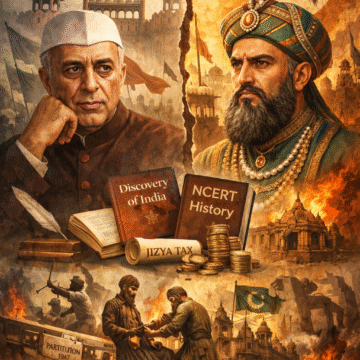
Jawaharlal Nehru, Aurangzeb, Mughal Empire, Discovery of India, NCERT History, Jizya Tax, Temple Destruction, Partition 1947, Muslim League, Indian Historiography, Political Narrative, Historical Debate, Hindu History, Islamic Rule, Ideological Conflict
Post

Aurangzeb in Nehru’s Praise: Political Necessity and 70-Year Whitewash

This analysis examines how Aurangzeb in Nehru's Praise emerged not as accidental interpretation but as political necessity during 1944–46. By humanizing systematic persecution through virtue-first framing and euphemistic language, Nehruvian historiography reshaped textbook narratives, public memory, and debates on Islamic rule, leaving a seventy-year imprint on India’s historical consciousness.
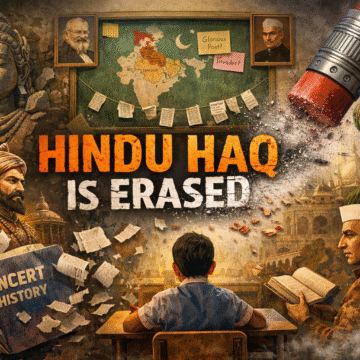
NCERT textbook, Indian history education, civilizational narrative, Gupta Empire scholar, Mughal emperor throne, classroom symbolism, historical memory, Aurangzeb debate, Shivaji representation, educational conditioning, India map chalkboard, narrative contrast digital art, Haq Film Sparks Query
Post

Haq Film Sparks Query: Where Did This Contempt for Hindus Get Manufactured?

This analysis examines how educational narratives shape civilizational perception. Using the Haq film as an entry point, it reviews NCERT textbook patterns, representation of the Gupta and Mughal empires, portrayal of Shivaji and Aurangzeb, Nehru’s historiography, and theological debates—arguing that institutional structures influence how generations understand Hindu civilizational identity.