
Patanjali’s Yoga Sutra 1.18 reveals the Practice of Para Vairagya—the supreme detachment that leads the yogi beyond all cognition into Asamprajnata Samadhi. Through Neti-Neti and repeated practice, the mind’s fluctuations cease, leaving only the subtle impressions of stillness. This process culminates in freedom, where consciousness rests in its own radiant nature.
Tag: Consciousness
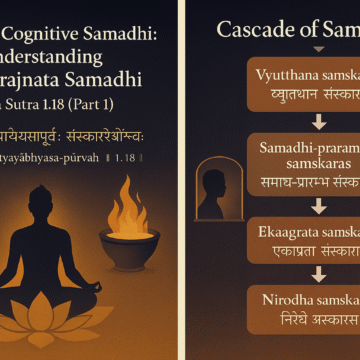
Beyond Cognitive Samadhi: Understanding Asamprajnata Samadhi
Asamprajnata Samadhi, described in Patanjali’s Yoga Sutra 1.18, is the transcendence of even the most refined meditative cognition. Through Para Vairagya—supreme detachment—every mental modification ceases, leaving only subtle impressions of cessation (Saṁskāra-Śeṣa). It marks a categorical shift from knowing to being, where pure consciousness abides in its own nature, beyond all thought.
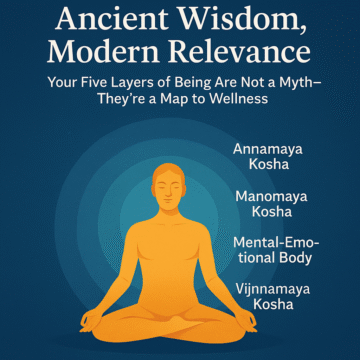
Pancha Koshas: Ancient Wisdom, Modern Relevance
Modern science is slowly validating what ancient rishis already mapped millennia ago: the five koshas are not metaphors, but layers of lived experience. From breath to bliss, each kosha influences health, emotion, and insight. This blog bridges ancient yogic wisdom with today’s neuroscience, epigenetics, and trauma therapy—revealing a timeless framework for holistic well-being and spiritual evolution.
Yoga Sutras’ Sleep Vritti: Unveiling the Depths of Conscious Rest
Explore the profound insights of "Yoga Sutras’ Sleep Vritti" as we delve into Sutra 1.10, where sleep is not just rest but a transformative mental modification. This blog uncovers how understanding sleep as a vritti can enhance our meditation practices and lead to deeper spiritual and mental well-being.