
Tag: Demography

Home » Demography
Hindu worship, sacred boundaries, religious observance, Navratri ritual, devotional gathering, cultural preservation, women in worship, temple traditions, spiritual discipline, faith and identity
Post

Salafist Trojan Technique in Practice: Muslim Girls in Hindu Festival Infiltration

This analysis examines how the Salafist Trojan Technique in Practice scales from individual interactions to institutional influence. Drawing parallels from the UK grooming gang scandal, Indian interfaith controversies, and festival boundary disputes, it argues that recurring patterns, doctrinal asymmetries, and enabling institutions transform isolated incidents into systematic civilizational pressure—requiring clarity, boundary maintenance, and informed community response.
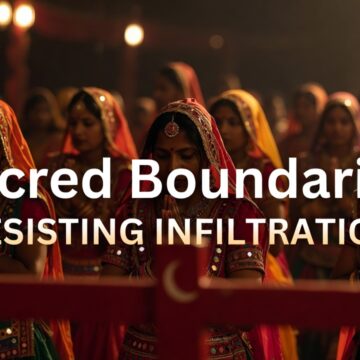

Hindu festival, Garba celebration, cultural boundaries, sacred space, religious tradition, civilizational identity, cultural preservation, community rituals, Hindu society, tradition and continuity, Salafist Trojan Technique
Post

Salafist Trojan Technique: Use of Muslim Girls in Hindu Festival Infiltration

This article examines the Salafist Trojan Technique—an operational method that converts doctrine into demographic action. Using the Kota Garba incident as a case study, it traces how women are strategically deployed to infiltrate Hindu sacred spaces, normalize presence, and erode boundaries. From medieval precedents to modern Love Jihad networks, the pattern reveals a civilizational strategy, not isolated romance.

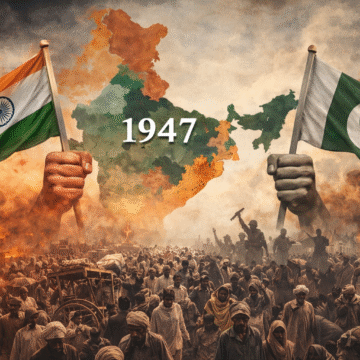
Partition of India,1947 Partition, Indian subcontinent history, demographic change, India Pakistan split, communal violence, forced migration, civilizational conflict, South Asian history, HinduinfoPedia
Post

Partition Demographic Catastrophe: Yogi Adityanath’s Statistical Proof (1800-1947)

This blog examines the Partition Demographic Catastrophe through historical data, regional case studies, and post-1947 demographic outcomes. From Moplah violence and Kashmir’s transformation to Pakistan’s minority collapse and India’s contrasting pluralism, it evaluates Yogi Adityanath’s safety question using population statistics, legal frameworks, and long-term civilizational patterns.