
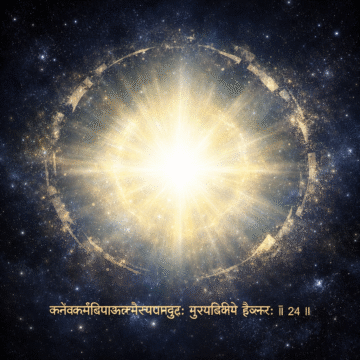
Patanjali's Yoga Sutra 1.24 defines Purusha Vishesha Ishvara as the special consciousness eternally untouched by kleshas, karma, vipaka, and ashaya—the four chains binding all beings to samsara. Distinct from ordinary and even liberated purushas, Ishvara holds a pure sattvic chitta out of sovereign compassion, singular in sovereignty, and serves as the ultimate object of Ishvara Pranidhana surrender for swift samadhi. This operational definition bridges ancient philosophy with practical yoga. (58 words)
Tag: karma
Kautilya Beyond Arthashastra: Exploring the Broader Themes of Hindu Philosophy-III
Exploring Kautilya beyond the Arthashastra reveals deep insights into Hindu philosophy through the lens of Dharma, Karma, rebirth, and Bhakti. These timeless principles not only influenced ancient governance but continue to inspire our journey towards personal and collective spiritual growth, emphasizing the profound relevance of Kautilya's teachings in modern times.
Manusmriti and Societal Framework: The Role of Varnas
Continuing our exploration of Manusmriti, this segment dives into the sophisticated system of varna. We explore how these roles, determined by individual qualities and actions, contribute to societal harmony, reflecting the cosmic principles of dharma, karma, and moksha, and providing insights into both ancient and contemporary societal frameworks.
Sanatan Dharma: A Philosophy Beyond Theism and Atheism
Explore the rich tapestry of Sanatan Dharma, a philosophy that transcends traditional religious boundaries, integrating atheistic and theistic views alike. This blog delves into its philosophical depth, examining how concepts like karma and dharma foster a unique ethical framework that resonates with seekers of truth across different cultures and times.