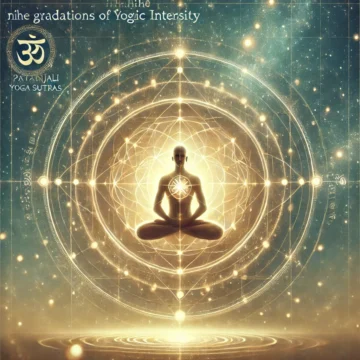

Patanjali’s Yoga Sutras 1.21–1.22 present a precise framework for measuring spiritual progress through nine gradations of yogic intensity. By examining the interplay of inner urgency (संवेग) and method (उपाय), this analysis explains why practitioners advance at different speeds, integrates classical commentary, and situates the system within modern psychological and cultural realities.
Tag: Samadhi
Five-Stage Path to Samadhi for Ordinary Yogis: Sutra 1.20
Yoga Sutra 1.20 reveals Patanjali’s universal path to samadhi for ordinary practitioners through five sequential stages—śraddhā, vīrya, smṛti, samādhi, and prajñā. Rather than inherited privilege, liberation unfolds through disciplined removal of inner obstructions, allowing dormant yogic samskāras to awaken naturally and culminate in objectless absorption.
Bhava Pratyaya Videha Yogis: Spiritual Privilege And Rebirth (Yoga Sutra 1.19)
Bhava Pratyaya Videha Yogis represent inherited meditative capacity carried across lifetimes, granting effortless access to profound samadhi. Patanjali warns that such absorption—whether bliss-based or cosmic—remains within nature unless completed by viveka-khyāti. True liberation arises not from experience alone, but from discriminative wisdom that dissolves even subtle bondage.
Beyond Liberation: Videha, Prakriti-laya (Yoga Sutras 1.18-1.19)
Even the most sublime yogic states—Videha and Prakriti-laya—are revealed to be subtle forms of bondage in Patanjali’s Yoga Sutra. This blog explores how these states, while appearing like liberation, still bind the yogi through attachment. It introduces three authentic post-death paths—Sadyo-mukti, Krama-mukti, and Avatāra—and explains the deeper role of Viveka-khyāti and Bhava-pratyaya.
Patanjali Yoga Sutra Terms Explained: Understanding Yoga Sutra Terms-II
This expanded glossary completes the essential vocabulary needed to fully understand Patanjali’s Yoga Sutra, especially the profound teachings of 1.18–1.19. Covering advanced sadhana, post-death paths, psychological pitfalls, and subtle distinctions, it clarifies how abhyasa, vairagya, samskaras, and liberation processes interconnect—revealing the entire spectrum from effort to Kaivalya.
Patanjali Yoga Sutra Glossary: Understanding Yoga Sutra Terms-I
Struggling with complex Sanskrit in the Yoga Sutras? This glossary simplifies 36 key terms from Patanjali’s Yoga Sutras 1.18–1.19, focusing on Samadhi, samskaras, kleshas, and Sankhya philosophy. Gain clarity on Nirbija, Viveka-khyati, and Purusha-Prakriti to unlock Asamprajnata Samadhi and deepen your spiritual understanding. Ideal companion for beginners and advanced yoga practitioners alike.
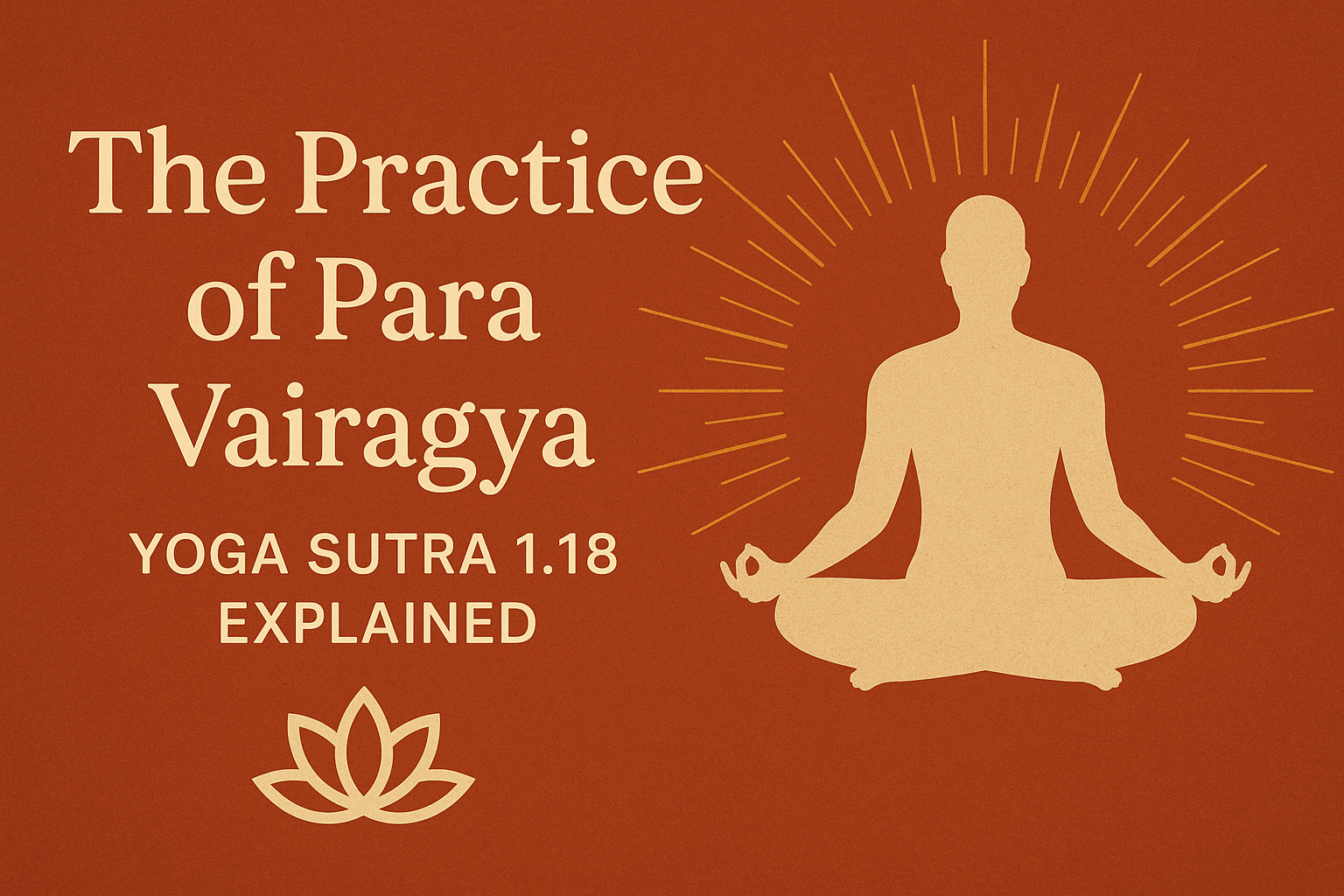
Practice of Para Vairagya – Yoga Sutra
Patanjali’s Yoga Sutra 1.18 reveals the Practice of Para Vairagya—the supreme detachment that leads the yogi beyond all cognition into Asamprajnata Samadhi. Through Neti-Neti and repeated practice, the mind’s fluctuations cease, leaving only the subtle impressions of stillness. This process culminates in freedom, where consciousness rests in its own radiant nature.
Samadhi Secrets Unlocked: An Exploration of Yoga Sutra 1.17
Explore the depths of Yoga Sutra 1.17, a cornerstone in yogic philosophy that introduces Samprajnata Samadhi—stages of deep meditation leading to spiritual enlightenment. This blog delves into the multifaceted levels of consciousness that guide practitioners from mere concentration to the profound unity of the universe.