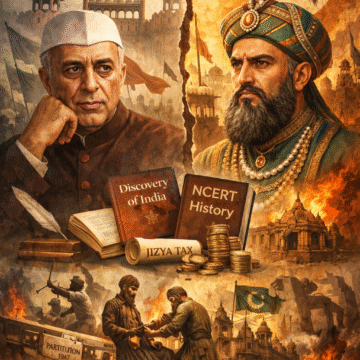

This analysis examines how Aurangzeb in Nehru's Praise emerged not as accidental interpretation but as political necessity during 1944–46. By humanizing systematic persecution through virtue-first framing and euphemistic language, Nehruvian historiography reshaped textbook narratives, public memory, and debates on Islamic rule, leaving a seventy-year imprint on India’s historical consciousness.