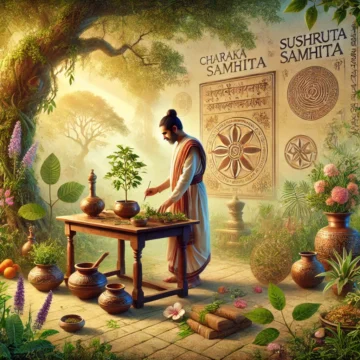

Vedic science, rooted in ancient Indian knowledge, spans astronomy, mathematics, architecture, medicine, Ayurveda, and Yoga. This heritage continues to inspire modern science. During the Vedic period, astronomy was crucial in religious and daily life, with texts like the Rigveda discussing celestial movements. Scholars like Aryabhata and Brahmagupta significantly contributed to Indian astronomy, influencing future developments and connecting Vedic texts with contemporary scientific theories.
Author: Sarvananda (Sarvananda )
Guru Purnima: Celebrating the Revered Teacher-Student Tradition
Explore the rich traditions of Guru Purnima, a festival honoring the sacred Guru Shishya Parampara through rituals like Puja, Satsang, and Meditation. This day marks a pivotal moment for introspection and renewal, celebrating the enduring wisdom of Gurus across generations.
Guru Arjan Dev Martyrdom: Consequence of Islamic Fundamentalism
Guru Arjan Dev Martyrdom Commemorating the Martyrdom of Guru Arjan Dev: As part of our weekly exploration of spirituality and worship at HinduInfoPedia.org, this Friday, May 31, 2024, we delve into a significant historical event: the martyrdom of Arjan Dev. Shri Guru Arjan Dev Ji, the fifth Sikh Guru, was martyred on May 30, 1606,...
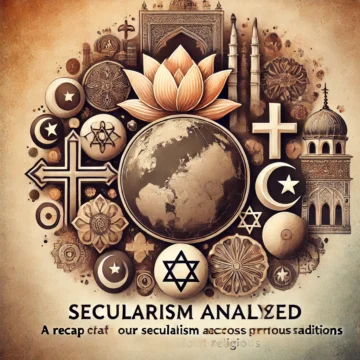
Secular Reflections: Faiths in Modern Society
Today, we explore the intricate dance between diverse religious teachings and secular values. Delving into Hinduism and the Abrahamic faiths, we uncover how each tradition intertwines with secular principles to promote peace, unity, and mutual respect, illuminating their profound impact on fostering a more inclusive and harmonious societal framework.
Dharma Meaning: Key Concepts in Hindu Philosophy
Continuing our weekly thematic exploration at HinduInfoPedia.org, this post, scheduled for May 29, 2024, delves deeper into the meaning of dharma within Sanatan Dharma. Building on last week’s discussion by Maharishi Dayanand Saraswati, founder of Arya Samaj, we explore the next 36 definitions from his work "आर्योदेशरत्नमाला," highlighting Hindu philosophy's inclusivity and practical applications in daily life.
Jawaharlal Nehru: Continued British Raj Legacy Post-Independence
Explore the lesser-known aspects of Jawaharlal Nehru's leadership, focusing on the controversial policies and administrative decisions that have shaped modern India. This critical analysis delves into the complexities of his tenure, examining the enduring impacts on India's political landscape, and highlighting the debates that continue to surround his legacy in shaping a post-colonial nation.
Shrimad Bhagwat: Exploring its Teachings and Timeless Wisdom
The Shrimad Bhagwat, a cornerstone of Vedic literature, explores devotion and righteousness through Lord Krishna's teachings. Composed by sage Vyasa, its twelve cantos delve into philosophical teachings and spiritual insights. From Krishna's vibrant tales in the Tenth Canto to the profound Uddhava Gita, it offers a comprehensive guide to spiritual enlightenment and influences Indian cultural and spiritual life.
Agriculture in India: Comparing with Vedic Agriculture Principles
Explore the ancient wisdom of Vedic agriculture, blending cultural heritage, scientific precision, and spiritual insight. Drawing from texts like the Rigveda and Yajurveda, it aligns farming with natural cycles, using techniques like crop rotation and natural fertilizers. This sustainable approach nourishes both body and soul, fostering a profound connection with nature and community well-being.
Guru Shishya Parampara: Preserving the Sacred Relationship
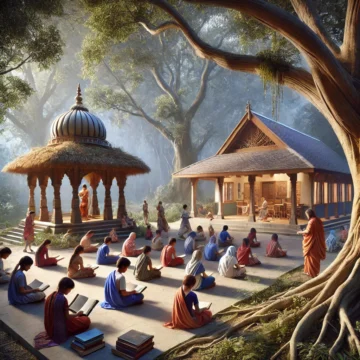
The Guru Shishya Parampara, a sacred teacher-student tradition, has preserved Hindu knowledge for over 4000 years. Despite historical setbacks like the burning of Nalanda University, this tradition ensured the continuity of wisdom through oral teachings. Today, it remains a cornerstone of Hindu education, blending ancient practices with modern needs.
Top Ten Lord Krishna Temples
Join us on a spiritual voyage through the "Top Ten Lord Krishna Temples," a journey that not only reflects architectural grandeur but also embodies the profound spirituality and cultural heritage integral to Hindu worship. From the historic depths of Mathura's Krishna Janmabhoomi to the modern magnificence of Bengaluru's ISKCON Temple, each site reveals its unique narrative. Experience the vibrant festivities at Banke Bihari Temple during Holi and feel the serenity of Vrindavan's Prem Mandir. Delve into the traditional rituals at Udupi Sri Krishna Matha and witness community unity at Nathdwara's Srinathji Temple. These temples are not just structures of stone; they are vibrant centers of life, inspiring devotion with every story they tell.
Sanatana Dharma: Secular and Inclusive Values of Hindu Philosophy
Explore the profound teachings of Sanatana Dharma, which emphasize inclusivity and collective well-being through ancient scriptures. This blog delves into how these principles of Hindu philosophy resonate with modern societal challenges, fostering peace and unity across diverse communities under the symbolic shelter of an ancient, all-encompassing tree.
Meaning of Sanatan Dharma: Learn Concepts in Hindu Philosophy
Continuing our weekly thematic exploration at HinduInfoPedia.org, this blog post, scheduled for May 22, 2024, delves into the meaning of Sanatan Dharma, as elucidated by Maharishi Dayanand Saraswati, a revered scholar and founder of the Arya Samaj. His seminal work, "आर्योदेशरत्नमाला," offers 100 essential definitions that form the core of Vedic knowledge, shaping our understanding of Hindu philosophy and its practical applications in daily life.
Sanatan Dharma, unlike more doctrinally rigid religions like Christianity or Islam, presents a unique framework that accommodates diverse beliefs, including atheism. This flexibility allows for various systems of salvation, reflecting the inclusivity fundamental to Hindu thought. Followers who engage in idol worship and those who do not are equally recognized as Hindus.
Arya Samaj, initiated by Maharishi Dayanand, advocates for a form of worship that eschews idolatry, aligning with the tenets of Vedic scripture. This blog series explores these nuances, with special commentary by the author on definitions that particularly reflect the Arya Samaj’s perspectives. Through this exploration, we aim to deepen the reader's appreciation for the broad and inclusive nature of Hinduism and the specific interpretations of Maharishi Dayanand Saraswati.
Pokhran II: Stragetic Assertion of India K
The 1998 Pokhran II nuclear tests by India were not just demonstrations of scientific prowess, but assertive actions of strategic autonomy in a world where geopolitical tensions and nuclear armament dictated international relations. These tests were a direct response to India’s security concerns, particularly with Pakistan, and the restrictive global nuclear non-proliferation policies that seemed tilted in favor of the nuclear-armed states. India's stance was clear – to maintain a credible defense posture in a region fraught with nuclear tension and rivalry, especially with Pakistan. This transformative period in India's defense strategy was not only about asserting its nuclear capabilities but also about demanding an equitable stance in global nuclear policies.
Hindu Sacred Texts: The Building Blocks of Hinduism
Hinduism, one of the world's most ancient religions, offers a profound collection of sacred texts that have shaped spiritual and everyday life across millennia. Central to these are the Vedas, described as the core of Hindu philosophy and spirituality, along with a diverse array of texts like the Upanishads, Smritis, and the epic tales of the Ramayana and Mahabharata. Each layer, from the foundational Vedas to the practical narratives of the Puranas, serves to guide adherents in their spiritual journey, reflecting the intricate tapestry of rituals, ethics, and cultural customs inherent in Hindu tradition.
Spiritual Journey of Chandrasekharendra Saraswati
On the birth anniversary of Chandrasekharendra Saraswati, explore the profound spiritual journey and teachings of this revered figure. Delve into his contributions to Vedic science, his philosophical teachings, and the enduring impact of his legacy that continues to influence spiritual and educational realms.
Vedic science and its legacy
Vedic science, rooted in ancient Indian knowledge systems, encompasses a profound body of wisdom that has influenced various fields such as astronomy, mathematics, architecture, medicine, Ayurveda, and Yoga. Emerging from a rich heritage of scholarly tradition, spiritual practices, and empirical observations, the Vedas serve as the foundation for a comprehensive understanding of the universe and human existence. The principles of Vedic science, meticulously documented in the Vedas, emphasize observation, inference, and a deep connection with nature. This holistic approach is evident in practices like Ayurvedic treatment, Panchakarma treatment, Shirodhara, and the use of Ayurvedic herbs and oils. The advanced metallurgical knowledge showcased by the Iron Pillar of Delhi and the sophisticated urban planning of Mohenjo-Daro and Harappa highlight the practical applications of Vedic science. Today, the relevance of Vedic principles is recognized in alternative medicine, modern architecture, and various scientific disciplines, demonstrating the enduring legacy of this ancient wisdom.
Gurukul Education System: A Journey Through Time
The Gurukul Education System, deeply rooted in Hindu culture, has profoundly shaped the intellectual and spiritual landscape of India from the Vedic period to the present day. Gurukuls, traditional residential schools, offered more than just academic knowledge; they were centers of holistic learning where students received physical training, moral discipline, and spiritual enlightenment under the close guidance of a Guru. This system promoted an egalitarian approach to education, where learning was accessible to all based on merit rather than social standing, exemplified by the legendary camaraderie and schooling of Lord Krishna and Sudama. The curriculum was comprehensive, incorporating Vedic studies, mathematics, astronomy, philosophy, and the arts, ensuring a well-rounded development of students. Despite the shifts brought about by colonial influences, the legacy of Gurukul education continues to resonate in modern educational practices, emphasizing the importance of holistic development and moral values.
Top Five Ram Temples: Exploring Sacred Abodes of Lord Rama
Explore the awe-inspiring temples dedicated to Lord Rama, each a blend of divine presence, architectural beauty, and deep cultural roots. From the historic Ram Janmabhoomi in Ayodhya to the picturesque Bhadrachalam on the banks of the Godavari, these temples are not just centers of worship but vibrant hubs of community and tradition. Discover the profound impact of these sacred sites on their devotees and the wider Hindu culture as we traverse the landscapes from Ayodhya to Nashik, revealing stories, traditions, and architectural marvels.
Dharma and Ethics: Scrutinizing Warfare Through Ancient Wisdom
Exploring the application of Dharma in warfare, this essay delves into the ancient Mahabharata and modern conflicts like Vietnam's 'Hamburger Hill'. It examines how Dharma guides ethical decision-making in warfare, emphasizing the balance between moral imperatives and military objectives, and the pursuit of righteousness over strategic gains.
Maharana Pratap: History Unveiled
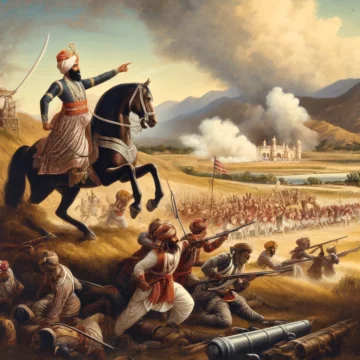
Explore the life of Maharana Pratap, a symbol of Rajput valor and resistance against Mughal dominance. Born on May 9, 1540, in Kumbhalgarh, Rajasthan, Pratap's legacy as the fierce protector of Mewar resonates through Indian history. His unwavering commitment to the sovereignty of Mewar is celebrated in numerous memorials, and his tactics in guerrilla warfare are studied for their brilliance. His legendary battle at Haldighati in 1576 against the Mughals marked a significant point in his reign, showcasing his strategic prowess and enduring spirit. This essay delves deep into his battles, governance, and the indelible mark he left on Rajputana and beyond