


Browse Through All Blogs
Bhava Pratyaya Videha Yogis: Spiritual Privilege And Rebirth (Yoga Sutra 1.19)
Part 27: Patanjali Yoga Sutra Explained
Bhava Pratyaya Videha Yogis Introduced
Patanjali Yoga Sutra is a spiritual guide not for a good reader but for a good learner and seeker and practitioner. The text is not a religious scripture but a spiritual reference book that has meaning far beyond what is written in the sutras as demonstrated in our previous blogs. In this context if someone says he seem to have won the spiritual lottery may be a fallacy. Born with the ability to slip into deep meditative states that would take others lifetimes to achieve. No grinding practice. No years of discipline. They just… enter samadhi.
These are the bhava pratyaya videha yogis—souls who carry advanced spiritual capacity from previous lives. They’re the naturally gifted in the realm of consciousness.
But Patanjali, in Yoga Sutra 1.19, delivers a sobering truth: This privilege is also their prison.
The Modern Parallel: Peak Experiences Without Practice
Walk into any Silicon Valley meditation retreat, any yoga festival, any psychedelic integration circle. You’ll meet them: people chasing transcendent experiences. Cosmic consciousness. Ego dissolution. The bliss of pure being.
They want the destination without the journey. The samadhi without the sadhana. The liberation without the discipline.
This isn’t new. Twenty-five centuries ago, Patanjali identified this exact pattern—and warned against it.
The Sanskrit: भवप्रत्ययो विदेहप्रकृतिलयानाम् (1.19)
Transliteration:
Bhava-pratyayo videha-prakṛti-layānām
Word-by-Word Breakdown:
- भव (Bhava): Existence, becoming, birth, the conditioned state of being
- प्रत्यय (Pratyaya): Cause, cognition, mental content, that which produces an effect
- विदेह (Videha): Without body, disembodied, transcending body-consciousness
- प्रकृतिलय (Prakṛti-laya): Dissolved in primordial nature, merged with the root of manifestation
- आनाम् (Ānām): Of those, belonging to them (genitive plural)
Combined Translation:
“For those who are videha (disembodied) and prakṛti-laya (dissolved in nature), [asamprajñata samadhi arises through] bhava-pratyaya—cognition caused by their state of existence [from past lives].”
Simpler Rendering:
Yogis who achieved high meditative states in previous lives carry this capacity into their current birth. They access asamprajñata samadhi naturally, not through deliberate practice in this lifetime.
Understanding Bhava Pratyaya Videha Yogis: The Two Categories
Vyasa, in his classical commentary, identifies two distinct types of practitioners who experience samadhi through bhava-pratyaya rather than upāya-pratyaya (means-based practice):
1. Videha: The Bliss-Trapped Souls
What It Means:
Videha literally means “without body” or “disembodied.” But this isn’t about ghosts or spirits. It refers to yogis who:
- Achieved Ananda Samadhi (bliss-based absorption) in previous lives
- Became so attached to this infinite, expansive bliss that they dissolved into it
- After death, their consciousness merged into the celestial realm (often called देवलोक or Svarga)
- They experience prolonged absorption in pure bliss consciousness
- But they still carry subtle samskaras (unmanifested impressions)
The Experience:
- Consciousness without physical form
- Boundless ananda (आनन्द) flowing endlessly
- Sense of “I am infinite bliss” without ego-distortion
- Feels like ultimate freedom—but isn’t
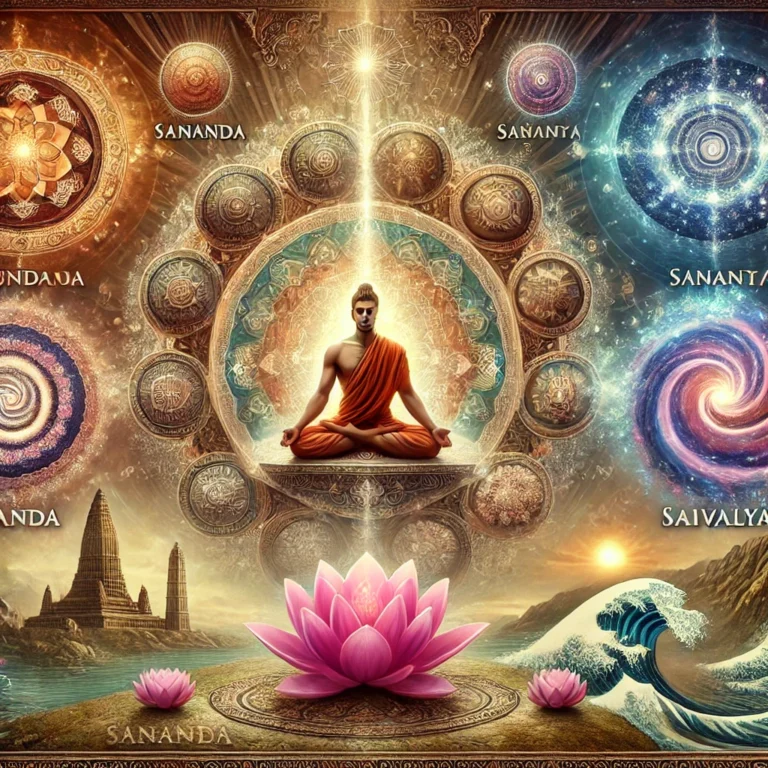
Image: replace with article featured image
The Trap:
- Attachment to bliss becomes a golden cage
- The experience is within prakriti, not transcendent of it
- They’re experiencing a refined material state, not purusha realization
- Eventually, residual karmas force rebirth
Why They Must Return:
Because the seeds of desire—though subtle, though refined—remain unburnt. Videha yogis haven’t achieved viveka-khyāti (discriminative wisdom that burns all seeds). They’ve settled into bliss rather than pushed through to kaivalya.
This aligns with Krishna’s teaching in Bhagavad Gita 6.41-45, where the yoga-bhrashta (fallen yogi) is reborn in favorable circumstances to continue spiritual practice from where they left off.
2. Prakṛti-laya: The I-Am-Ness Dissolvers
What It Means:
Prakṛti-laya means “dissolved in prakṛti” or “merged back into the matrix of nature.” These yogis:
- Achieved Asmita Samadhi (I-am-ness absorption) in previous lives
- Merged their consciousness with Mahat-tattva (महत्तत्त्व), the cosmic intelligence—this is the first evolute of prakṛti, also called Buddhi at the cosmic level
- Dissolved into the pure sense of universal existence itself
- After death, their awareness rests in the deepest layer of material consciousness
- Experience profound peace and universal identity—”I am All”
The Experience:
- Pure sense of existence without specific form
- Awareness merged with the cosmic “I-principle”
- No individual ego, yet not true Self-realization
- Resting in primordial sattvic equilibrium
The Trap:
- This state is the highest material existence, but it’s still material
- It’s रूपरहित (formless), yes—but it’s not चित् (pure consciousness)
- The prakṛti-laya yogi has reached the ceiling of nature, not escaped it
- When the cosmic cycle resets (प्रलय, pralaya), they must manifest again
Why They Must Return:
The residual samskaras tied to this subtle I-am-ness eventually propel them back into manifestation. They experience pseudo-kaivalya (जड़ कैवल्य)—an isolation that looks like liberation but lacks the irreversible clarity of true viveka.
The Core Distinction: Bhava-Pratyaya vs. Upāya-Pratyaya
Vyasa makes a crucial philosophical distinction that Patanjali doesn’t explicitly state but implies:
Asamprajñata Samadhi Has Two Paths
-
- Bhava-Pratyaya Asamprajñata Samadhi
- Caused by existence itself (previous attainment)
- Arises naturally for bhava pratyaya videha yogis and prakṛti-laya yogis
- Inherited capacity, not current effort
- Feels effortless—which is precisely the problem
- Upāya-Pratyaya Asamprajñata Samadhi (Covered in Sutra 1.20)
- Caused by deliberate means (practice in this life)
- Requires श्रद्धा, वीर्य, स्मृति, समाधि, प्रज्ञा (faith, vigor, memory, absorption, wisdom)
- Conscious cultivation, step by step
- Harder—but leads to irreversible liberation
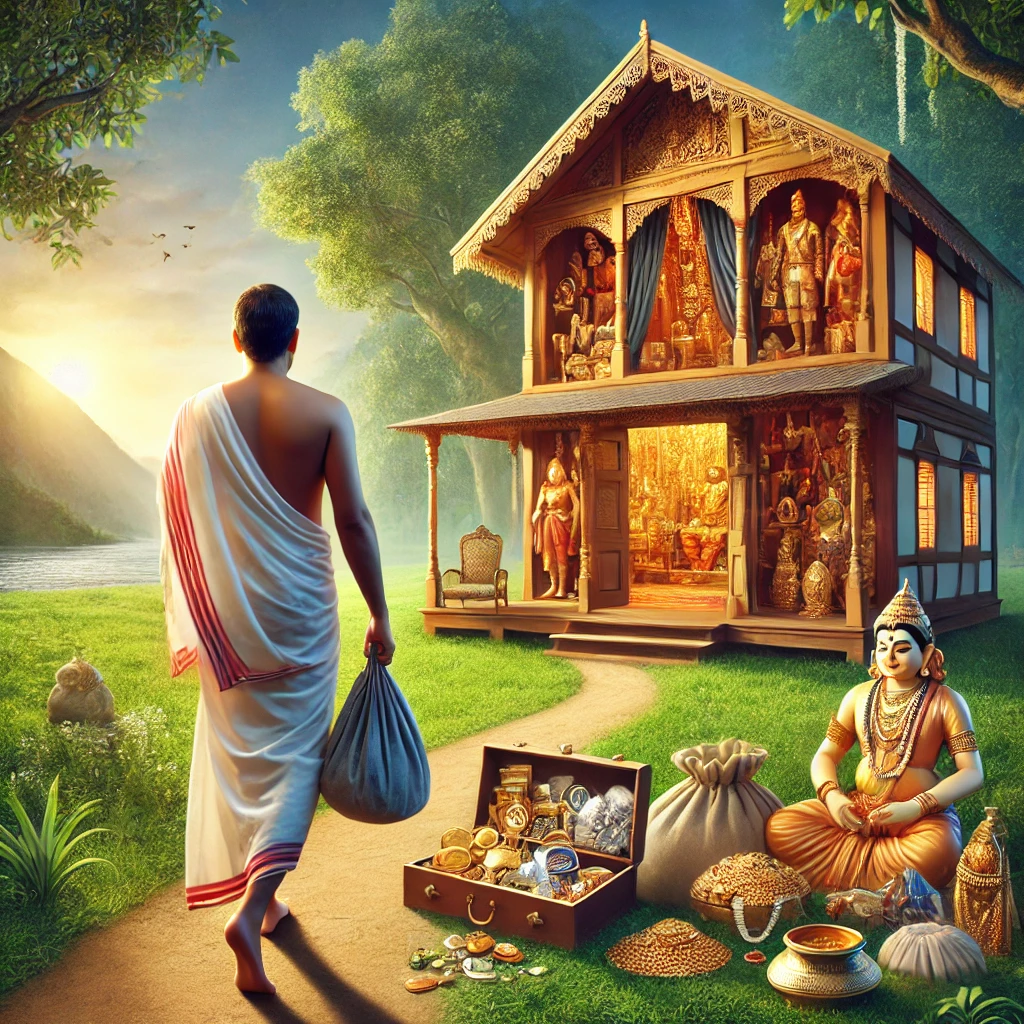
Image: replace with article featured image
Virāma-Pratyaya: Understanding the Cause of Cessation
Here’s where it gets philosophically intricate. In Sutra 1.18, Patanjali mentioned:
Virāma-pratyaya-abhyāsa-pūrvah saṁskāra-śeṣo’nyah
This describes asamprajñata samadhi for ordinary practitioners: it arises through the practice (अभ्यास) of virāma-pratyaya—the cognition of cessation.
But bhava pratyaya videha yogis and prakṛti-laya yogis don’t need virāma-pratyaya practice.
Why? Because they already have the virāma-pratyaya cognition carried over from past lives. Their mental organ (citta) already knows how to cease all fluctuations. It’s muscle memory at the level of consciousness.
The Problem With Inherited Capacity
Think of it like this:
-
-
-
- Ordinary Yogi: Learns to play the piano from scratch. Practices scales. Builds technique through deliberate, conscious effort. Develops deep understanding of why each note works.
- Bhava Pratyaya Videha Yogi: Born with the ability to play Beethoven’s Moonlight Sonata perfectly. Never learned it. Just… can. But doesn’t understand the theory. Can’t teach others. And doesn’t know why it works.
-
-
The second pianist has the performance. The first has the mastery.
In spiritual terms:
-
-
-
- Videha/prakṛti-laya yogis have the experience of samadhi
- But they lack the viveka-ja jñāna (knowledge born of discrimination) that makes liberation irreversible
- They’re like trust-fund kids in the realm of consciousness—privileged but not self-made
-
-
The Universal Truth: Death Doesn’t Check Your Balance Sheet
Before we examine the three paths ahead for bhava pratyaya videha yogis, let’s pause to recognize something that transcends all religious boundaries, all spiritual traditions, all philosophical systems:
Nothing you inherit—whether wealth, power, status, or capacity—truly belongs to you.
This isn’t a Hindu teaching. This isn’t a Yoga philosophy principle. This isn’t even a spiritual concept.
This is observable cosmic law.
The Material Evidence: COVID-19 and the Illusion of Ownership
During the COVID-19 pandemic, this truth revealed itself with brutal clarity across every culture, every religion, every economic system on Earth.
Some of America’s wealthiest business owners—people with billions in assets, access to the best healthcare, private medical teams, every conceivable resource—still died. Their wealth couldn’t purchase immunity from death. The virus didn’t check bank accounts before entering cells. It didn’t spare the powerful. It didn’t negotiate with billionaires.
Examples from recent history:
-
-
- Sheldon Adelson – Casino magnate with $33 billion net worth, died January 2021 from complications of non-Hodgkin’s lymphoma despite access to world-class medical care
- Red McCombs – Auto dealer and real estate billionaire, died February 2023
- Countless other ultra-wealthy individuals across all nations who, despite resources most people can only imagine, couldn’t escape fundamental biological laws
-
The pattern is clear and religiously neutral: material wealth is borrowed and must be returned. You don’t own it. You’re temporarily using it. When your time ends, it goes back into circulation.
A Christian billionaire dies. An atheist billionaire dies. A Muslim billionaire dies. A Hindu billionaire dies. A Buddhist billionaire dies.
Death makes no theological distinctions. The cosmos reclaims what was always its own.
Beyond Religion: The Cosmic Principle
This observation doesn’t require you to:
-
-
- Believe in karma
- Accept reincarnation
- Practice meditation
- Follow any spiritual path
- Subscribe to any religious framework
-
It simply requires you to observe reality.
Every human who has accumulated wealth, power, knowledge, or capacity has eventually returned it all. No exceptions. Not one person in recorded history has kept their acquisitions beyond death. Not the pharaohs with their pyramids. Not the emperors with their dynasties. Not the billionaires with their empires.
This is not theology. This is physics. This is biology. This is observable fact.
The universe operates on a rental system, not an ownership system. You can use resources temporarily. You cannot possess them permanently.
The Spiritual Application: Patanjali’s Insight on Inherited Capacity
Now, here’s where Patanjali’s teaching on bhava pratyaya videha yogis becomes profound:
The same cosmic principle that governs material wealth also governs spiritual attainments.
This is what makes Yoga Sutras a scientific text rather than a religious scripture. Patanjali isn’t asking for faith. He’s pointing to observable patterns that operate whether you believe in them or not.
The Spiritual Wealth Parallel
Bhava pratyaya videha yogis have inherited extraordinary spiritual capacities:
-
-
- Effortless entry into samadhi
- Spontaneous experiences of cosmic bliss
- Natural absorption in meditation
- Inherited discriminative capacity from past practice
-
But just as billions of dollars don’t guarantee physical survival, these spiritual experiences don’t guarantee liberation.
Why? Because in Yoga philosophy’s framework, these experiences still belong to prakriti (nature/cosmos), not to purusha (witnessing consciousness).
The bliss? It’s सात्त्विक (sattvic) manifestation—refined, sublime, beautiful—but still within the domain of the three gunas (qualities of nature). The cosmic consciousness? It’s awareness merged with Mahat-tattva—the highest evolute of prakriti, yes, but still an evolute of prakriti. The effortless samadhi? It’s citta achieving perfect stillness—but citta itself is a product of prakriti.
Or, in non-Yogic terms: These experiences are states of consciousness, not consciousness itself. States arise and pass. Consciousness remains.
The Trap of Spiritual Privilege
Here’s where bhava pratyaya videha yogis face their unique danger:
The billionaire who inherits wealth might at least know intellectually that death will take everything. But the naturally gifted yogi? Their experiences feel so transcendent, so infinite, so free that they mistake them for ultimate liberation.
They think:
-
-
- “I’ve dissolved into infinite bliss—this must be moksha!”
- “I’ve merged with cosmic consciousness—I am the All!”
- “Samadhi comes effortlessly—I’ve achieved what others struggle lifetimes for!”
-
But Patanjali says: No. You’ve achieved what a trust-fund child achieves—access to resources you didn’t earn through conscious effort. And just like inherited material wealth, these spiritual experiences will be reclaimed by the cosmos.
When the Cosmos Reclaims What’s Hers
In Yoga philosophy’s framework:
For the videha yogi dissolved in bliss: When the karmic momentum sustaining that celestial absorption exhausts itself, prakriti pulls consciousness back into manifestation. Rebirth occurs.
For the prakṛti-laya yogi merged with cosmic intelligence: When the great cosmic cycle resets (प्रलय, pralaya), even Mahat-tattva dissolves back into mula-prakriti, and the yogi must manifest again.
The parallel is exact:
-
-
- Material billionaire dies → Wealth returns to circulation in the economy (prakriti’s material domain)
- Spiritual adept dies → Experience-capacity returns to circulation in the cosmic cycles (prakriti’s subtle domain)
-
Neither truly “owned” what they had. Both were temporarily stewarding the cosmos’s resources—one material, one subtle.
The Only Thing That Transcends
What doesn’t get reclaimed by the cosmos?
In Patanjali’s framework: Viveka-khyāti—the discriminative wisdom that realizes: “I am not prakriti. I am purusha. All experiences, all states, all attainments are objects witnessed by me, not identical with me.”
In universal terms: The recognition that you are the witnessing awareness, not the contents of awareness.
This wisdom:
-
-
- Isn’t an experience (experiences are temporary states that arise and pass)
- Isn’t a state (states are fluctuations that come and go)
- Isn’t an attainment (attainments are achievements that can be lost)
-
It’s the irreversible recognition of what you actually are: the witnessing consciousness that was never born, never dies, and never belongs to the realm of temporary phenomena.
This is why:
-
-
- The ordinary practitioner building discrimination through struggle often surpasses the naturally gifted
- Conscious cultivation (upāya-pratyaya) leads to irreversible insight
- Inherited capacity (bhava-pratyaya) without discrimination leads to rebirth/re-experiencing
-
The billionaire’s child might enjoy luxury but remain spiritually empty. The self-made entrepreneur who built from nothing often has deeper wisdom. The same pattern holds in spiritual life—and this pattern transcends all religious frameworks.
Why This Matters: The Three Gates Ahead
When these bhava pratyaya videha yogis eventually take birth again (and they must, due to residual samskaras), what happens?
Patanjali will address this in subsequent sutras, but the classical commentaries outline three possible paths:
Path 1: Sadyo-Mukti (Immediate Liberation)
For yogis who developed viveka-khyāti before death:
-
-
-
- All kleshas destroyed as burnt seeds
- Even the subtle body dissolves
- No rebirth
- Direct kaivalya
-
-
This is NOT the videha/prakṛti-laya path. These yogis don’t need bhava-pratyaya because they’re already free.
Path 2: Krama-Mukti (Gradual Liberation via Īshvara’s Citta)
For yogis attached to bliss or I-am-ness:
-
-
-
- After death, merge into Īshvara’s consciousness (आदित्यलोक)
- Purify remaining samskaras in that refined space
- Eventually achieve kaivalya without physical rebirth
- This is the videha route when practiced with awareness
-
-
Image: replace with article featured image
Path 3: Avatāra (Conscious Return for Service)
For yogis who achieved viveka but choose return:
-
-
-
- Complete freedom attained
- Return to physical form by choice, not compulsion
- Serve as teachers, guides, liberators
- Bhagavad Gita references this (4.6-9)
-
-
The Key: All three paths transcend bhava-pratyaya eventually. The videha/prakṛti-laya states are transitional, not terminal.

The Bridge to Sutra 1.20: The Path for Everyone Else
Patanjali’s next sutra will address those who don’t have bhava-pratyaya inheritance. Those who must build their path from scratch in this lifetime.
For them, the route is:
Shraddha-virya-smriti-samadhi-prajna-purvaka itaresham
Coming next: The five essential qualities that transform ordinary practitioners into extraordinary yogis—without relying on past-life privileges.
Closing Reflection
Patanjali’s teaching in Sutra 1.19 is deeply compassionate. He’s not dismissing natural capacity. He’s not saying inherited attainment is worthless. He’s simply pointing out its limitation.
The videha/prakṛti-laya states are sublime—but not final.
Think of them like this:
-
-
-
- A child prodigy pianist can play Chopin at age 8
- Extraordinary? Yes.
- Complete musicianship? Not yet.
- They still need to learn composition, theory, teaching
- The gift is real—but it’s not the whole journey
-
-
Similarly, bhava pratyaya videha yogis have real attainment. Genuine capacity. Beautiful experiences. But:
-
-
-
- Bliss is not liberation
- Cosmic consciousness is not kaivalya
- Effortless samadhi is not irreversible freedom
-
-
The path continues.
And paradoxically, those who start without natural advantages often finish first—because they’re forced to build conscious understanding, unwavering discrimination, and complete para-vairagya from the ground up.
The trust-fund child and the self-made entrepreneur both can reach the same destination. But their journeys—and their understanding—will be fundamentally different.
Patanjali invites us all to be self-made in the realm of consciousness.
Next: Shraddha, Virya, Smriti, Samadhi, Prajna—The Five-Fold Path for Ordinary Practitioners (Sutra 1.20)
Key Takeaways
✓ Bhava pratyaya videha yogis access samadhi through inherited capacity from past lives, not current practice
✓ Videha yogis are attached to Ananda (bliss) and merge into celestial absorption after death
✓ Prakriti-laya yogis are attached to Asmita (I-am-ness) and dissolve into cosmic intelligence
✓ Both states are within prakriti, not transcendent of it—they’re sublime but not final
✓ Residual samskaras force eventual rebirth or require purification in Īshvara’s consciousness
✓ Universal pattern: Nothing inherited—material or spiritual—truly belongs to you; cosmos reclaims everything
✓ COVID-19 evidence: Extreme wealth (Sheldon Adelson $33B, Red McCombs) couldn’t prevent death—observable across all religions
✓ Cosmic rental system: Material wealth returns to economy at death; spiritual experiences return to cosmic cycles—temporary stewardship, not permanent ownership
✓ Upāya-pratyaya path offers conscious cultivation for those without inherited capacity
✓ True liberation requires viveka-khyāti that destroys all kleshas as burnt seeds
✓ Three post-death paths: immediate kaivalya, gradual liberation via Īshvara’s citta, or conscious return as avatāra
Feature Image: Click here to view the image.
Videos
Read on
- https://medium.com/p/inherited-meditative-states-and-the-subtle-work-of-inner-freedom-patanjali-yoga-sutra-1-19-870551b7d2d0
- https://x.com/HinduInfopedia/status/2000148754436157652?s=20
- https://www.facebook.com/share/p/1ApzxVqXMb/
Glossary of Terms
- Bhava Pratyaya: A condition where meditative absorption arises due to mental impressions carried over from previous lives rather than present-life effort.
- Videha: A yogic state where consciousness becomes free from bodily identification and rests in blissful absorption, yet remains within nature.
- Prakṛti-Laya: A state in which awareness dissolves into the primordial matrix of nature, merging with its most subtle level without attaining liberation.
- Samadhi: A deep meditative absorption where mental fluctuations cease and awareness becomes unified with its object.
- Asamprajñata Samadhi: A form of samadhi beyond object-based awareness, marked by complete cessation of mental activity.
- Samprajñata Samadhi: Meditative absorption that includes awareness of subtle objects such as bliss, ego-sense, or refinement.
- Ananda Samadhi: A bliss-based meditative absorption experienced within refined sattvic consciousness.
- Asmita Samadhi: Absorption rooted in the subtle sense of “I-am-ness” prior to individuality.
- Citta: The mental field comprising intellect, ego, and mind that reflects consciousness.
- Vritti: A mental modification or fluctuation occurring within the citta.
- Citta-Vritti-Nirodha: The restraint or cessation of mental fluctuations, defined as the core practice of yoga.
- Samskara: Subtle latent impressions formed by past actions and experiences that influence future tendencies.
- Viveka-Khyāti: Irreversible discriminative wisdom that clearly distinguishes consciousness from nature and leads to liberation.
- Vairagya: Non-attachment toward experiences, objects, and even subtle spiritual states.
- Para-Vairagya: Supreme non-attachment extending beyond the gunas and refined meditative states.
- Prakṛti: Primordial nature composed of the three gunas from which all material manifestation arises.
- Purusha: Pure consciousness, distinct from nature, witnessing without modification.
- Gunas: The three fundamental qualities of nature—sattva, rajas, and tamas—that shape experience.
- Kaivalya: Absolute liberation where consciousness stands completely independent of nature.
- Mahat-Tattva: The first cosmic principle emerging from prakṛti, representing universal intelligence.
- Ling Sharira: The subtle body that carries impressions across lifetimes.
- Krama-Mukti: Gradual liberation attained through continued purification without physical rebirth.
- Sadyo-Mukti: Immediate liberation achieved through complete destruction of all causes of bondage.
- Yoga Sutra One Point Nineteen: A sutra describing samadhi that arises from previous existence rather than deliberate practice.
- Upaya-Pratyaya: Samadhi achieved through conscious means such as discipline, effort, and wisdom.
#Yoga #Samadhi #Meditation #Vedanta #HinduinfoPedia #PatanjaliYogaSutraExplained #पतंजलियोगसूत्रकीव्याख्या #YogaPhilosophy #Meditation #YogicPractice #Patanjali #पतंजलियोगसूत्रकाविस्तार
Past Blogs of The Blogs
- Vedic science and its legacy
- Hindu Sacred Texts: The Building Blocks of Hinduism
- Yoga Day and Ashtanga Yoga In Hindu Philosophy
- Patanjali and His Ashtanga Yoga
- Patanjali Yoga Sutras: Understanding “Atha Yoganushasanam”
- Patanjalis yoga sutra: Understanding Yogashchittavrittinirodhah
- Yoga Learning: Unraveling ‘Yogashchittavrittinirodhah’
- Yoga Rupe Vritti – Managing Mind Modifications through Yoga
- Yoga and Vritti Types: Navigating Mental Modifications
- Yoga Sutras’ Five Vrittis: Mastering Mind Through Ancient Wisdom
- Yoga Sutras’ Pramana Vritti: Exploring Sources of True Knowledge
- Yoga Sutras’ Viparyaya Vritti: Misconceptions and Clarity
- Yoga Sutras’ Vikalpa Vritti: Unraveling Mind’s Illusions
- Yoga Sutras’ Sleep Vritti: Unveiling the Depths of Conscious Rest
- Yoga Sutras’ Memory Vritti: Unraveling the Threads of Recall
- Yoga Sutra Practice Non-Attachment: Mastering Mind and Embracing Tranquility
- Yoga Vritti Restraint Method: Mastering Mindful Discipline
- Yoga Long Term Discipline: Mastering the Art of Sustained Practice
- Yoga Renunciation of Desires: A Path to Inner Peace
- Yoga Beyond Gunas Attachment: Unlocking the Secrets of Sutra
- Samadhi Stages Unfolded: Samadhi Practice- Yoga Sutra 1.17
- https://hinduinfopedia.org/beyond-cognitive-samadhi-understanding-asamprajnata-samadhi/
- https://hinduinfopedia.org/practice-of-para-vairagya-yoga-sutra/
- https://hinduinfopedia.org/patanjali-yoga-sutra-glossary-understanding-yoga-sutra-terms-i/
- https://hinduinfopedia.org/patanjali-yoga-sutra-terms-explained-understanding-yoga-sutra-terms-ii/
- https://hinduinfopedia.org/beyond-liberation-videha-prakriti-laya-yoga-sutras-1-18-1-19/
Later Blogs of The Blogs
- https://hinduinfopedia.org/five-stage-path-to-samadhi-for-ordinary-yogis-sutra-1-20/ https://tinyurl.com/y8zwn6cf
- https://hinduinfopedia.org/yoga-practice-and-yogic-intensity/ https://hinduinfopedia.in/%e0%a4%af%e0%a5%8b%e0%a4%97%e0%a4%be%e0%a4%ad%e0%a5%8d%e0%a4%af%e0%a4%be%e0%a4%b8-%e0%a4%8f%e0%a4%b5%e0%a4%82-%e0%a4%af%e0%a5%8b%e0%a4%97%e0%a4%bf%e0%a4%95-%e0%a4%a4%e0%a5%80%e0%a4%b5%e0%a5%8d/
- https://hinduinfopedia.org/ishvara-pranidhana-the-direct-path-to-samadhi/ https://hinduinfopedia.in/%e0%a4%88%e0%a4%b6%e0%a5%8d%e0%a4%b5%e0%a4%b0-%e0%a4%aa%e0%a5%8d%e0%a4%b0%e0%a4%a3%e0%a4%bf%e0%a4%a7%e0%a4%be%e0%a4%a8-%e0%a4%b8%e0%a4%ae%e0%a4%b8%e0%a5%8d%e0%a4%a4-%e0%a4%95%e0%a5%8d%e0%a4%b0/
Reference
- https://archive.org/details/in.ernet.dli.2015.327483/page/n207/mode/1up
- https://archive.org/details/ambl_patanjali-yoga-sutra-by-swami-vivekananda/page/28/mode/1up
Follow us:
- English YouTube: https://www.youtube.com/@Hinduofficialstation
- Hindi YouTube: https://www.youtube.com/@HinduinfopediaIn
- X: https://x.com/HinduInfopedia
- Instagram: https://www.instagram.com/hinduinfopedia/
- Facebook: https://www.facebook.com/Hinduinfopediaofficial
- Threads: https://www.threads.com/@hinduinfopedia
Browse Through All Blogs
Leave a Reply