
Category: Bharat

Home » Bharat
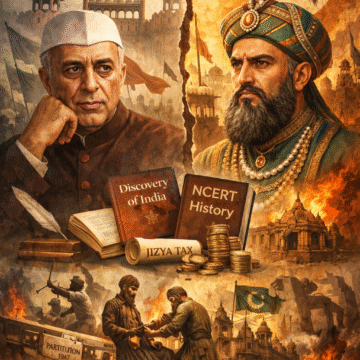
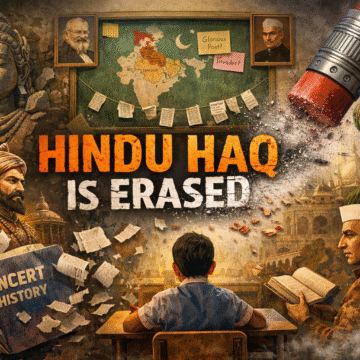
NCERT textbook, Indian history education, civilizational narrative, Gupta Empire scholar, Mughal emperor throne, classroom symbolism, historical memory, Aurangzeb debate, Shivaji representation, educational conditioning, India map chalkboard, narrative contrast digital art, Haq Film Sparks Query
Post

Haq Film Sparks Query: Where Did This Contempt for Hindus Get Manufactured?

This analysis examines how educational narratives shape civilizational perception. Using the Haq film as an entry point, it reviews NCERT textbook patterns, representation of the Gupta and Mughal empires, portrayal of Shivaji and Aurangzeb, Nehru’s historiography, and theological debates—arguing that institutional structures influence how generations understand Hindu civilizational identity.

Raktbeej thesis, Devi Mahatmya symbolism, Kali archetype, civilizational diagnostic, mythological encoding, Vedic science concept, replication metaphor, symbolic warfare art, Hindu philosophy illustration, cosmic geometry background, conceptual political art, dark editorial cover design
Post

रक्तबीज सिद्धांत: आधुनिक समझ से परे का प्राचीन निदान

रक्तबीज सिद्धांत एक प्राचीन सभ्यतागत निदान के रूप में प्रस्तुत किया गया है, जो यह तर्क देता है कि कुछ संघर्षात्मक संरचनाएँ पराजय से समाप्त नहीं होतीं बल्कि पुनरुत्पादित होती हैं। लेख देवी महात्म्य की कथा, जनसांख्यिक आँकड़ों, मध्य पूर्व के उदाहरणों और वैश्विक संस्थागत ढांचों के विश्लेषण के माध्यम से इस प्रतिरूप को समझाने का प्रयास करता है।

Purusha Vishesha, Ishvara, Yoga Sutra 1.24, Patanjali Yoga Sutras, Supreme Consciousness, Samkhya philosophy, pure awareness, klesha karma vipaka ashaya, samsara cycle, sattva guna, Hindu philosophy, Vedic wisdom, meditation art, cosmic spirituality, Indian spiritual philosophy
Post

Purusha Vishesha Ishvara: The Supreme Consciousness Beyond All Afflictions (Yoga Sutra 1.24)

Patanjali's Yoga Sutra 1.24 defines Purusha Vishesha Ishvara as the special consciousness eternally untouched by kleshas, karma, vipaka, and ashaya—the four chains binding all beings to samsara. Distinct from ordinary and even liberated purushas, Ishvara holds a pure sattvic chitta out of sovereign compassion, singular in sovereignty, and serves as the ultimate object of Ishvara Pranidhana surrender for swift samadhi. This operational definition bridges ancient philosophy with practical yoga. (58 words)

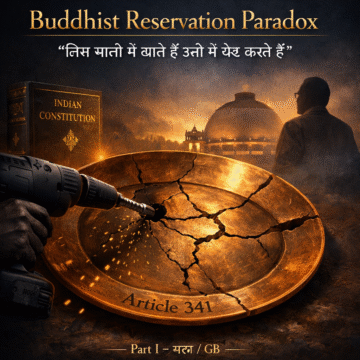
Buddhist Reservation Paradox, Article 341, Indian Constitution, cracked bronze plate, political symbolism, Deekshabhoomi, Ambedkar silhouette, reservation debate, constitutional conflict, social justice discourse, civilizational metaphor, Hindi proverb symbolism, बौद्ध आरक्षण विरोधाभास
Post

बौद्ध आरक्षण विरोधाभास: जिस थाली में खाया उसी में छेद किया

बौद्ध आरक्षण विरोधाभास उस संवैधानिक और वैचारिक टकराव को उजागर करता है जहाँ २२ प्रतिज्ञाओं के माध्यम से हिंदू धर्म का औपचारिक त्याग करने वाले व्यक्ति अनुसूचित जाति आरक्षण के लाभ प्राप्त करते रहते हैं। यह लेख वर्ण, जाति, औपनिवेशिक नीतियों और अनुच्छेद ३४१ की पृष्ठभूमि में इस संस्थागत विरोधाभास का विश्लेषण प्रस्तुत करता है।

Rigveda, Indra, Vajra, Vritra slaying, Vedic protection, thunderbolt weapon, cosmic battle, divine warrior, Rigvedic mantras, svārajyam, Gotama Rahugana, liberation of waters, ancient Hindu scripture, spiritual defense, Vedic hymns, Indra Vritra, thousand-pointed vajra, Hindu mythology, protection shield, Rigveda 1.80, divine power, Sanskrit verses, enlightenment energy, warrior deity, storm god, Vedic wisdom
Post

Rigvedic Protection Shield Using RV 1.80 Verses

Rigvedic Protection Mantras in RV 1.80 reveal Indra’s thunderbolt doctrine—sixteen verses of escalating force culminating in the slaying of Vṛtra and the release of life-giving waters. From the command “Go forward, meet the foe” to the thousand-pointed iron vajra, this hymn encodes sovereignty, decisive engagement, and liberation through divine power.

Indo Kids Elite Rebels, zero-risk activism, dynastic heirs, manufactured dissent, privilege rebellion, Indian politics, rebranded rebels, elite activism, political nepotism, designer revolution, Hindu Infopedia, NDA effect, Nepal contrast, credential laundering, victim narrative
Post

Indo Kids Elite Rebels: When Power’s Children Lead the Revolt Against Power

This blog dissects how India's Indo Kids elite rebels—privileged dynastic heirs—perform rebellion against power while preserving it through zero-risk activism, credential laundering, cause adoption, aesthetic construction, and victim narratives. Contrasting genuine bottom-up revolts (Nepal's Nepo Kids uprising) exposes the top-down manufactured dissent pipeline, amplified by media and international networks, as elite adaptation to democratic threats.

RSS, character formation, discipline, national development, corporate ethics, leadership, Indian culture, organized training, sunrise symbolism, institutional strength
Post

RSS Character Manufacturing System: Global Export Possibility

This article explores how the RSS Character Manufacturing System: global export possibility scales from shakhas to corporations and national governance. It argues that disciplined mentorship, corrective authority, and service orientation can address the human manufacturing crisis, offering a structured framework for restoring character formation in workplaces, citizenship, and civilizational institutions worldwide.

Jauhar, Chittor Fort, Rajput History, Theological Warfare, Islamic Conquest, Hindu Resistance, Medieval India, Siege of Chittor, Rajput Women, Civilizational Conflict, Rajasthan History, Honor Death Tradition
Post

जोहर से सती तक: मान-मर्यादा आधारित जीवन-मृत्यु परंपरा का विस्तार

जोहर से सती तक की ऐतिहासिक यात्रा यह दर्शाती है कि किस प्रकार 1303 से 1947 तक चले दीर्घकालिक आक्रमण दबाव ने राजस्थान जैसे सीमांत क्षेत्रों में मान-आधारित जीवन-मृत्यु संरचना को जन्म दिया। यह प्रथा सार्वभौमिक धार्मिक आदेश नहीं थी, बल्कि विशिष्ट ऐतिहासिक परिस्थितियों की सांस्कृतिक प्रतिक्रिया थी।

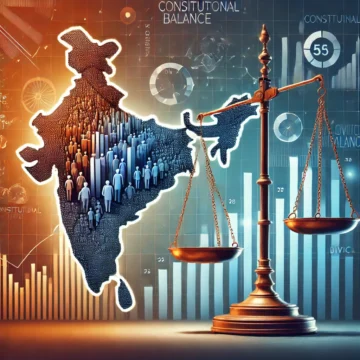
constitutional governance, civic balance, demographic analysis, India map, electoral trends, data visualization, political study, justice scale, social dynamics, policy discussion, स्थानीय जनसंख्या बदलाव विश्लेषण
Post

स्थानीय जनसंख्या बदलाव विश्लेषण: योगी आदित्यनाथ का निर्णायक मोड़ (1947-2025)

स्थानीय जनसंख्या बदलाव विश्लेषण यह परीक्षण करता है कि जनसंख्या सीमाएँ किस प्रकार राजनीतिक प्रतिनिधित्व, सामाजिक संरचना और प्रशासनिक संतुलन को प्रभावित करती हैं। मुर्शिदाबाद, मालेगाँव, मलप्पुरम और नूह से लेकर फ्रांस, स्वीडन, ब्रिटेन तथा लेबनान तक के उदाहरणों के माध्यम से यह अध्ययन दर्शाता है कि क्या समान प्रतिशत स्तर लोकतांत्रिक व्यवस्थाओं में तुलनीय परिणाम उत्पन्न करते हैं।

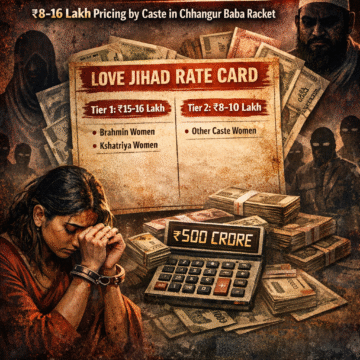
Love Jihad investigation, caste based pricing, forced religious conversion, organized conversion racket, human trafficking India, religious coercion, Hindu women targeting, conversion economics, investigative journalism India, ATS investigation, institutional corruption, demographic warfare, illegal conversions, financial trail, civilizational conflict, लव जिहाद रेट कार्ड
Post

लव जिहाद रेट कार्ड अनावृत: छांगुर बाबा रैकेट में जाति के आधार पर ₹8–16 लाख की कीमत

यह लेख छांगुर बाबा धर्मांतरण रैकेट में सामने आए लव जिहाद रेट कार्ड को उजागर करता है, जहाँ जाति के आधार पर हिंदू महिलाओं की कीमत तय की गई। आधिकारिक बयानों, ज़ब्त दस्तावेज़ों और पीड़ित गवाहियों के आधार पर यह दिखाता है कि कैसे धर्मांतरण एक संगठित, वित्तपोषित और औद्योगिक-स्तरीय शोषण मॉडल में बदल गया।

Hindu worship, sacred boundaries, religious observance, Navratri ritual, devotional gathering, cultural preservation, women in worship, temple traditions, spiritual discipline, faith and identity
Post

Salafist Trojan Technique in Practice: Muslim Girls in Hindu Festival Infiltration

This analysis examines how the Salafist Trojan Technique in Practice scales from individual interactions to institutional influence. Drawing parallels from the UK grooming gang scandal, Indian interfaith controversies, and festival boundary disputes, it argues that recurring patterns, doctrinal asymmetries, and enabling institutions transform isolated incidents into systematic civilizational pressure—requiring clarity, boundary maintenance, and informed community response.

disciplined education, teacher authority, character building, structured learning, educational hierarchy, value-based schooling, social discipline, institutional order, youth formation, civilizational education, RSS Character Manufacturing Model
Post

RSS Character Manufacturing Model: Global Export Possibility

The article explains why the RSS Character Manufacturing Model: Global Export Possibility is not theory but a civilizational necessity. It traces the global human manufacturing crisis to the collapse of discipline and hierarchy, and shows how the RSS shakha system—rooted in authority, service, and structured correction—offers a scalable solution beginning with schools and families.

Indian history, historiography, historical analysis, ancient temples, civilizational memory, scholarly research, narrative framing, cultural heritage, history writing
Post

Aurangzeb in Nehru’s Writings: How “Hardworking and Sincere” Neutralized Systematic Persecution

This blog examines Aurangzeb in Nehru’s Writings to expose a systematic historiographical technique that humanizes religious persecution through virtue-first framing, euphemistic language, and strategic omissions. By analyzing Nehru’s portrayal of Aurangzeb, it reveals how doctrinally driven violence was reframed as personal complexity, shaping Indian historical consciousness for over seven decades.

Nupur Sharma, Supreme Court of India, free speech, judicial bias, victim blaming, fear based jurisprudence, religious violence, constitutional crisis, mob pressure, rule of law, judicial failure, freedom of expression
Post

Nupur Sharma Declared Culprit: When Supreme Court Blames the Victim for Violence

The Nupur Sharma case exposes a deeper judicial crisis in India, where fear of violent reaction overrides constitutional principles. This analysis examines how Supreme Court observations during a procedural hearing inverted causality by blaming a speaker for violence committed by others, abandoning free-speech doctrine, reasoned adjudication, and dharmic concepts of justice.

Indo Kids, narrative shaping, political rebranding, elite power, manufactured dissent, media manipulation, NGOs, dynastic politics, controlled activism, ideological warfare, political analysis, propaganda machinery
Post

Indo Kids Are Made — The Machinery of Elite Rebranding

This analysis explains how “Indo Kids” are manufactured, not born—elite heirs rebranded as activists through media amplification, NGO backing, and international fellowships. As dynastic politics lost direct power, controlled dissent became a survival strategy. The blog exposes how rebellion aesthetics are engineered to preserve elite influence while appearing revolutionary.

Indian secularism, legal asymmetry, constitutional imbalance, Hindu temples, religious freedom, Waqf law, judicial bias, minority rights debate, state control of religion, civilizational conflict, Indian constitution, law and religion, Legal Asymmetry Against Hindus
Post

Legal Asymmetry Against Hindus: How “Secularism” Enables Islamic Dominance

Legal Asymmetry Against Hindus exposes how India’s secular framework selectively protects Islamic practices while imposing state control on Hindu traditions. From Shariat autonomy and Waqf privileges to judicial interventions in Hindu temples, the legal system enforces a two-tier structure. This is not constitutional drift, but deliberate architecture shaping civilizational outcomes.

Indian historiography, Nehru narrative, Islamic invasions, historical revisionism, euphemistic language, civilizational memory, Hindu civilization, conquest and synthesis, colonial mindset, ideological history writing
Post

Nehru Glorifying Islamic Invaders: The ‘Vigorous and Virile’ Narrative

This blog critically examines how Jawaharlal Nehru glorified Islamic invaders through deliberate vocabulary choices that reframed conquest as contribution. By contrasting his admiring language for invaders with his denigrating portrayal of Hindu civilization, the analysis exposes a systematic double standard that shaped Indian historiography, minimized historical trauma, and normalized civilizational subjugation as progress.

judicial corruption, Indian judiciary, institutional failure, Lady Justice, rule of law, judicial accountability, Supreme Court India, legal crisis, corruption symbolism, justice system, constitutional failure, dharma versus law, court ethics, judicial reform, HinduinfoPedia, Institutional Corruption in Indian Judiciary
Post

Institutional Corruption in Indian Judiciary: When Bar Council Admits

This blog examines Institutional Corruption in the Indian Judiciary through insider admissions by senior Bar Council leaders, exposing how judicial self-protection, selective application of law, and in-house inquiries have hollowed accountability. Using constitutional analysis and ancient dharmic principles, it reveals how systemic corruption undermines equality, justice, and public faith in India’s courts.

Partition of India,1947 Partition, Indian subcontinent history, demographic change, India Pakistan split, communal violence, forced migration, civilizational conflict, South Asian history, HinduinfoPedia
Post

Partition Demographic Catastrophe: Yogi Adityanath’s Statistical Proof (1800-1947)

This blog examines the Partition Demographic Catastrophe through historical data, regional case studies, and post-1947 demographic outcomes. From Moplah violence and Kashmir’s transformation to Pakistan’s minority collapse and India’s contrasting pluralism, it evaluates Yogi Adityanath’s safety question using population statistics, legal frameworks, and long-term civilizational patterns.

Saraswati Rajamani, Azad Hind Fauj, female freedom fighters, Indian independence movement, Netaji Subhas Chandra Bose, women spies, anti colonial resistance, World War II India, Rangoon 1940s, unsung heroes, Spy Saraswati Rajamani
Post

Spy Saraswati Rajamani: Azad Hind Fauj Female Spies-II

Spy Saraswati Rajamani: Azad Hind Fauj Female Spies-II Netaji’s Spy Saraswati Rajamani We present the second installment on the little-known spy Saraswati Rajamani, who devoted her youth to the cause of India’s freedom. Every spy knows the mathematics of their profession: eventually, you get caught. The only questions are whether you can escape, and whether you’ll...