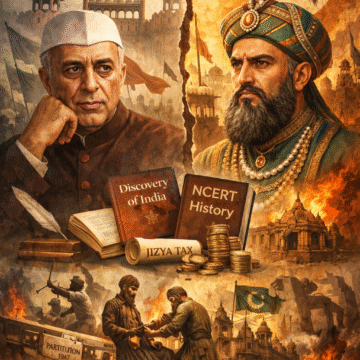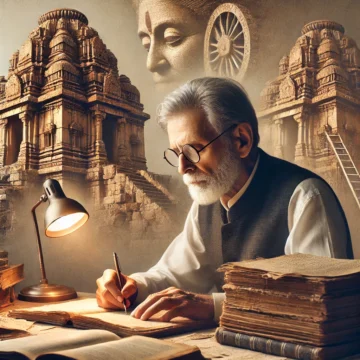

This blog examines Aurangzeb in Nehru’s Writings to expose a systematic historiographical technique that humanizes religious persecution through virtue-first framing, euphemistic language, and strategic omissions. By analyzing Nehru’s portrayal of Aurangzeb, it reveals how doctrinally driven violence was reframed as personal complexity, shaping Indian historical consciousness for over seven decades.
Category: Personalities
Partition Demographic Catastrophe: Yogi Adityanath’s Statistical Proof (1800-1947)
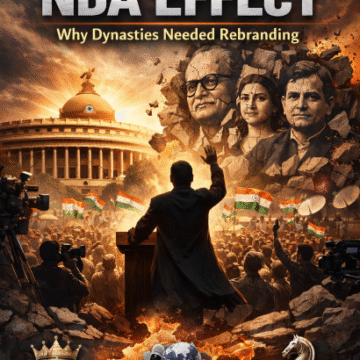
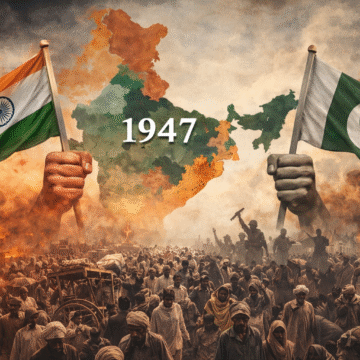
This blog examines the Partition Demographic Catastrophe through historical data, regional case studies, and post-1947 demographic outcomes. From Moplah violence and Kashmir’s transformation to Pakistan’s minority collapse and India’s contrasting pluralism, it evaluates Yogi Adityanath’s safety question using population statistics, legal frameworks, and long-term civilizational patterns.
Spy Saraswati Rajamani: Azad Hind Fauj Female Spies-II
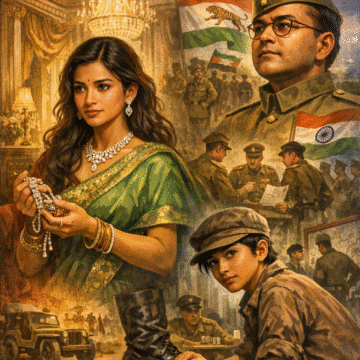
Spy Saraswati Rajamani: Azad Hind Fauj Female Spies-II Netaji’s Spy Saraswati Rajamani We present the second installment on the little-known spy Saraswati Rajamani, who devoted her youth to the cause of India’s freedom. Every spy knows the mathematics of their profession: eventually, you get caught. The only questions are whether you can escape, and whether you’ll...
Saraswati Rajamani: Azad Hind Fauj Female Spies
Saraswati Rajamani: Azad Hind Fauj Female Spies Saraswati Rajamani The Philanthropist Teen On the birth anniversary of one of India’s rare war heroines, Saraswati Rajamani, observed on the eleventh of January, we present a brief tale of her life. Year 1942. Rangoon, present-day Myanmar. In one of the wealthiest neighborhoods, stood a teenage girl, at...
How Nehru Portrayed Muhammad Ghori: Darkest Defeat Became ‘Historical Progress’-II
This article examines How Nehru Portrayed Muhammad Ghori by analyzing the narrative techniques used to transform India’s most consequential military defeat into “historical progress.” By tracing linguistic minimization, symbolic erasure, and euphemistic framing, it explains how the civilizational rupture at Tarain was rendered historically weightless, shaping generations of misunderstanding about conquest, sovereignty, and long-term consequences.
Nehru’s Portrayal of Muhammad Ghori: Darkest Defeat Became ‘Historical Progress’-I
The defeat of Prithviraj Chauhan at the Second Battle of Tarain in 1192 marked the most decisive rupture in Indian history, opening North India to centuries of Islamic rule. This article examines how Nehru’s portrayal of Muhammad Ghori reframed permanent conquest as civilizational transition, severing causation from consequence and erasing historical trauma.
Buddhist Reservation Paradox: Why Buddhists Get SC Benefits
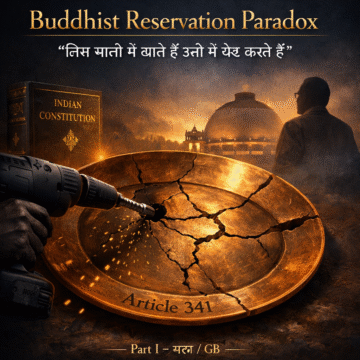
This article examines the Buddhist Reservation Paradox—how Buddhists retain Scheduled Caste benefits while explicitly rejecting the Hindu framework that created those protections. By tracing constitutional amendments, Ambedkarite ideology, judicial patterns, and ethical principles of Dharma, it argues that reservation has become a right detached from responsibility, raising serious questions of equity, gratitude, and constitutional consistency.
Chinmayananda Saraswati: A Beacon of Spiritual Enlightenment
Chinmayananda Saraswati: A Beacon of Spiritual Enlightenment Introducing the Hindu Sher Chinmayananda Saraswati In the tranquil embrace of Ernakulam, Kerala, Chinmayananda Saraswati took his first breath on May 8, 1916, amidst the lush greenery and gentle whispers of nature. Born into a devout Hindu family, his arrival was heralded as auspicious, marked by the chanting...
Sri Aurobindo: The Mystic, Philosopher, and Revolutionary
Sri Aurobindo, born on August 15, 1872, in Calcutta, British India, was a multifaceted personality who contributed as a philosopher, poet, yogi, and freedom fighter. His involvement in the Indian independence movement and his pioneering work in Integral Yoga highlight his impact. After being active in nationalist activities, he shifted focus to spiritual development in Pondicherry, where he created Integral Yoga, a holistic spiritual practice aiming to unify the physical, mental, and spiritual aspects of life. Sri Aurobindo's writings, like "Savitri" and "The Life Divine," showcase his literary genius and philosophical insights, influencing both Eastern and Western thought. His legacy continues through projects like Auroville, which embodies his vision of human unity.