
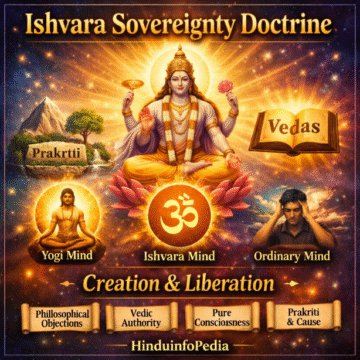
This analysis of Yoga Sutra one point twenty four explains the Ishvara Sovereignty Doctrine through the commentary of Patanjal Yog Pradip by Swami Omanand. It examines four philosophical objections, clarifies the distinction between ordinary, yogic, and Ishvara’s mind, and explains why conscious direction is necessary alongside prakriti to understand creation and liberation.
Tag: Ishvara
Purusha Vishesha Ishvara: The Supreme Consciousness Beyond All Afflictions (Yoga Sutra 1.24)
Patanjali's Yoga Sutra 1.24 defines Purusha Vishesha Ishvara as the special consciousness eternally untouched by kleshas, karma, vipaka, and ashaya—the four chains binding all beings to samsara. Distinct from ordinary and even liberated purushas, Ishvara holds a pure sattvic chitta out of sovereign compassion, singular in sovereignty, and serves as the ultimate object of Ishvara Pranidhana surrender for swift samadhi. This operational definition bridges ancient philosophy with practical yoga. (58 words)
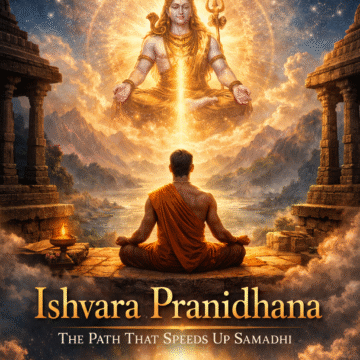
Ishvara Pranidhana In Practice: Path to Samadhi Beyond All Gradations (Yoga Sutra 1.23)-II
Ishvara Pranidhana in practice examines how the yogic principle of surrender operates in real life beyond textual explanation. Moving from doctrine to lived orientation, the article explores daily discipline, psychological effects, modern challenges, misconceptions, and contemporary relevance, showing how surrender matures through practice, guidance, and sustained alignment rather than belief or technique alone.
Ishvara Pranidhana: Path to Samadhi Beyond All Gradations (Yoga Sutra 1.23)-I
This article examines Yoga Sutra 1.23, where Patanjali introduces Ishvara Pranidhana as a means to accelerate samadhi. After outlining graded paths based on effort, the sutra presents surrender as a stabilizing and intensifying orientation. The study interprets Ishvara Pranidhana through classical commentary, psychology, and lived yogic tradition.