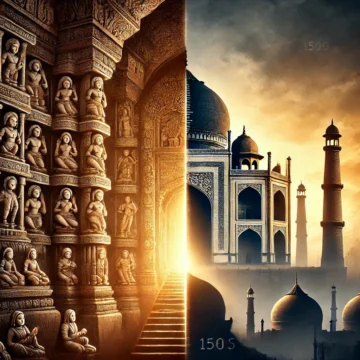

This analysis examines Political Islam versus Sanatan Dharma through Mughal-era governance (1526–1800), testing claims of tolerance against historical evidence. By comparing Mughal rule over Hindu majorities with Hindu kingdoms governing Muslim minorities, the study reveals a persistent safety asymmetry rooted in doctrinal systems rather than individual rulers.
Tag: Islam
इस्लामी सत्ता का विरोधाभास
यह लेख धार्मिक ग्रंथों में निहित उस संरचना का विश्लेषण करता है जहाँ दूत की आज्ञा को ईश्वर की आज्ञा के समकक्ष रखा गया है। पाठीय उदाहरणों के माध्यम से यह दिखाया गया है कि यह व्यवस्था व्यवहार में कैसे दंड, कानून और आधुनिक प्रवर्तन प्रणालियों को प्रभावित करती है, जिससे “इस्लामी सत्ता का विरोधाभास” उत्पन्न होता है।
इस्लामी अधिकार विरोधाभास विश्लेषण – संरक्षण की असमानता से संरचना का अनावरण
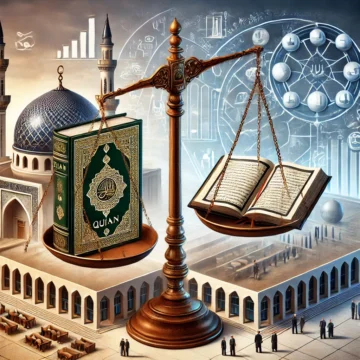
यह लेख इस्लामी अधिकार विरोधाभास का विश्लेषण करता है, जहाँ व्यवहारिक दंड संरचनाएँ यह उजागर करती हैं कि पैग़ंबर मुहम्मद का संरक्षण ईश्वर की तुलना में अधिक कठोर और घातक है। क़ुरआनी आयतों, हदीसों और आधुनिक निंदा-विरोधी कानूनों के तुलनात्मक अध्ययन के माध्यम से यह ब्लॉग दिखाता है कि यह विरोधाभास वैचारिक नहीं, बल्कि विधिक और संरचनात्मक रूप से क्रियाशील है।
Secularism within Islam: Interpreting Modern Meaning of Quranic Texts
In Secularism within Islam: Interpreting Modern Meaning of Quranic Texts, we explore Quranic teachings on governance and individual rights. This segment delves into how Islamic texts advocate for human dignity and ethical state conduct, reflecting secular commitments to justice and equality. By examining historical and contemporary scholarship, we illuminate the interplay between religious doctrines and secular policies.