
Tag: Practice

Home » Practice
Ishvara Pranidhana, yoga practice, surrender, samadhi, Patanjali Yoga Sutra, Hindu philosophy, spiritual discipline, yogic living, inner alignment, grace and effort
Post

Ishvara Pranidhana In Practice: Path to Samadhi Beyond All Gradations (Yoga Sutra 1.23)-II

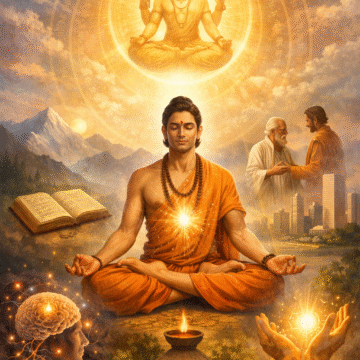
Ishvara Pranidhana in practice examines how the yogic principle of surrender operates in real life beyond textual explanation. Moving from doctrine to lived orientation, the article explores daily discipline, psychological effects, modern challenges, misconceptions, and contemporary relevance, showing how surrender matures through practice, guidance, and sustained alignment rather than belief or technique alone.
Patanjali Yoga Sutras, yogic intensity, samvega, samadhi, meditation, Indian philosophy, spiritual progress, sacred geometry, Vedic wisdom, consciousness studies, yoga practice, enlightenment, ancient Hindu science
Post

Yoga Practice and Yogic Intensity: Spiritual Progress Monitor (Yoga Sutras 1.21-1.22)

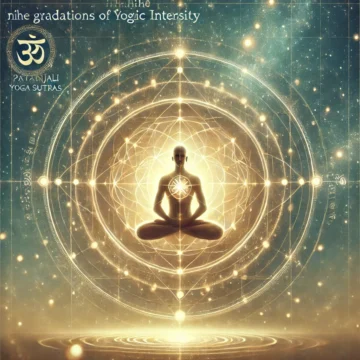
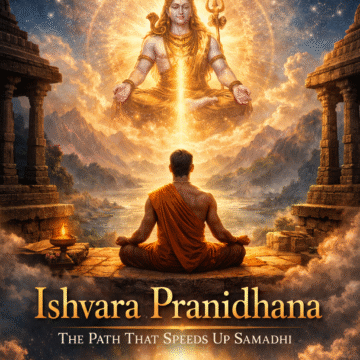
Patanjali’s Yoga Sutras 1.21–1.22 present a precise framework for measuring spiritual progress through nine gradations of yogic intensity. By examining the interplay of inner urgency (संवेग) and method (उपाय), this analysis explains why practitioners advance at different speeds, integrates classical commentary, and situates the system within modern psychological and cultural realities.

Yoga Sutra 1.19, Bhava Pratyaya, Videha Yogis, Prakriti Laya, Samadhi, Viveka Khyati, Spiritual Discernment, Yoga Philosophy, Kaivalya, Patanjali Yoga, Meditation States, Non Attachment, Sankhya Philosophy, Cosmic Consciousness, Spiritual Liberation, Bhava Pratyaya Videha
Post

Bhava Pratyaya Videha Yogis: Spiritual Privilege And Rebirth (Yoga Sutra 1.19)

Bhava Pratyaya Videha Yogis represent inherited meditative capacity carried across lifetimes, granting effortless access to profound samadhi. Patanjali warns that such absorption—whether bliss-based or cosmic—remains within nature unless completed by viveka-khyāti. True liberation arises not from experience alone, but from discriminative wisdom that dissolves even subtle bondage.

Yoga Sutra, Para Vairagya, Asamprajnata Samadhi, Patanjali, Meditation, Nirodha, Hindu Philosophy, Yogic Detachment, Consciousness, Stillness, Yogic Art, Sanskrit Wisdom, Spiritual Illustration, Mind Cessation, Hinduinfopedia, Yoga Philosophy, Meditation Practice, Yoga Knowledge, Detachment, Kaivalya
Post

Practice of Para Vairagya – Yoga Sutra

Patanjali’s Yoga Sutra 1.18 reveals the Practice of Para Vairagya—the supreme detachment that leads the yogi beyond all cognition into Asamprajnata Samadhi. Through Neti-Neti and repeated practice, the mind’s fluctuations cease, leaving only the subtle impressions of stillness. This process culminates in freedom, where consciousness rests in its own radiant nature.