


Buddhist Reservation Paradox: Why Buddhists Get SC Benefits Christians and Muslims Don’t
भारत/GB
Buddhist reservation paradox, ingratitude toward Hindu system, SC reservation policy, Ambedkarite anti-Hindu statements, Rajendra Pal Gautam conversion event, mass Buddhist conversions, constitutional discrimination, Hindu generosity exploited, CJI Gavai controversy, Pattern of using Hindu-granted power against Hindu interests.
Blog 6 | #7: “When Courts Fail Both Ancient Dharma and Modern Jurisprudence”
Why Buddhist Reservation Paradox Matters for Secular Democracy
Following the shoe-throwing incident at the Supreme Court on October 6, 2025, multiple digital media platforms and legal-commentary websites circulated photographs of B. R. Gavai wearing Louis Vuitton footwear reportedly priced at approximately ₹78,000 during official appearances. Several of these outlets framed the images symbolically—arguing that the optics were jarring in light of Justice Gavai’s publicly recorded remarks on Hindu deities and his background as a beneficiary of Scheduled Caste reservation. It is within this externally articulated commentary that some writers have described the episode as a visible manifestation of what they term the Buddhist Reservation Paradox.

According to commentaries, the controversy was not about luxury per se, but about perceived dissonance: a career enabled by a reservation framework financed by Hindu taxpayers, juxtaposed against judicial statements viewed as dismissive of Hindu religious sentiment.
It is within this externally articulated framing—rather than a claim originating here—that commentators have described the episode as a visible illustration of what they term the “Buddhist Reservation Paradox.”
There’s a Hindi phrase that captures this perfectly: “जिस थाली में खाते हैं उसी में छेद करते हैं” – they eat from the plate while drilling holes in it. Hindu society created and funds the reservation system. Does this phrase fit the context? It is for the reader to decide. Hindu acceptance made Buddhist SC status possible in 1990. And how is this generosity repaid? With judicial mockery of Hindu deities, with campaigns to “convert India into a Buddhist nation,” with systematic use of state power against Hindu interests.
The Buddhist Reservation Paradox isn’t just a constitutional contradiction—it’s a study in institutional ingratitude.
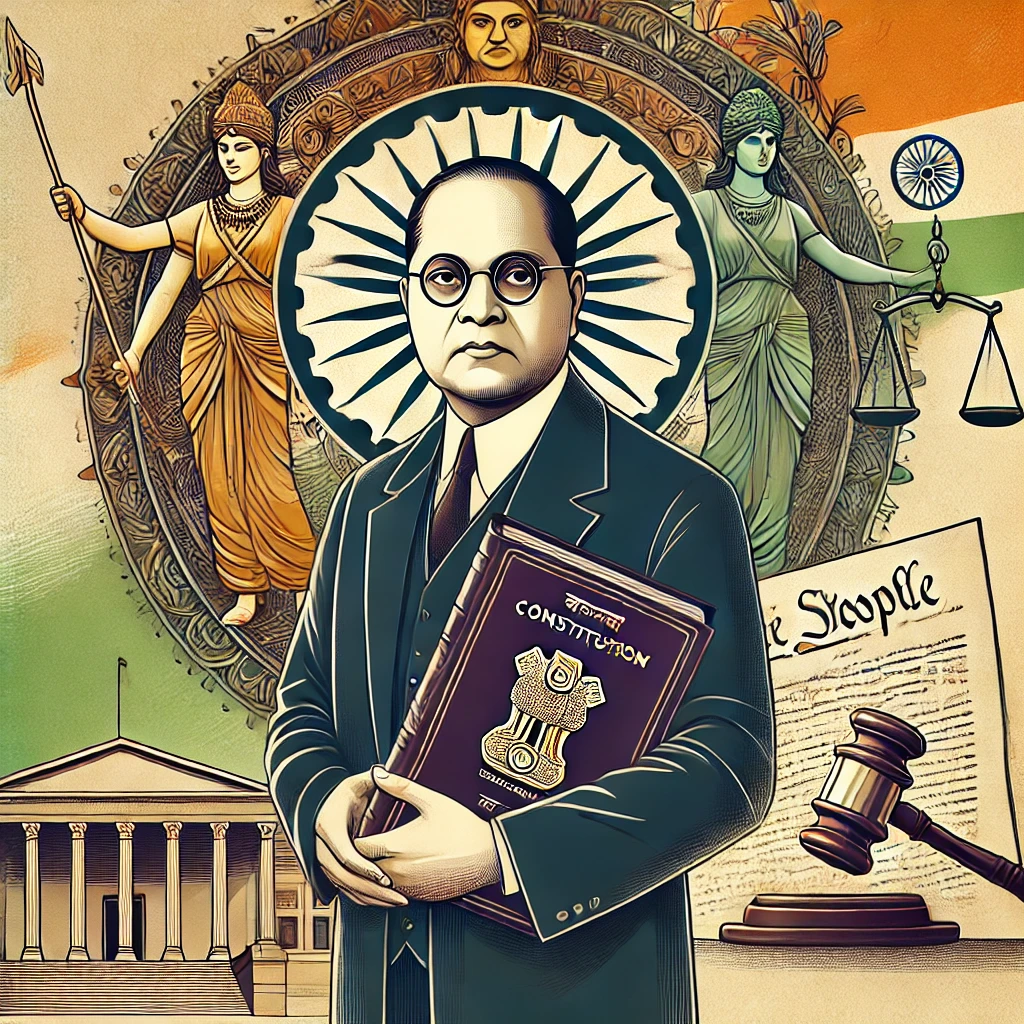 Featured Analysis: The Ambedkarite Framework
Understanding the Buddhist Reservation Paradox requires examining Ambedkar’s actual vision for Buddhist conversion—it wasn’t about spiritual enlightenment, it was about political separation from Hinduism.
Ambedkar’s 22 vows weren’t theological refinements—they were declarations of war against Hindu religious framework. His critique of Manusmriti, while containing valid points about caste rigidity, extended to rejection of entire Hindu philosophical tradition.
Critical reading on Ambedkar’s approach:
- Ambedkar’s Buddhist Political Move: Divergence from Gandhi on Caste Issues
- Ambedkar’s Buddhist Conversion: Challenging Caste with New Faith
- Manusmriti Critique of Ambedkar and Its Modern Relevance
- Ambedkar’s Criticism and the Manusmriti: Insights and Impact
- Ambedkar’s Criticism of Manusmriti: A Modern Review
The movement Ambedkar created wasn’t about reforming Hinduism or working within its framework—it was about complete separation while retaining constitutional benefits designed for Hindu caste victims.
Understanding the Buddhist Reservation Paradox
The Buddhist Reservation Paradox operates on three levels:
Level 1: Doctrinal Rejection of Hinduism
Ambedkar’s 22 vows, administered to 380,000 followers on October 14-15, 1956, and to millions since, include:
Vow 1: “I shall have no faith in Brahma, Vishnu and Maheshwara, nor shall I worship them.”
Vow 2: “I shall have no faith in Rama and Krishna, nor shall I worship them.”
Vow 3: “I shall have no faith in Gauri, Ganpati and other gods and goddesses of Hindus, nor shall I worship them.”
Vow 5: “I do not and shall not believe that Lord Buddha was the incarnation of Vishnu. I believe this to be sheer madness and false propaganda.”
Vow 19: “I renounce Hinduism, which is harmful for humanity and impedes the advancement and development of humanity.”
These aren’t theological refinements—they’re explicit, total renunciation. Modern Buddhist leaders continue this trajectory. In 2024, a prominent Buddhist leader in Delhi instructed 100,000 Buddhists not to pray to Hindu gods. In 2022, AAP Minister Rajendra Pal Gautam led a mass conversion event where 10,000 people took these same vows on Dussehra—the very day Hindus celebrate Lord Ram’s victory.
Level 2: Constitutional Benefit from Hindu Caste System
Despite total doctrinal rejection of Hinduism, Buddhist Dalits retain Scheduled Caste reservation status specifically designed to remedy discrimination within the Hindu caste system.
The constitutional logic requires believing you’re a victim of Hindu caste oppression while simultaneously believing you’ve left Hinduism entirely. This is the Buddhist Reservation Paradox in its purest form.
Meanwhile, Christian and Muslim Dalits who face identical caste discrimination receive no such benefits. The only distinction: religion’s “origin”—a culturally nationalist criterion with zero constitutional relevance.
Level 3: Using State Power Against Hindu Interests
Once reservation elevates Buddhist individuals to positions of power, that power is often deployed against Hindu religious interests:
- CJI Gavai: “Lord Vishnu can repair himself” remark dismissing Hindu deity protection
- Courts: Instant stays for Haldwani demolitions, years-long delays for Hindu temple cases
- Judicial sensitivity: Extraordinary protection for minority religious concerns, mockery for Hindu beliefs
- Political leaders: Open campaigns to “convert India into Buddhist nation by 2025”
The Hindu plate provides the meal. Buddhist beneficiaries drill holes in it.
Caste, Law, and the Cost of Permanent Legal Identity
One overlooked consequence of caste-based policy is that with reservation comes permanent caste fixation, reinforced through an increasingly coercive legal framework. Instead of dissolving caste consciousness, the law often institutionalizes it for life—socially, administratively, and legally.
Reservation requires caste to be continuously asserted and documented. This keeps individuals locked into caste identity long after the original intent of reform, turning caste from a historical injustice into a perpetual legal status.
Legal Protection and the Risk of False Implication
This problem is amplified by the structure of caste-based criminal law, particularly the SC/ST (Prevention of Atrocities) Act. While enacted to prevent genuine abuse, its design has been acknowledged by courts to carry a risk of misuse.
In Subhash Kashinath Mahajan v. State of Maharashtra (2018), the Supreme Court of India explicitly noted instances of false implication, observing that automatic arrest and lack of preliminary verification had led to the harassment of innocent citizens, including public servants. Although later political intervention diluted some safeguards, the judicial finding of misuse remains on record.
When Protection Becomes Punishment
The result is a paradoxical outcome:
-
Non-SC citizens interact under constant legal fear
-
SC beneficiaries remain permanently tied to caste identity
-
Social trust erodes, replaced by legal anxiety
In this sense, caste obsession enforced through law becomes a punishment in itself—psychological, social, and legal—often outweighing the economic benefits of reservation.
A Double-Edged Identity Sword
This framework operates as a double-edged sword.
On one edge, caste identity is asserted to retain constitutional benefits. Buddhist beneficiaries continue to be treated as Dalits for legal purposes, even though caste is historically a Hindu social construct and Buddhism explicitly rejects the Hindu framework. The logic implicitly treats caste oppression as a problem rooted in Hindu society, while extending its remedies beyond it.
On the other edge, the same identity functions as a shield against criticism. Once caste status is invoked, criticism of Ambedkarite Buddhism, conversion politics, or anti-Hindu rhetoric is frequently reframed as intolerance or hostility toward a marginalized community. Legitimate ideological scrutiny is thus conflated with social discrimination.
The outcome is a structural imbalance: caste is invoked when benefits are sought and weaponized when critique arises, ensuring that identity remains permanently insulated from both reform and accountability.
This reality complicates the moral narrative of caste policy and deepens the Buddhist Reservation Paradox:
caste is officially condemned, yet legally frozen forever.
The Pattern of Ingratitude: Gautam and Beyond
Rajendra Pal Gautam (October 2022): The Dussehra Conversion
AAP Minister and Delhi Social Welfare Minister Rajendra Pal Gautam attended a mass conversion event on October 5, 2022—during Dussehra, when Hindus celebrate Lord Ram’s victory. At the event:
- 10,000 Hindus converted to Buddhism in mass ceremony
- Took Ambedkar’s 22 vows rejecting Hindu gods
- Saffron-clad leader administered oath: “I shall have no faith in Brahma, Vishnu and Maheshwara… I shall have no faith in Rama and Krishna… I do not believe Lord Buddha was incarnation of Vishnu—this is sheer madness”
Gautam later stated in 2020 interview: “We are working to convert India into a Buddhist nation. Our target is to convert 10 crore people to Buddhism by October 2025.”
This wasn’t spiritual seeking—it was political warfare against Hindu religious framework, conducted by someone who likely benefited from reservation policies meant to remedy Hindu caste discrimination.
The “10 Crore by 2025” Campaign
Mission Jai Bheem and Buddhist Society of India (founded by Ambedkar in 1955) openly campaign for mass conversions:
- Annual conversion events in major cities
- Lakhs converted over decades in Delhi alone
- Explicit goal: Turn India into Buddhist-majority nation
- Funded by: Foreign sources including Western countries and Taiwan
The Buddhist movement views itself not as reformation of Hinduism, but as conquest of India—replacing Hindu majority with Buddhist majority while continuing to draw benefits from Hindu-funded reservation system.
The Pattern Across Institutions
Buddhist beneficiaries of reservation reaching positions of power:
In Judiciary:
- CJI Gavai’s remarks about Lord Vishnu
- Selective sensitivity favoring minority concerns over Hindu grievances
- Career advancement despite anti-Hindu bias
In Politics:
- AAP ministers openly conducting conversion events
- BSP using Buddhist identity politically while maintaining Hindu vote bank
- Explicit campaigns to convert India away from Hindu majority
In Academia:
- Ambedkarite scholars rewriting Indian history
- Portraying Buddhism as oppressed by Hinduism (ignoring Hindu acceptance)
- Erasing Hindu philosophical influence on Buddhism
Featured Investigation: The Selective Sensitivity Pattern
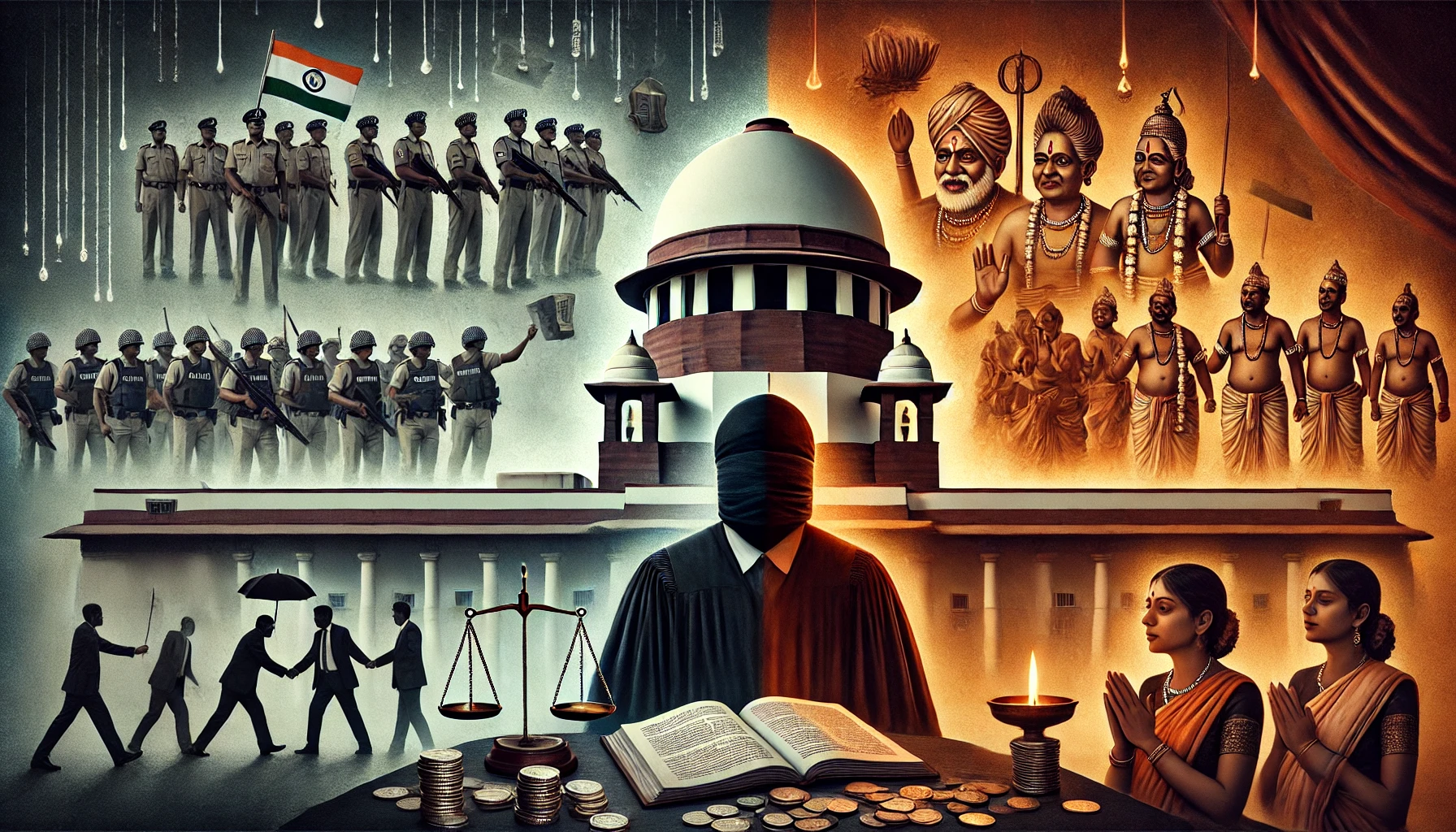
The Buddhist Reservation Paradox manifests in judicial decisions showing extraordinary protection for minority concerns while dismissing Hindu grievances:
Essential documentation:
- Public Order and Protests: Supreme Court’s Shaheen Bagh Failure
- Ranchi Court Confrontation: When Lawyers Challenge Judicial Arrogance
- When Judges Investigate Themselves
The pattern is clear: Hindu taxpayers fund system → Buddhist beneficiaries reach power → Power used to favor minorities over Hindus → Hindu concerns dismissed or mocked.
जिस थाली में खाते हैं उसी में छेद करते हैं।
Ambedkar’s 22 Vows: The Foundation of Separation
The 22 vows aren’t about spiritual practice—they’re about political separation while maintaining economic connection.
Vows Rejecting Hindu Framework (1-12): 1-3: Reject Hindu trinity and major deities 4: Reject Shraddha rituals 5: Critical vow: Reject Buddha as Vishnu avatar (separates Buddhism from Hinduism) 6-12: Reject Hindu ceremonies, Brahmin priesthood, caste system
Vows Establishing Buddhist Identity (13-22): 13-22: Follow Buddhist teachings, establish egalitarian society
The Hypocrisy:
- Vow 5 explicitly rejects Hindu framework (Buddha ≠ Vishnu avatar)
- Constitution grants SC status for being victim of Hindu caste system
- Logic: We left Hinduism BUT we deserve benefits for Hindu caste victimhood
This is the foundation of the Buddhist Reservation Paradox: Total doctrinal separation + Constitutional benefit from Hindu system = Institutional hypocrisy.
Ambedkar himself recognized this tension—he almost converted to Sikhism or Christianity but chose Buddhism specifically because it’s “of Indian origin” and wouldn’t create perception of foreign allegiance. The choice was strategic, not spiritual.
Constitutional Framework: Hindu Society’s Generosity
The Evolution of SC Order 1950
Original Constitution (Scheduled Castes) Order, 1950: SC status limited to Hindus only. Logic: Caste is Hindu system; only Hindu Dalits need remedy.
1956 Amendment: Extended to Sikhs
- Justification: Sikhism of Indian origin
- Political reality: Sikh pressure in Punjab
1990 Amendment: Extended to Buddhists
- Justification: Buddhism of Indian origin, caste discrimination persists
- Political reality: Ambedkarite movement pressure
- This was HINDU SOCIETY’S GENEROSITY – accepting that Buddhist converts still deserved benefits
Christian/Muslim Dalits: EXCLUDED
- Despite facing identical discrimination
- Despite caste persisting in both communities
- Excluded because Christianity/Islam are “foreign religions”
The Religious Hierarchy
| Religious Identity | SC Status? | Basis |
|---|---|---|
| Hindu Dalit | ✅ Yes | Original 1950 |
| Sikh Dalit | ✅ Yes | Added 1956 – Indian origin |
| Buddhist Dalit | ✅ Yes | Added 1990 – Indian origin + HINDU GENEROSITY |
| Christian Dalit | ❌ No | Foreign religion |
| Muslim Dalit | ❌ No | Foreign religion |
The Buddhist Reservation Paradox is enabled by Hindu acceptance. Hindu society could have said: “You left Hinduism via Buddhism? Fine, then you’re not victims of Hindu caste system anymore—no benefits.”
Instead, Hindu society showed generosity: “We accept that caste discrimination persists even after conversion. We’ll continue supporting you.”
How is this generosity repaid?
- CJI mocks Lord Vishnu from bench
- Leaders campaign to convert India to Buddhist nation
- Power used against Hindu interests
- Hindu gods explicitly rejected while Hindu benefits explicitly retained
जिस थाली में खाते हैं उसी में छेद करते हैं।
The Religious Identity Hypocrisy
The Buddhist Reservation Paradox exposes a fundamental hypocrisy:
Claim When Seeking Benefits: “We are victims of Hindu caste oppression. Hindu society must remedy this discrimination through reservation.”
Claim When Rejecting Hindu Framework: “We have renounced Hinduism. It is harmful to humanity. Lord Buddha was not Vishnu’s avatar—this is madness. We are establishing separate Buddhist identity.”
The Question: Can you simultaneously be:
- Victim of Hindu caste system (justifying constitutional benefits)
- Completely separated from Hinduism (doctrinal position)
If you’ve truly left Hinduism, how are you still a victim of its caste system deserving ongoing benefits?
If discrimination persists despite conversion (basis for 1990 amendment), doesn’t this prove conversion didn’t actually separate you from Hindu social framework?
The Christian/Muslim Exclusion Exposes Hypocrisy
Dalit Christians:
- Face identical caste discrimination from upper-caste Christians
- Churches maintain caste segregation, separate cemeteries
- Inter-caste marriage taboo continues
- Constitutional status: EXCLUDED (except 3 states)
Dalit Muslims:
- Face identical discrimination from Ashraf Muslims
- Mosques, graveyards show caste divisions
- Social hierarchy persists
- Constitutional status: EXCLUDED
Dalit Buddhists:
- Face identical caste discrimination
- Caste identity persists in practice
- Inter-caste marriage taboo continues
- Constitutional status: INCLUDED
The ONLY difference: Buddhism is “of Indian origin.”
This reveals the Buddhist Reservation Paradox is enabled by cultural nationalism, not constitutional logic. Hindu society treats Buddhism favorably because it originated in India—despite Buddhists explicitly rejecting Hindu framework.
Meanwhile Christians and Muslims, facing identical discrimination, receive no such favoritism.
Using Power Gained Through Hindu System Against Hindus
The Cruelest Dimension of the Buddhist Reservation Paradox: Power Gained Through Hindu Generosity Deployed Against Hindu Interests
CJI Gavai Example
Path to Power (Institutional Reality):
- Born into a Scheduled Caste background
- Raised within a family whose political ascent occurred through constitutionally reserved electoral structures, including a father who entered Parliament from a Scheduled Caste–reserved constituency
- Legal education and professional entry unfolded within an affirmative-action ecosystem designed to enhance Scheduled Caste representation
- Judicial career progressed in an institutional environment shaped by reservation, representation logic, and caste-based corrective policy
- Reached the Supreme Court of India (2019)
- Became Chief Justice of India (2025) — the highest judicial office, following seniority convention
There is no publicly confirmed information indicating whether Justice Gavai availed reservation in school, college, or legal education, and therefore no claim is made either way. What is firmly established, however, is that his ascent to the office of Chief Justice of India occurred within—and was enabled by—an inter-generational ecosystem of caste-based political representation, built through constitutionally reserved power structures. While Justice Gavai has supported the principle of eliminating the creamy layer from reservation to ensure benefits reach the poorest, he has endorsed the expansion of reservation in certain categories in lower-level staff—reflecting in higher judiciary.
Use of Power (Publicly Reported Outcomes):
- September 16, 2025: Remarks widely reported and interpreted as dismissive of a petition seeking protection of a Hindu deity
- Judicial patterns noted by critics: heightened sensitivity in minority-related matters contrasted with prolonged delays or dismissive treatment in Hindu religious cases
- Public controversy over luxury footwear worn at official ceremonies, cited by commentators as symbolically incongruent with Buddhist ideals of non-attachment
- No institutional consequences — elevation proceeded uninterrupted
The Ladder
Hindu taxpayers sustain the reservation framework →
Caste-based political representation (father’s reserved MP seat) creates inter-generational advantages →
Son enters judicial career within this ecosystem →
Judicial authority accumulated →
Power exercised in ways widely perceived as adverse to Hindu religious interests
जिस थाली में खाते हैं उसी में छेद करते हैं।
Judicial Pattern
Compare treatment:
Hindu Cases:
- Temple land disputes: Decades of delay
- Idol desecration: “Deity can repair itself”
- Festival interference: Courts micromanage Dahi Handi, Jallikattu, Kanwar Yatra
- Religious rights: Dismissed with sarcasm
Minority Cases:
- Shaheen Bagh illegal occupation: Allowed for months
- Haldwani demolition: Instant stay despite illegal construction
- Nupur Sharma quoting texts: “You set country on fire”
- Minority religious concerns: Extraordinary sensitivity
Who enabled this judicial power? Hindu reservation system.
How is it used? Against Hindu interests.
Political Pattern
Rajendra Pal Gautam:
- Likely benefited from reservation (Dalit background)
- Became AAP minister (state power)
- Used platform to conduct mass conversion events on Dussehra
- Explicit goal: Convert India away from Hindu majority
- Resignation under pressure – but movement continues
BSP (Bahujan Samaj Party):
- Built on Ambedkarite Buddhist identity
- Uses SC reservation to reach power
- Maintains Buddhist symbols while courting Hindu votes
- Once in power, protects minority interests over Hindu concerns
The pattern repeats: Reservation → Power → Anti-Hindu use of power.
Why Christians and Muslims Are Excluded
If caste discrimination is the criterion for SC status, and caste persists in Christian and Muslim communities (it does), why are they excluded while Buddhists are included?
Official Justification
Government logic:
- Buddhism “of Indian origin” → Cultural continuity with Hindu civilization
- Christianity/Islam “foreign religions” → Conversion seen as break with Indian identity
- Buddhist caste discrimination “persists” → Justifies benefits
- Christian/Muslim caste “eliminated by conversion” → No benefits needed
Empirical reality:
- Caste persists in ALL three communities identically
- Churches have separate seating for Dalits
- Mosques maintain caste hierarchies
- Buddhist social structures mirror Hindu caste patterns
The real reason: Cultural nationalism
Hindu society accepts Buddhism as “ours” (originated in India, philosophical compatibility) while rejecting Christianity/Islam as “theirs” (foreign origin, theological opposition).
This favoritism toward Buddhism is Hindu generosity—treating Buddhist converts better than logic demands because Buddhism is seen as reformation rather than rejection.
How is this generosity repaid?
Ambedkar’s Vow 5: “Lord Buddha was not Vishnu avatar—this is MADNESS.”
Buddhist campaigns: “Convert India to Buddhist nation.”
The Buddhist Reservation Paradox: Hindu favoritism toward Buddhism → Buddhist rejection of Hindu framework → Buddhist use of Hindu-granted power against Hindus
The Crypto-Christian Comparison
Understanding the Buddhist Reservation Paradox requires comparing it to crypto-Christians in South India.
According to the 2011 Census of India, Christians constitute 2.30% of the population (≈2.78 crore); however, multiple demographic analyses and former census officials have suggested that the actual Christian population—particularly in South India—may be significantly higher, often estimated at 4–5 crore, due to widespread underreporting linked to reservation incentives and the phenomenon of crypto-Christian identity according to Firstpost amd Organiser.
Crypto-Christians (Crores in South India):
What they do:
- Convert to Christianity for economic benefits, missionary schools, foreign aid
- Publicly identify as Hindu to retain SC reservation benefits
- Hide conversion to avoid losing constitutional status
- Dishonest – lying about religious identity
Why they do it:
- SC benefits only for Hindus/Sikhs/Buddhists
- Christian conversion eliminates SC status
- Solution: Lie – claim to be Hindu while practicing Christianity
Moral status:
- Dishonest
- Lying to system
- Hypocritical
- BUT at least they recognize they shouldn’t receive Hindu caste victim benefits after leaving Hinduism
Ambedkarite Buddhists:
What they do:
- Convert to Buddhism via Ambedkar’s 22 vows explicitly rejecting Hinduism
- Openly declare separation from Hindu religious framework
- Retain SC benefits designed for Hindu caste victims
- Use power gained through Hindu system to mock Hindu gods and convert Hindus away
Why they can do it:
- 1990 amendment granted SC status to Buddhists
- “Indian origin” justification
- Political pressure succeeded
Moral status:
- Openly hypocritical
- No pretense of gratitude
- Explicit rejection of Hindu framework while drawing Hindu benefits
- Using Hindu-granted power against Hindu interests
The Comparison
Crypto-Christians: Lie about religious identity to keep benefits
- At least recognize conversion should eliminate Hindu caste victim status
- Show shame by hiding conversion
Ambedkarite Buddhists: Openly reject Hinduism while keeping benefits
- No recognition that leaving Hinduism should eliminate Hindu caste victim status
- No shame – publicly campaign to convert India away from Hinduism
- Add insult – use Hindu-granted power to attack Hindu interests
Which is worse?
The crypto-Christian lies. The Ambedkarite Buddhist openly exploits while attacking.
One shows hypocrisy through deception. The other shows hypocrisy through shameless ingratitude.
At least the crypto-Christian knows they shouldn’t eat from the plate. The Ambedkarite Buddhist eats from it while openly drilling holes and inviting others to do the same.
Featured Content: Understanding Caste Complexity
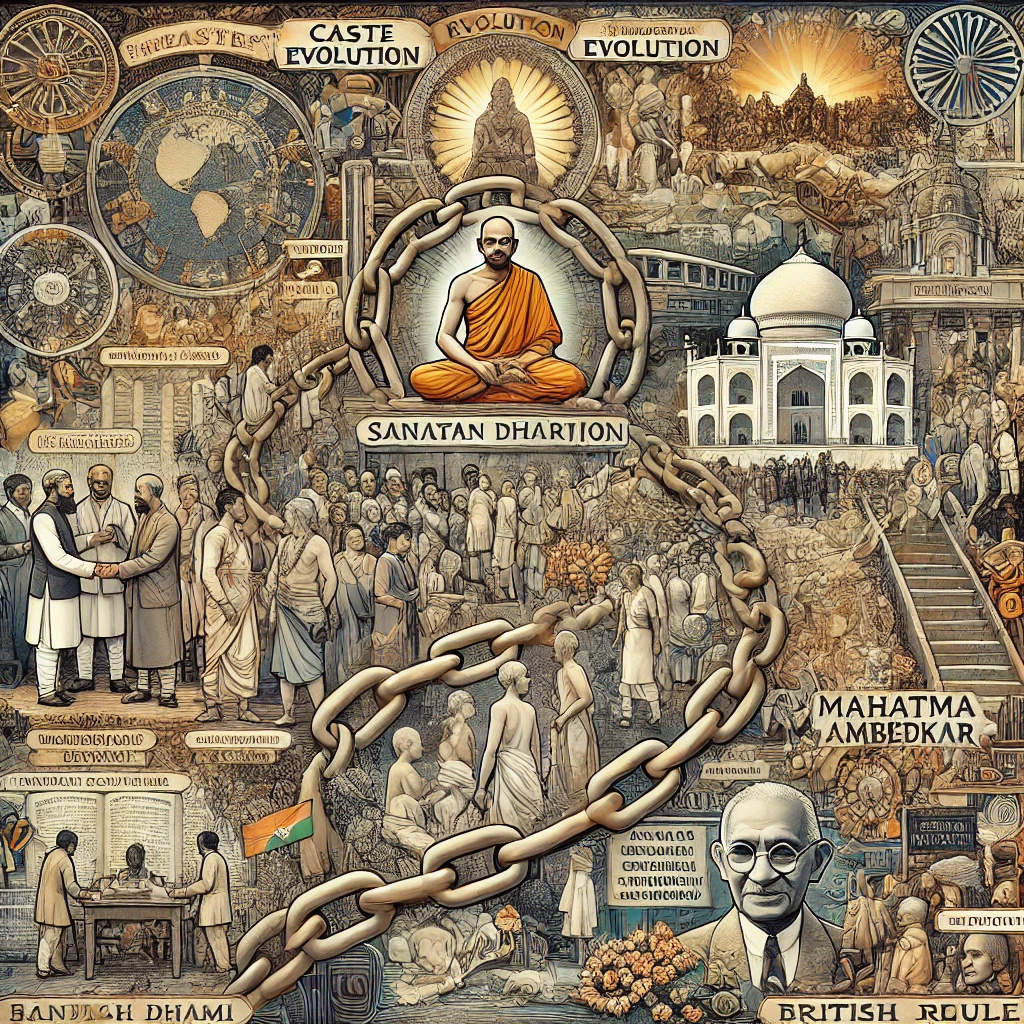
The Buddhist Reservation Paradox intersects with broader questions about caste, conversion, and social justice:
Essential background:
- Caste System and Untouchability: Exploring Misunderstood Concepts
- Hindu Philosophy: Key Concepts in Sanatan Dharma
- Meaning of Sanatan Dharma
- Dharma Meaning: Key Concepts in Hindu Philosophy
Understanding Hindu philosophical framework helps clarify what Ambedkarite Buddhism explicitly rejected—and what Hindu society generously continued supporting despite that rejection.
Modern Jurisprudence Analysis
Article 14 & 15: Constitutional Equality
Article 14: “The State shall not deny to any person equality before the law.”
Article 15(1): “The State shall not discriminate against any citizen on grounds only of religion, race, caste, sex, place of birth.”
SC Order 1950 creates explicit religious discrimination:
Hindu/Sikh/Buddhist Dalit: SC benefits ✅
Christian/Muslim Dalit: No SC benefits ❌
Identical discrimination → Differential treatment based on religion = Violation of Article 15(1)
The “Indian Origin” Doctrine
Courts justify Buddhist inclusion via “Indian origin” reasoning:
- Buddhism originated in India → Cultural continuity
- Christianity/Islam foreign → Break with Indian identity
Constitutional problems:
- Origin is irrelevant to discrimination: If caste persists, origin of religion doesn’t matter
- Cultural nationalism ≠ Constitutional law: Favoring “Indian” religions violates secular framework
- Empirical falsity: Caste persists in all communities regardless of origin
The Generosity Question
Hindu society could have argued (constitutionally): “You explicitly left Hinduism via Buddhism. You’re no longer victims of Hindu caste system. Benefits end.”
Instead: “We recognize discrimination persists. We’ll continue supporting you.”
This was generosity, not constitutional requirement.
Buddhist response:
- “Lord Buddha wasn’t Vishnu avatar—this is MADNESS”
- “Convert India to Buddhist nation”
Constitutional law cannot mandate gratitude. But it can acknowledge ingratitude.
Ancient Dharma: The Ethics of Gratitude
Concept of Kṛtajñatā (Gratitude)
Bhagavad Gita 16.2: “Fearlessness, purity of heart, steadfastness in knowledge… charity, self-control, sacrifice, study of scriptures, austerity, uprightness… gratitude—these are the divine qualities.”
Mahabharata (Adi Parva): “There is no virtue equal to gratitude, and no sin equal to ingratitude.”
Chanakya Niti: “One who forgets the good done to him by others is worse than even a beast.”
Dharmic ethics place enormous emphasis on gratitude toward benefactors. This applies to:
- Students toward teachers (Guru-dakshina)
- Citizens toward nation (Rashtra-bhakti)
- Beneficiaries toward system (Kṛtajñatā)
Application to Buddhist Reservation Paradox
Hindu society:
- Created reservation system
- Funded it through taxes
- Extended it to Buddhists in 1990 (generosity)
- Continues supporting despite doctrinal rejection
Buddhist beneficiaries:
- Reach positions of power through this system
- Reject Hindu framework (22 vows)
- Mock Hindu deities from positions of power
- Campaign to convert Hindus away
- Use state apparatus against Hindu interests
Dharmic assessment: This violates Kṛtajñatā (gratitude). Not illegal—but ethically problematic.
The Bhagavad Gita Standard
Gita 3.21: “Whatever a great man does, common people follow; whatever standards he sets, the world pursues.”
Applied to judges: CJI Gavai’s ₹78,000 shoes and Lord Vishnu mockery set a standard. What standard?
- Power without gratitude
- Benefits without acknowledgment
- Luxury without restraint
- Mockery toward benefactors
This is adharmic behavior from one holding supreme judicial office.
Concept of Nyaya (Justice)
Manusmriti 8.15: “The king who administers justice according to dharma grows in power and prosperity.”
Justice requires not just legal correctness but ethical propriety. When judges mock beliefs of the majority community that funded the system elevating them, this violates Nyaya even if technically legal.
The Buddhist Reservation Paradox from dharmic lens: Legal but unethical. Constitutional but ungrateful. Permissible but dishonorable.
The Moral Question
Strip away constitutional complexity and ask the simple moral question:
If a community:
- Created a system to remedy discrimination you faced
- Funded it through their taxes
- Extended it to you despite your rejection of their religious framework
- Continued supporting you even as you explicitly campaign against their beliefs
Do you have a moral obligation to:
- Show gratitude toward that community?
- Exercise restraint in attacking their religious framework?
- Acknowledge the generosity shown?
Or is it morally acceptable to:
- Use power gained through their system to mock their gods?
- Campaign to convert their community away to your religion?
- Show zero acknowledgment of the support received?
The Buddhist Reservation Paradox raises this moral question.
We’re not arguing Buddhists should be denied benefits. We’re not claiming conversion should eliminate SC status.
We’re asking: When you benefit from a system, do you owe ethical consideration to those who created it?
Hindu society says: We’ll support you anyway.
Buddhist beneficiaries say: We’ll use that support to attack you.
Dharma says: This is ingratitude manifest.
Eating From the Plate and Drilling Holes in It:
The Louis Vuitton controversy and CJI Gavai’s “Lord Vishnu” remark exposed the Buddhist Reservation Paradox at multiple levels:
Constitutional Level:
- Buddhists retain SC benefits despite rejecting Hinduism
- Christians/Muslims excluded despite identical discrimination
- “Indian origin” distinction culturally nationalist, not constitutionally relevant
- Religious hierarchy violates Article 15’s equality principle
Ethical Level:
- Hindu society created and funds reservation system
- Extended to Buddhists in 1990 despite doctrinal rejection of Hinduism
- Buddhist beneficiaries reach power through this system
- Use power to mock Hindu gods, favor minorities, campaign against Hinduism
Practical Level:
- CJI wears ₹78,000 shoes (Buddhist non-attachment violated)
- Mocks Hindu deity from bench (using Hindu-granted power against Hindus)
- Faces zero consequences (system protects its beneficiaries)
- Pattern repeats across judiciary, politics, academia
Moral Level:
- Gratitude (Kṛtajñatā) violated
- Ethics of reciprocity ignored
- Standards of propriety abandoned
- Ingratitude elevated to institutional norm
They eat from the plate while drilling holes in it.
The question isn’t whether Buddhists deserve dignity, success, or rights—they absolutely do.
The question isn’t whether reservation should continue—reasonable people can disagree.
The question is: When you benefit from a system created by a community you’ve explicitly rejected, do you owe that community basic gratitude and ethical restraint?
The Buddhist Reservation Paradox suggests the answer is: Apparently not.
Hindu taxpayers fund the system. Buddhist beneficiaries climb the ladder. Once at top, they mock Hindu gods, favor minorities, and campaign to convert India away from Hinduism.
Next in series: Nupur Sharma case—examining how the Supreme Court blamed a Hindu woman for quoting Islamic texts while defending judges who mock Hindu deities.
Key Takeaways
✓ Buddhist Reservation Paradox: Buddhists retain SC benefits while explicitly rejecting Hinduism; Christians/Muslims don’t despite identical discrimination
✓ Ambedkar’s 22 vows totally reject Hindu framework—not reformation but separation
✓ 1990 SC amendment extending benefits to Buddhists was Hindu society’s GENEROSITY
✓ Rajendra Pal Gautam (2022): Led 10,000 mass conversion on Dussehra, goal “10 crore Buddhists by 2025”
✓ Crypto-Christians LIE to keep benefits; Ambedkarite Buddhists OPENLY exploit while attacking
✓ Hindu system funds reservation → Buddhist reaches power → Uses power against Hindu interests
✓ “Indian origin” justification is cultural nationalism violating constitutional equality
✓ Dharmic ethics: Kṛtajñatā (gratitude) violated; Nyaya (justice) requires ethical propriety, not just legality
✓ Moral question: Do beneficiaries owe gratitude to the system and community that elevated them?
✓ Pattern: Judicial, political, academic Buddhists using Hindu-granted power against Hindu interests
Next: Nupur Sharma—Hindu woman quoting texts blamed for violence vs judges mocking deities facing promotion
Featured Content: Civilizational Patterns
The Buddhist Reservation Paradox is one manifestation of broader civilizational tensions between Hindu accommodation and minority assertion:
Understand the larger pattern:
- Yogi Adityanath on Hindu Safety vs Muslim Safety: A Civilizational Pattern
- Principle of Sacred Exclusion: Dharma’s Right to Boundaries
- Nehru’s Historical Narrative: How He Shaped Indian Histography
International institutional parallels:
- When Dictatorships Vote on Democracy: The UN Legitimacy Crisis
- Regime Change Playbook: A Manual for Color Revolution Operations
- Muslim Brotherhood France: Intelligence Report Media Ignored
Dharmic foundations:
- Sanatana Dharma: Secular and Inclusive Values of Hindu Philosophy
- Secular Reflections: Faiths in Modern Society
Disclaimer / अस्वीकरण
This article is a work of public-interest commentary and constitutional analysis based solely on publicly available information, including media reports, judicial records, constitutional provisions, and recorded public statements.
All references to the judiciary, Justice B. R. Gavai, or Ambedkarite movements are institutional and analytical, not personal. No allegation of illegality, criminal conduct, or improper personal benefit is made. Where factual confirmation is unavailable, this limitation is explicitly acknowledged.
The critique presented is jurisprudential, constitutional, and ethical in nature. Symbolic interpretations and moral arguments reflect reasoned opinion, not claims of intent or misconduct. The article does not advocate denial of rights, discrimination, or exclusion of any community.
Buddhists, Dalits, and all religious groups are recognized as equal citizens under the Constitution. The focus is limited to examining constitutional consistency, institutional patterns, and the ethical relationship between entitlement and responsibility within a democratic framework.
Readers are encouraged to consult primary sources and form their own conclusions.
Feature Image: Click here to view the image
Videos
Glossary of Terms
- Buddhist Reservation Paradox: A constitutional and ethical contradiction in which Buddhist converts retain Scheduled Caste reservation benefits while explicitly rejecting the Hindu social framework from which those benefits originate.
- Scheduled Caste (SC) Reservation: A system of affirmative action in India designed to remedy historical caste-based discrimination within the Hindu social order through quotas in education, employment, and political representation.
- Constitution (Scheduled Castes) Order, 1950: A Presidential Order that originally limited SC status to Hindus, later extended to Sikhs (1956) and Buddhists (1990), but not to Christians or Muslims.
- Ambedkar’s 22 Vows: A set of declarations administered during mass Buddhist conversions that explicitly renounce Hindu gods, rituals, and philosophical foundations.
- Indian Origin Doctrine: A judicial and political justification used to extend SC benefits to Buddhists and Sikhs on the basis of cultural origin rather than lived discrimination.
- Kṛtajñatā (Gratitude): A Dharmic ethical principle emphasizing moral obligation and acknowledgment toward benefactors, institutions, and society.
- SC/ST (Prevention of Atrocities) Act: A criminal statute enacted to prevent caste-based abuse, whose misuse has been judicially acknowledged in multiple Supreme Court observations.
- Crypto-Christians: Individuals who practice Christianity while officially identifying as Hindu to retain SC reservation benefits, particularly documented in parts of South India.
- Inter-generational Reservation Ecosystem: The transmission of political, institutional, and social advantage across generations through constitutionally reserved structures.
- Judicial Sensitivity Asymmetry: A recurring pattern in which courts are perceived to display heightened sensitivity toward minority religious concerns while minimizing or dismissing Hindu grievances.
#SCReservation #BuddhistReservation #CastePolicy #JudicialBias #BuddhistReservationParadox #JisThaliMeKhateHain #HinduGenerosity #AmbedkariteIngratitude #RajendraPalGautam #MassConversions #ConstitutionalHypocrisy #CJIGavai #LordVishnuMockery #SCReservationPolicy #ChristianDalitExclusion #MuslimDalitExclusion #CryptoChristians #Krtajnata #JudicialAccountability #HinduinfoPedia #WhenCourtsFailAncientDharmaandModernJurisprudence
Previous Blogs in the Series
- Shoe at Supreme Court: Symbol of India’s Judicial Crisis
- Dharma vs Jurisprudence: The Framework for Measuring Judicial Failure
- Ranchi Court Confrontation: When Lawyers Challenge Judicial Arrogance
- Public Order and Protests: Supreme Court’s Shaheen Bagh Failure
- Judicial Accountability Crisis: When Judges Investigate Themselves
- Lord Vishnu Can Repair Himself: When Chief Justice Mocks Hindu Beliefs
Understanding the Broader Context
Ambedkar’s Vision and Critique:
- Ambedkar’s Buddhist Political Move: Divergence from Gandhi on Caste Issues
- Ambedkar’s Buddhist Conversion: Challenging Caste with New Faith
- Manusmriti Critique of Ambedkar and Its Modern Relevance
- Ambedkar’s Criticism and the Manusmriti: Insights and Impact
- Ambedkar’s Criticism of Manusmriti: A Modern Review
Civilizational Patterns:
- Regime Change Playbook: A Manual for Color Revolution Operations
- When Dictatorships Vote on Democracy: The UN Legitimacy Crisis
- Demographic Reality Exposed: How High-Fertility Clusters Reshape Democracies
Follow us:
English YouTube: Hinduostation – YouTube
Hindi YouTube: Hinduinfopedia – YouTube
X: https://x.com/HinduInfopedia
Instagram: https://www.instagram.com/hinduinfopedia/
Facebook: https://www.facebook.com/Hinduinfopediaofficial
Threads: https://www.threads.com/@hinduinfopedia
Leave a Reply