
Category: Bharat

Home » Bharat » Page 2
East India Company, Divide and Rule, British Raj, Colonial India, Indian History, Partition, Bharat, Colonial Strategy, British Empire, HinduinfoPedia
Post

Divide and Rule by East India Company

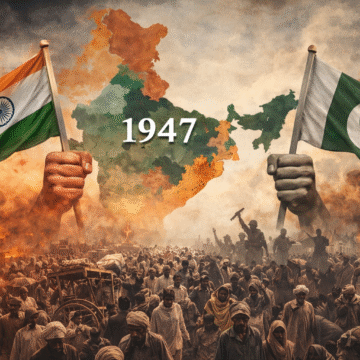
The British didn’t conquer India by force alone—they conquered it through division. Divide and Rule by East India Company reveals how religion, caste, region, and class were systematically weaponized to keep Bharat fragmented. From Plassey to Partition, it exposes how a civilizational mosaic was turned into a map of conflict and dependency.

Swayamsevak in service during crisis — embodying discipline, compassion, and selfless duty for society.
Post

Spiritual Foundation: Power of Sarve Bhavantu Sukhinah

The centenary declaration of RSS makes clear that every program—shakha expansion, leadership, social change—rests on a deeper spiritual foundation. Expressed in the timeless prayer Sarve Bhavantu Sukhinah, this foundation guides individuals from self-discipline to world peace. It is not limited to ritual but extends into families, society, and Bharat’s global responsibility.

Panch Parivartan, Hindu philosophy, transformation, spiritual growth, RSS vision, Indian culture, five dimensions, family values, societal harmony, national unity, global peace, Sanskrit quote, Indian spirituality
Post

Panch Parivartan: The Five-Dimensional Transformation

Panch Parivartan represents the most comprehensive goal of the RSS Centenary Declaration—five layers of transformation from the self to the world. It begins with individual discipline, extends into family values, social harmony, and national strength, and culminates in global welfare. This five-dimensional model weaves unity, prosperity, and spirituality into one continuous process of renewal.

RSS, swayamsevak, cleanliness drive, social service, environment, community, discipline, unity, transformation, volunteerism, Social Metamorphosis
Post

Social Metamorphosis: From Values to Culture

Social Metamorphosis: From Values to Culture is not just about reform, but a holistic transformation of society. It begins with individuals shaped by values, extends into families, education, and communities, and balances economic strength with cultural revival. Women, youth, technology, and even the global Hindu diaspora together create a living model of harmony and collective progress.

Organizing Noble People, community, gathering, family, meal, togetherness, harmony, society, HinduinfoPedia
Post

Organizing Noble People: Power of Social Transformation

The RSS centenary declaration emphasizes that progress cannot rest on numbers alone. The third goal, Organizing Noble People, calls for uniting value-driven individuals from education, culture, industry, and public life. By nurturing confidence, civic duty, and leadership, this organization builds harmony in society, strength in the nation, and a vision of global peace.

Morning shakha discipline: RSS swayamsevaks embodying unity and character training—the living foundation of गुणात्मक सुधार, Striving for Character Excellence
Post

Striving for Character Excellence: Enhancing Shakha Quality

Striving for Character Excellence is not a matter of numbers but of depth—discipline, dharma, and duty. The RSS centenary resolution emphasizes that shakhas must nurture confidence, values, and responsibility through training, prayer, and collective living. From individuals to families and society, this pursuit builds the foundation of a harmonious Hindu society for global peace.

truck, Malayalam text, Hindi text, Seva Bharati, RSS, Kerala, social service, banner, yellow truck, blue truck
Post

Centenary Resolution: From Shakha Expansion to Social Transformation

Centenary Resolution: From Shakha Expansion to Social Transformation Part 3: RSS Centenary Sankalp Blog Series Centenary Resolution And Role of Shakha Among the five goals established at the historic Centenary Resolution gathering in Bengaluru, the first and most fundamental objective is “Shakha Expansion.” This represents the transformation of Dr. Hedgewar’s 1925 vision into the reality...

Pledge for the World: The Vision of a Harmonious and Organized Hindu Society
Post

Pledge for the World: The Vision of a Harmonious and Organized Hindu Society

Samras and Sangathan are more than words; they form the blueprint for civilizational renewal. Harmony ensures dissolution of caste, regional, and economic divides, while organization channels collective energy toward dharmic goals. The resolution insists that such a society, guided by sajjan shakti, can offer the world a practical path to enduring peace and cooperation.

East India Company, Maratha Empire, Colonial India, Shivaji Maharaj, British Raj, Mughal decline, historical art, Indian history, 18th century, Hindu resistance, East India Company Vs Maratha
Post

East India Company vs Maratha Empire

The clash between the East India Company vs Maratha Empire was not just a battle of arms but of minds. The Marathas embodied Hindu resurgence and resistance, while the British turned trade into conquest through strategic manipulation. This blog explores how valor met calculation, and how disunity turned sovereignty into subjugation.

Treaty of Allahabad, East India Company, Shah Alam II, Robert Clive, Mughal Empire, British Colonial History, Bengal, Corporate Rule, Colonial India, Historical Painting, India 1765
Post

East India Company Treaty of Allahabad 1765

East India Company Treaty, 1765, of Allahabad transformed the East India Company from traders into rulers, granting them Diwani rights over Bengal, Bihar, and Orissa. Signed by a weakened Mughal Emperor Shah Alam II, it legalized economic conquest, birthed the Dual System, caused Bengal’s famine, and laid the financial foundation of the British Empire in India.

East India Company, British colonialism, India history, trading ships, Bengal, sepoys, British Empire, historical transformation, colonial power, spice trade, symbolic art, Mughal decline, Company rule, British officers, Indian port
Post

East India Company: From Traders to Rulers – The Complete Transformation

The East India Company’s journey from a spice-trading venture to the ruler of India is one of history’s most dramatic transformations. Backed by a royal charter in 1600, it built trading posts, commanded armies, and exploited India’s political cracks. Through Plassey and Buxar, it secured dominance, accelerating the decline of Sanatana culture and Bharat’s sovereignty.

Indra, Vedic warrior, Rigveda, thunderbolt, Vajra, divine protector, spiritual defense, Sanskrit hymns, celestial power, ancient India, sacred fire, spiritual warfare, dharmic protection, mythological symbolism, Hindu deities
Post

Hymns of Safeguard: An Ancient Armory for Modern Crisis

In times of crisis, evidence and reason alone cannot protect a civilization. The Rigveda’s Hymns of Safeguard provide an ancient arsenal of spiritual defense. These mantras, once invoked in yajnas, are not gentle prayers but powerful invocations to Indra, the warrior deity, calling forth protection, strength, and the defeat of hostile forces.

Yajna, Rigveda, Vedic Ritual, Agni Mantra, Havan, Fire Ceremony, Hinduism, Vedic Chanting, Divine Protection, Spiritual Defense, Bhakti Marga
Post

Vedic Defense Through Rigveda Richas: A Deeper Look at Divine Protection

The Rigveda offers more than ancient poetry—it provides divine protection against modern threats. Through powerful hymns dedicated to Agni and Indra, these sacred verses invoke divine intervention to defend dharma from external forces. Learn how specific Rigvedic mantras serve as spiritual shields, empowering the righteous while destroying obstacles that threaten cosmic order and Hindu civilization.

Rigveda, Vedic deities, Agni, Indra, Ashvin Kumars, divine protection, Hinduism, fire god, vajra, sacred hymns, spiritual art
Post

Rigvedic Hymns: A Deeper Look at Divine Protection

Rigvedic hymns go beyond philosophy—they are invocations of divine protection. With Indra striking down slanderers, Agni safeguarding yajnas, and the Ashvins rescuing the faithful, these verses form a spiritual defense manual for those walking the path of dharma. Learn how to invoke not retaliation, but divine alignment with cosmic truth and strength.

Ashvini Kumars, Rigveda, Vedic deities, divine physicians, dawn chariot, lotus, healing, protection, dharma, spiritual defense
Post

Ashvini Kumar Suktas for Divine Rescue and Healing

In the Vedic Defense Mantras series, the Ashvini Kumars embody divine rescue—swift, healing, and protective. Where Agni purifies and Indra empowers, the Ashvins intervene directly: healing wounds, restoring communities, and eliminating enemies of dharma. Their suktas teach us that true protection is not passive endurance but active divine intervention for survival and restoration.

Indra, Rigveda, Indra Suktas, Vedic iconography, vajra, divine warrior, Airavata, battle invocation, Hindu deities, dharma vs adharma, Sanskrit verses, Vedic symbols, Hindu art, cosmic symbolism
Post

Indra Suktas for Victory: Invoking the Divine Warrior Against Overwhelming Odds

Indra, the undefeated warrior of the Rigveda, is invoked through the Indra Suktas for Victory as the cosmic protector of dharma. These hymns go beyond myth, offering strength, clarity, and resilience when communities face overwhelming threats. From breaking Maya’s illusions to ensuring survival, they empower collective courage and righteous defense across generations.

Agni, Vedic fire, Rigveda, dharmic protection, sacred fire, Hindu deity, spiritual purification, divine flame, fire altar, family worship, Vedic ritual, protective mantra, yajna, Agni sukta, divine energy, ancient India, Hindu tradition, spiritual defense, cosmic fire, transformation
Post

Agni Suktas for Protection: Invoking Divine Fire Against Adharmic Forces

In the Rigveda, Agni is more than a fire deity—he is a protector, purifier, and messenger to the divine. This blog unveils three powerful Agni suktas invoked for community protection, karmic shielding, and dharmic clarity. Discover how ancient Hindus defended themselves not with weapons, but through sacred sound and collective consciousness. A defense begins with fire.

Vedic Defense Mantras, Vedic, Rigveda, mantras, Hindu, Agni, Indra, protection, fire, thunderbolt, elephant, dharma, Indra Suktas
Post

Vedic Defense Mantras: Rigveda’s Protection Against Threats

In an age of ideological conquest and cultural erosion, physical resistance alone is not enough. This blog revives the ancient Rigvedic response to existential threats: Vedic defense mantras. Rooted in dharma and powered by intention, these mantras invoke divine forces to protect truth, neutralize adharma, and spiritually shield communities without compromising the very values they stand for.

colonial India, British rule, courtroom, historical illustration, Indian judiciary, British judge, Indian defendant, legal proceedings, sepia tone, cultural interaction
Post

Ancient Hindu Texts: Cultural Biases in Reinterpretation

This blog explores how cultural biases influence interpretations of Hindu scriptures, such as the Manusmriti and Vedantic works. We delve into how figures like Ambedkar, Shankaracharya, and Gandhi have historically shaped these texts, revealing more about their eras than the texts themselves.