

Tag: Authority

Home » Authority
disciplined education, teacher authority, character building, structured learning, educational hierarchy, value-based schooling, social discipline, institutional order, youth formation, civilizational education, RSS Character Manufacturing Model
Post

RSS Character Manufacturing Model: Global Export Possibility

The article explains why the RSS Character Manufacturing Model: Global Export Possibility is not theory but a civilizational necessity. It traces the global human manufacturing crisis to the collapse of discipline and hierarchy, and shows how the RSS shakha system—rooted in authority, service, and structured correction—offers a scalable solution beginning with schools and families.

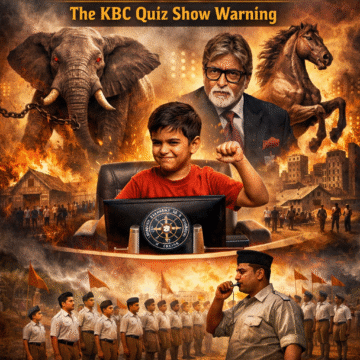
uncontrolled child development, character formation, discipline and authority, parenting crisis, education collapse, civilizational decline, moral discipline, human manufacturing crisis, social order, cultural decay, authority and respect, child psychology, traditional values, modern education failure
Post

Uncontrolled Child Development: The KBC Quiz Show Warning

Uncontrolled Child Development is a silent crisis shaping modern society. Intelligence without discipline, freedom without restraint, and ambition without character are producing capable but dangerous individuals. From classrooms to corporations, the abandonment of authority and corrective discipline has weakened institutions and fractured social order. Civilizational survival depends on restoring disciplined human manufacturing.

character formation, education contrast, discipline and routine, traditional training, modern schooling crisis, leadership development, cultural continuity, human development, authority and learning, social resilience
Post

Building Without Master Craftsman: Compare with RSS Assembly

Modern education processes children but fails to form humans. This blog contrasts institutional schooling with the RSS shakha system, showing how authority, discipline, repetition, and structured pressure create resilient character. While schools abandon formative authority, shakhas preserve the master craftsman model that produces stability, responsibility, and civilizational continuity.

authority collapse, moral decline, hierarchy, discipline, human formation, civilizational crisis, cultural decay, plumb line metaphor, mason’s line, social order, ideological breakdown, modern society, values erosion, KBC's Broken Line
Post

KBC Exposing Authority Collapse in Human Manufacturing

A single moment on KBC revealed a deeper civilizational failure: the collapse of authority in modern human formation. This article examines how dismantling hierarchy, discipline, and correction—under the guise of equality and rights—has distorted human manufacturing. Drawing from Hindu philosophy, it argues that structured authority is essential for upright, responsible individuals and social stability.

religious authority, Islamic law, obedience, scripture and power, authority paradox, theology and law, symbolic illustration, ancient texts, modern implications, ideological control, jurisprudence, belief and authority, इस्लामी सत्ता का विरोधाभास
Post

इस्लामी सत्ता का विरोधाभास

यह लेख धार्मिक ग्रंथों में निहित उस संरचना का विश्लेषण करता है जहाँ दूत की आज्ञा को ईश्वर की आज्ञा के समकक्ष रखा गया है। पाठीय उदाहरणों के माध्यम से यह दिखाया गया है कि यह व्यवस्था व्यवहार में कैसे दंड, कानून और आधुनिक प्रवर्तन प्रणालियों को प्रभावित करती है, जिससे “इस्लामी सत्ता का विरोधाभास” उत्पन्न होता है।

authority paradox, legal asymmetry, blasphemy laws, freedom of expression, power structures, ideological enforcement, judicial imbalance, religious authority, censorship through fear, analytical illustration, law and religion, structural hierarchy
Post

इस्लामी अधिकार विरोधाभास विश्लेषण – संरक्षण की असमानता से संरचना का अनावरण

यह लेख इस्लामी अधिकार विरोधाभास का विश्लेषण करता है, जहाँ व्यवहारिक दंड संरचनाएँ यह उजागर करती हैं कि पैग़ंबर मुहम्मद का संरक्षण ईश्वर की तुलना में अधिक कठोर और घातक है। क़ुरआनी आयतों, हदीसों और आधुनिक निंदा-विरोधी कानूनों के तुलनात्मक अध्ययन के माध्यम से यह ब्लॉग दिखाता है कि यह विरोधाभास वैचारिक नहीं, बल्कि विधिक और संरचनात्मक रूप से क्रियाशील है।