
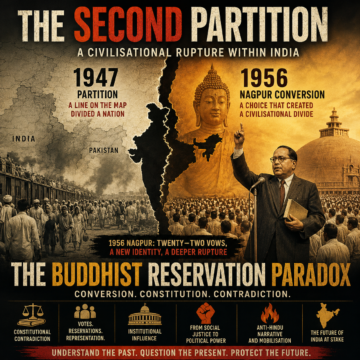
This prologue introduces the Buddhist Reservation Paradox series by examining the 1956 Nagpur conversion led by Dr. B.R. Ambedkar as a civilisational rupture within India. It argues that a constitutional contradiction emerged when conversion, reservations, and anti-Hindu political mobilisation intersected, creating long-term social, constitutional, and cultural consequences that continue to shape contemporary debates.
Tag: Conversion
Salafist Trojan Technique in Practice: Muslim Girls in Hindu Festival Infiltration
This analysis examines how the Salafist Trojan Technique in Practice scales from individual interactions to institutional influence. Drawing parallels from the UK grooming gang scandal, Indian interfaith controversies, and festival boundary disputes, it argues that recurring patterns, doctrinal asymmetries, and enabling institutions transform isolated incidents into systematic civilizational pressure—requiring clarity, boundary maintenance, and informed community response.
Salafist Trojan Technique: Use of Muslim Girls in Hindu Festival Infiltration
This article examines the Salafist Trojan Technique—an operational method that converts doctrine into demographic action. Using the Kota Garba incident as a case study, it traces how women are strategically deployed to infiltrate Hindu sacred spaces, normalize presence, and erode boundaries. From medieval precedents to modern Love Jihad networks, the pattern reveals a civilizational strategy, not isolated romance.