

Aurangzeb in Nehru’s Writings: How “Hardworking and Sincere” Neutralized Systematic Persecution
Part 5-I/#6: Nehru’s View on Islamic Invaders
भारत/GB
Introduction: When Personal Virtues Precede Crimes Against Humanity
Aurangzeb in Nehru’s Writings: From a Historical Perspective—perhaps the most striking feature isn’t what he says about India’s most controversial Mughal emperor, but how he says it. The man who destroyed thousands of Hindu temples, reimposed the jizya tax on Hindus, martyred Guru Tegh Bahadur for refusing to convert to Islam, and presided over systematic religious persecution that fundamentally altered India’s civilizational trajectory is introduced to readers through a carefully constructed vocabulary of personal virtue.
Aurangzeb in Nehru Writings begins not with the destruction of Kashi Vishwanath or Mathura’s Krishna Janmabhoomi, not with the execution of Sambhaji Maharaj or the forced conversions across the empire, but with admiring descriptions of his “simple living,” “personal piety,” “administrative diligence,” and “austere lifestyle.” This isn’t accidental—it’s a sophisticated technique of psychological framing where positive character assessments precede negative actions, fundamentally altering how readers process historical evidence.
As we documented in our analysis of Akbar the Jihadi, even the “tolerant” Mughal emperor required forced conversions and massacred 30,000 at Chittor.
With Aurangzeb, where atrocities couldn’t be omitted entirely, Nehru deployed a different strategy: humanization through virtue-first framing that neutralizes moral judgment before evidence is presented. This technique—presenting personal virtues before discussing crimes—creates psychological barriers to moral clarity that have shaped Indian historical consciousness for seven decades.
The stakes transcend one emperor’s character assessment. The humanization of Aurangzeb became the template for how Nehruvian historiography would handle all historical figures whose actions contradicted the synthesis narrative: acknowledge atrocities when unavoidable, but frame them within vocabularies of personal complexity, historical context, and religious sincerity that make moral judgment seem simplistic.
This analysis proceeds in two parts. Part I examines HOW Nehru humanized Aurangzeb—the specific techniques of virtue-first framing, euphemistic vocabulary, and strategic omissions that transformed systematic persecution into personal complexity. Part II examines WHY Nehru needed to defend Aurangzeb, exploring the political necessity that drove this distortion and its consequences for modern India.
The Virtue-First Pattern: How Nehru Introduces Aurangzeb
The Opening Frame in Discovery of India
When Nehru first introduces Aurangzeb in The Discovery of India (1946), his paragraph structure reveals the technique:
Paragraph 1:
“Aurangzeb was a capable and hardworking administrator. He was devout and austere in his personal life, unlike many of his predecessors. He possessed considerable courage and determination.”
Paragraph 2:
“His conception of the state was a religious one, and he sought to model it on early Islamic lines. This led to conflicts and the narrowing of the state’s foundation.”
Paragraph 3:
“Some of his religious measures were particularly unfortunate, such as the reimposition of the jizya tax.”
Notice the finesse in Paragraph 2: while Nehru acknowledges that Aurangzeb sought to model the state on early Islamic precedents, he remains silent on what that precedent meant in practice for the Hindu population—namely, systematic destruction of religious institutions, plunder, and large-scale violence. The ideological source is named; its civilizational impact is carefully omitted.
Notice the structure:
- Virtues first: Hardworking, devout, austere, courageous, determined
- Abstract motivation: “Religious conception” (not religious bigotry)
- Passive minimization: “Unfortunate measures” (not systematic persecution)
This isn’t how we describe systematic religious persecution. Compare this to how historians describe other religious persecutors:
How historians describe the Spanish Inquisition: “The Spanish Inquisition systematically tortured and executed Jews and Muslims who refused conversion. Thousands were burned at the stake in public spectacles designed to terrorize populations into religious conformity.”
How Nehru’s Aurangzeb historical perspective describes similar actions: “Some religious measures were unfortunate, stemming from his narrow religious conception.”
The vocabulary difference is devastating. Aurangzeb’s Nehru historical perspective transforms religious persecution from deliberate policy into unfortunate byproduct, from systematic violence into abstract “narrowing,” from terrorizing specific actions into vague “measures.”

How did Hindu majorities fare under Islamic rule from Akbar through Aurangzeb?
Compare documented evidence of religious persecution with claims of tolerance and synthesis.
An essential framework for evaluating Nehru’s humanization technique.
What Aurangzeb Actually Did: The Historical Record
The Scale of Temple Destruction
Before examining how Nehru described Aurangzeb’s actions, we must establish what actually happened. Modern archaeological surveys and contemporary historical sources provide devastating evidence.
Documented Temple Destructions (incomplete list from Aurangzeb’s reign 1658-1707):
- Kashi Vishwanath Temple, Varanasi (1669): One of Hinduism’s holiest sites destroyed, Gyanvapi Mosque built on ruins
- Krishna Janmabhoomi, Mathura (1670): Birthplace of Lord Krishna, temple demolished, Shahi Idgah built over it
- Somnath Temple, Gujarat (1665): Ancient Jyotirlinga temple destroyed (rebuilt and destroyed multiple times)
- Vishnu Temple, Udaipur (1679): Demolished during Rajput campaign
- Jagannath Temple, Puri: Multiple attempts at destruction, prevented by local resistance
Sita Ram Goel’s comprehensive documentation lists over 2,000 temples destroyed during Aurangzeb’s reign alone, based on Persian court chronicles, farman (imperial orders), and archaeological evidence. This isn’t Hindu nationalist propaganda—these are Mughal administrative records proudly documenting “purification of infidel lands.”
The Jizya Reimposition and Its Impact
In 1679, after ruling for 21 years, Aurangzeb reimposed the jizya tax that Akbar had suspended 115 years earlier. Contemporary accounts, including European travelers’ records, describe the systematic humiliation involved:
The Jizya Collection Ritual (documented by Francois Bernier, French physician at Mughal court):
- Hindu men required to present themselves publicly
-
Payment collected while standing, with Muslim official seated (signifying Hindu subordination)
-
Physical striking on the neck during payment (ritual humiliation)
- Rates: 13 tankas for wealthy, 6.5 for middle class, 3.25 for poor
- Non-payment resulted in imprisonment or forced conversion
Economic analysis by Irfan Habib shows jizya generated approximately 4-5 million rupees annually but cost approximately 10-12 million in economic disruption, peasant flight, and rebellion suppression. It was economically irrational—its purpose was theological subordination, not revenue.
Yet Aurangzeb’s Nehru historical perspective describes this as “some unfortunate religious measures”—erasing both the systematic humiliation and its ideological purpose.
The Martyrdom of Guru Tegh Bahadur
On November 11, 1675, Aurangzeb ordered the execution of Guru Tegh Bahadur, the ninth Sikh Guru, in Delhi’s Chandni Chowk. The circumstances reveal the systematic nature of religious persecution:
The Historical Context:
- Kashmiri Pandits approached Guru Tegh Bahadur, desperate to escape forced conversion
-
Aurangzeb’s governors were systematically forcing Hindus to convert through violence and threats
- Guru decided to challenge this policy, offering himself for martyrdom
- He was brought to Delhi, tortured for days, then publicly beheaded for refusing Islam
Contemporary Sikh sources document that before execution, three of his disciples were tortured to death in front of him to break his resolve:
-
Bhai Mati Das: Sawed alive between two wooden planks
-
Bhai Dayal Das: Boiled alive in a cauldron
-
Bhai Sati Das: Burned alive
Guru Tegh Bahadur watched this, still refused conversion, and was then beheaded. This wasn’t “unfortunate”—it was calculated terrorism designed to break Hindu resistance to forced conversion.
How does Aurangzeb’s Nehru historical perspective handle this? In 500+ pages of Discovery of India, Guru Tegh Bahadur’s martyrdom receives zero mentions. Not one word. The execution that galvanized Sikh resistance and revealed Aurangzeb’s systematic persecution policy is completely erased.

The Battle of Sirhind (1764) demonstrates how decades of religious persecution under Aurangzeb’s policies
produced organized military resistance, strategic coherence, and ultimately political assertion.
What begins as spiritual sacrifice ends as sovereign power.
The Humanization Vocabulary: Analyzing Nehru’s Language Choices
Comparative Vocabulary Analysis
Let’s examine exactly how Nehru described Aurangzeb versus how he described Hindu resistance to Aurangzeb:
Aurangzeb’s Character (Nehru’s vocabulary):
- “Hardworking and diligent”
- “Personally austere and devout”
- “Possessed administrative ability”
- “Sincere in his religious convictions”
-
“Lacked his ancestors’ tolerance but was deeply pious”
- “His religious policy was narrow but motivated by genuine belief”
Hindu Resistance to Aurangzeb (Nehru’s vocabulary):
Shivaji’s campaigns: “Guerrilla tactics born of desperation”
Rajput rebellions: “Futile resistance to historical forces”
Sikh militarization: “Religious fanaticism responding to fanaticism”
Popular Hindu uprisings: “Communal violence”
The pattern mirrors what we documented in Nehru glorifying Islamic invaders: Islamic religious motivation becomes “sincere piety,” Hindu resistance becomes “fanaticism.” Aurangzeb’s systematic destruction becomes “narrow policy,” Hindu defense becomes “communal violence.”
The Abstraction Technique
When Nehru must acknowledge Aurangzeb’s religious persecution, he uses abstract language that erases specific victims and actions:
What Happened: 2,000+ temples systematically destroyed
Nehru’s Description: “Adopted a narrow religious policy”What Happened: Guru Tegh Bahadur tortured and beheaded for refusing conversion
Nehru’s Description: [Complete silence—not mentioned at all]What Happened: Jizya reimposed with ritual humiliation
Nehru’s Description: “Some unfortunate fiscal measures with religious connotations”What Happened: Sambhaji Maharaj tortured for weeks, eyes gouged out, tongue cut, then executed
Nehru’s Description: “Dealt harshly with Maratha resistance”
This abstraction technique performs crucial psychological work: by removing concrete details, it makes emotional engagement with victims nearly impossible. Readers can’t visualize suffering when it’s described as “narrow policy” or “harsh dealing.” The vocabulary creates emotional distance that prevents moral clarity.
Compare this to how Nehru describes British colonial violence. When discussing Bengal Famine, Nehru uses concrete, emotional language: “millions starved while grain exports continued,” “deliberate policies caused mass death,” “colonial racism turned drought into genocide.”
Why the difference? Because British colonial crimes supported Nehru’s anti-colonial narrative, while Aurangzeb’s crimes contradicted his Hindu-Muslim synthesis framework. The vocabulary difference reveals ideological purpose.
Terms such as “vigorous,” “virile,” and “fresh energy” recast Islamic conquest as renewal,
while descriptors like “static,” “decadent,” and “stagnant” delegitimize Hindu civilization.
Side-by-side comparisons expose a consistent double standard in narrative construction.
The Sentence Structure Pattern: Virtue Before Crime
The Psychological Function of Ordering
Aurangzeb’s Nehru historical perspective reveals a consistent sentence structure pattern where personal virtues are mentioned before discussing crimes. This isn’t stylistic preference—it’s psychological manipulation.
Example 1 (from Discovery of India, page 318): “Aurangzeb was sincere and personally devout. His narrow religious outlook led him to adopt policies that alienated large sections of his subjects.”
Analysis: “Sincere and devout” creates positive impression first, making “narrow policies” seem like unfortunate side effect rather than deliberate persecution.
Example 2 (page 320): “Unlike his predecessors who lived luxuriously, Aurangzeb was simple and austere in his habits. However, his religious rigidity created difficulties.”
Analysis: “Simple and austere” humanizes him, making “religious rigidity” seem like excessive virtue rather than systematic cruelty.
Example 3 (page 322): “He worked hard at administration and possessed considerable ability. His interpretation of Islamic law was, however, strict and uncompromising.”
Analysis: “Worked hard” and “considerable ability” establish competence, making “strict interpretation” seem like principled consistency rather than ideological fanaticism.
The Psychological Impact:
Research in cognitive psychology on primacy effects shows that information presented first in a sequence has disproportionate influence on overall judgment. By consistently mentioning virtues before crimes, Nehru creates a cognitive framework where:
- Positive traits become central to Aurangzeb’s identity
- Negative actions become exceptions or aberrations
- Moral judgment becomes complicated by perceived complexity
- Simple clarity—systematic religious persecution—becomes “oversimplification”
Compare this to how we describe universally condemned historical figures:
Adolf Hitler: “Systematically murdered 6 million Jews. He was, however, personally vegetarian and loved dogs.”
No historian would structure Hitler’s description this way because it would humanize evil. Yet this is precisely Aurangzeb in Nehru’s Writings presented—systematic humanization of systematic persecution.
What Nehru’s Sentence Structure Hides
By structuring sentences to emphasize personal virtue before state policy, Nehru obscures the relationship between Aurangzeb’s “piety” and his persecution:
The Truth: Aurangzeb’s “sincere devotion” to Islam motivated temple destruction
Nehru’s Framing: Personal piety existed separately from religious persecution
The Truth: His “administrative diligence” enabled systematic oppression
Nehru’s Framing: Administrative ability was corrupted by religious narrowness
The Truth: “Simple living” reflected Islamic theological principle of rejecting Hindu “idol worship”
Nehru’s Framing: Austerity was personal virtue contrasting with persecution
This separation of piety from persecution is historically fraudulent. Aurangzeb’s own farmans (imperial orders) explicitly link his actions to Islamic devotion. A 1669 farman ordering temple destruction states: “In the Islamic shariah, idol-worship is the greatest sin… It is incumbent upon the Emperor who upholds Islam to suppress idolatry.”
Aurangzeb wasn’t a pious man whose narrow interpretation unfortunately led to persecution. He was a man whose piety demanded persecution. Separating these—as Aurangzeb’s Nehru historical perspective does—fundamentally misrepresents historical causation.
The “Narrow Religious Ideas” Euphemism
How Theological Imperative Becomes Personal Quirk
Perhaps the most revealing phrase in Aurangzeb in Nehru’s Writings is the repeated use of “narrow religious ideas” or “religious narrowness” to describe systematic religious persecution. This euphemism performs crucial ideological work.
What “Narrow Religious Ideas” Actually Meant in Aurangzeb’s reign:
- Systematic Temple Destruction: 2,000+ temples demolished based on Islamic prohibition of idolatry
- Jizya Reimposition: Poll tax on Hindus mandated by Quranic verse 9:29
- Conversion Campaigns: Forced conversions enforced through violence and economic pressure
- Legal Discrimination: Hindu testimony valued at half of Muslim testimony in courts
- Economic Persecution: Hindu merchants and traders subjected to extra taxation
- Educational Suppression: Sanskrit learning discouraged, madrassas promoted
- Temple Desecration: Sacred sites converted to mosques, urinals, or stables
These weren’t “narrow ideas”—they were systematic implementation of Islamic theological principles regarding polytheists. As documented in Islamic doctrinal history, Hindus were classified as mushrikun (polytheists/idolaters)—the lowest category in Islamic theology, worse than Jews or Christians.
Aurangzeb was implementing orthodox Islamic law regarding polytheists. To call this “narrow religious ideas” is like calling Nazi racial laws “narrow ethnic preferences”—it’s vocabulary designed to minimize through abstraction.
Comparison: How Nehru Described Other Religious Persecution
To expose the double standard in Aurangzeb’s Nehru historical perspective, compare his treatment of Aurangzeb with his treatment of other religious persecutors:
Spanish Inquisition (Nehru’s description in Glimpses of World History):
- “Torture chambers”
- “Systematic terror”
- “Religious fanaticism”
- “Brutal persecution”
- “Thousands burned at stake”
Aurangzeb’s temple destruction and forced conversions (Nehru’s description):
- “Narrow religious ideas”
- “Unfortunately adopted certain measures”
- “Lacked his ancestors’ tolerance”
- “Religious rigidity”
Both involved systematic religious persecution, forced conversions, and state-sponsored violence against religious minorities. Why the vocabulary difference?
Because Spanish Inquisition targeted Christians/Jews (Abrahamic religions Nehru respected) While Aurangzeb targeted Hindus (whose victimization Nehru needed to minimize for synthesis narrative)
The double standard reveals that Aurangzeb’s Nehru historical perspective isn’t about historical accuracy—it’s about protecting the Hindu-Muslim synthesis myth from evidence that contradicts it.
structural barriers to equality for Hindus under Islamic rule. This framework explains why
Aurangzeb’s persecution followed theological mandate rather than personal temperament, and
why Nehru’s language of “narrow religious ideas” conceals doctrinal causation.
What Nehru Completely Omitted About Aurangzeb
The Sambhaji Martyrdom
Perhaps the most revealing omission in Aurangzeb’s Nehru historical perspective is the complete erasure of Sambhaji Maharaj’s torture and execution. This erasure is significant because Sambhaji’s martyrdom reveals Aurangzeb’s character with devastating clarity.
What Happened (documented in Maratha and Mughal sources):
- February 1689: Sambhaji captured through betrayal
- Torture Period: Held for 40 days of systematic torture
- Demands: Convert to Islam or accept Mughal vassalage
- Sambhaji’s Response: Refused both, maintained Hindu dharma
- Final Torture: Eyes gouged out, tongue cut off, skin flayed
- Execution: Beheaded, body parts displayed publicly
Contemporary Persian chronicles describe Aurangzeb personally supervising the torture, offering Sambhaji release if he would convert. When Sambhaji recited verses from Hindu scriptures despite having his tongue cut, Aurangzeb ordered immediate execution.
This wasn’t war—Sambhaji was a prisoner. This was religious persecution: convert or die in agony. Yet Aurangzeb’s Nehru historical perspective mentions Sambhaji’s death in one sentence: “Sambhaji was captured and killed by Aurangzeb.” The 40 days of torture, the conversion demands, the religious nature of the execution—all erased.
Why? Because Sambhaji’s martyrdom demonstrates that Aurangzeb’s “narrow religious ideas” actually meant “convert to Islam or we’ll gouge your eyes out.” Such concrete details would make the humanization project impossible.
The Afzal Khan Deception: Hindu Vigilance Erased
Another revealing omission in Aurangzeb’s Nehru historical perspective concerns Shivaji’s encounter with Afzal Khan in 1659. The incident demonstrates both Islamic treachery and Hindu strategic brilliance—precisely the combination Nehru needed to erase.
What Happened: Afzal Khan, a powerful general of the Bijapur Sultanate, was sent to kill Shivaji. Rather than open battle, Afzal Khan proposed a “peace meeting” to negotiate. However:
1. The Deception: Afzal Khan wore hidden armor under his clothes and concealed weapons
2. The Plan: During a supposedly friendly embrace, he would assassinate Shivaji
3. Hindu Preparedness: Shivaji anticipated the treachery, wore his own armor, and carried wagh nakh (tiger claws)
4. The Outcome: When Afzal Khan attacked during the embrace.
This wasn’t unprovoked violence—it was righteous self-defense against calculated Islamic treachery disguised as peace negotiation.
Nehru’s Treatment: In Discovery of India, Shivaji’s conflicts with Bijapur are mentioned in passing as generic warfare. The Afzal Khan episode—one of the most famous incidents in Maratha history—receives no detailed mention. The deception attempt, the fake peace meeting, Shivaji’s defensive killing, and the moral clarity of righteous self-defense are all erased.
Why? Because the incident reveals uncomfortable truths: Islamic rulers used deception even in supposed peace talks, and Hindu leaders needed to remain perpetually vigilant against treachery. This contradicts Nehru’s synthesis narrative where Hindu-Muslim conflict resulted from mutual misunderstanding rather than systematic Islamic aggression met with Hindu defensive resistance.
Likewise, Nehru erases the extraordinary episode of Chhatrapati Shivaji’s escape from Aurangzeb’s captivity, eliminating from the historical record yet another instance of Hindu strategic intelligence overcoming Islamic coercive power.
The Guru Gobind Singh Context
After Guru Tegh Bahadur’s martyrdom in 1675, his son Gobind Singh (the tenth Sikh Guru) militarized the Sikh community specifically to resist forced conversion. The formation of the Khalsa in 1699 was a direct response to Aurangzeb’s persecution.
Contemporary Sikh sources document Guru Gobind Singh’s sons’ martyrdom during Aurangzeb’s reign:
- Sahibzada Ajit Singh (age 17): Killed in battle against Mughal forces, 1704
- Sahibzada Jujhar Singh (age 14): Killed in same battle, 1704
- Sahibzada Zorawar Singh (age 9): Bricked alive for refusing Islam, 1704
- Sahibzada Fateh Singh (age 6): Bricked alive with his brother, 1704
The two younger sons were offered life if they would convert. They refused, were sealed alive in a brick wall, and left to die. The Mughal governor responsible was following Aurangzeb’s policy: conversion or death, even for children.
Aurangzeb’s Nehru historical perspective mentions Guru Gobind Singh in passing but omits entirely that his four sons were killed by Aurangzeb’s forces, two of them while still children, specifically for refusing Islam. This omission erases the systematic nature of religious persecution and the generational trauma it caused.
The Comparative Method: Aurangzeb vs. Contemporary Hindu Rulers
The Vijayanagara Control Case
To expose the double standard in Aurangzeb’s Nehru historical perspective, we must compare Aurangzeb’s treatment with Nehru’s treatment of contemporary Hindu rulers. The Vijayanagara Empire ruled southern India from 1336-1646, overlapping significantly with Mughal rule in the north.
Vijayanagara’s Record on Religious Minorities:
- Multiple mosques built and maintained at state expense in Hampi and other cities
- Muslim merchants given trading privileges and legal protection
- Zero evidence of forced conversions of Muslims
- No poll tax on Muslims
- Muslim architects employed for palace construction
- Religious freedom guaranteed in kingdom laws
Contemporary Portuguese and Persian travelers praised Vijayanagara’s tolerance of Muslims, noting Muslims held government positions and practiced Islam freely.
Aurangzeb’s Record on Religious Minorities:
- 2,000+ Hindu temples destroyed
- Jizya imposed on all Hindus with ritual humiliation
- Systematic forced conversions
- Legal discrimination against Hindus
- Hindu merchants subjected to extra taxation
- Hindu religious practice increasingly restricted
Nehru’s Treatment:
- Vijayanagara: One paragraph in 500+ pages, described as “fought Muslims”
- Aurangzeb: 15+ pages emphasizing his administrative ability and personal piety
The inversion is complete: The Hindu empire that actually practiced religious tolerance gets one paragraph framed around conflict. The Muslim emperor who systematically persecuted religious minorities gets extensive coverage emphasizing his virtues.
This isn’t accidental—it’s ideological necessity. Acknowledging Vijayanagara’s genuine tolerance would undermine Nehru’s claim that Islamic rule brought “new vitality” and “synthesis” to “stagnant” Hindu civilization.
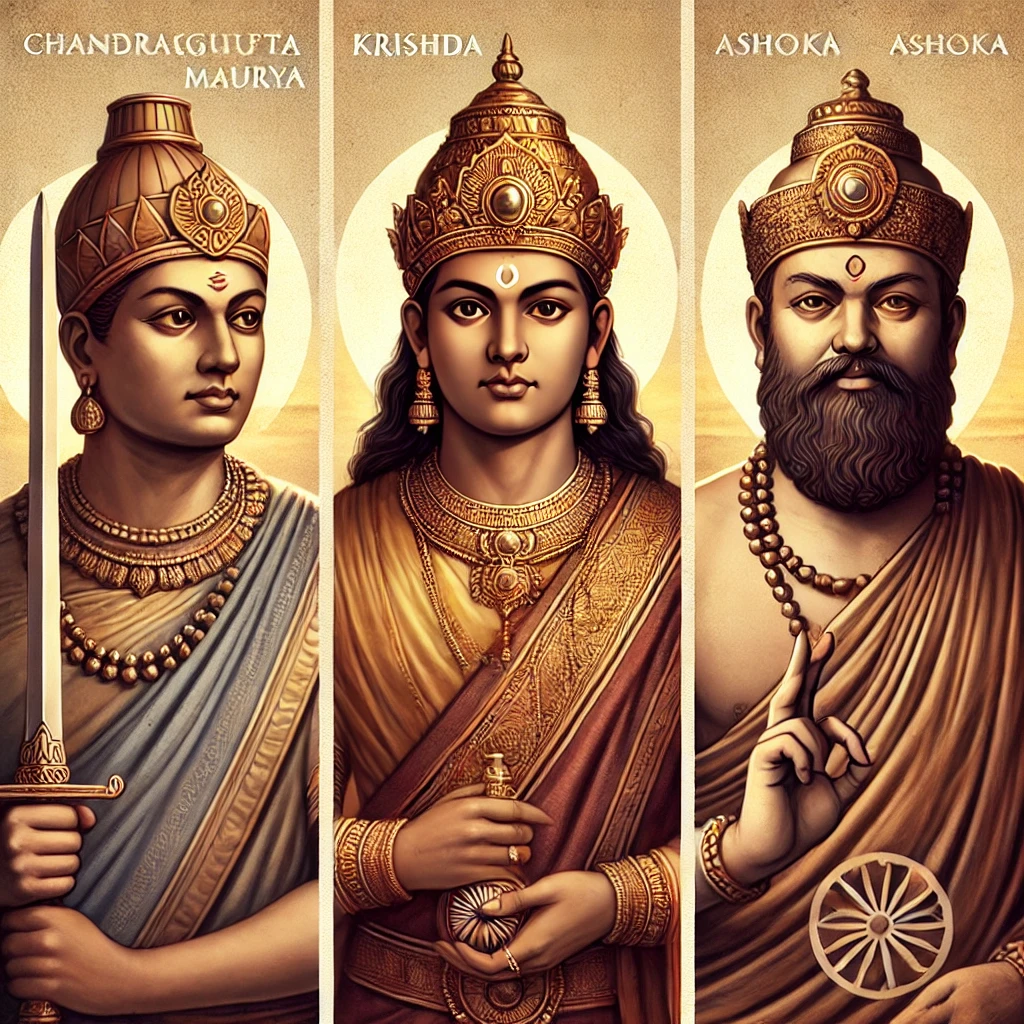
From the Mauryas through Vijayanagara, evidence shows institutional tolerance toward Muslims,
Christians, and other faiths. This historical record contrasts sharply with the tolerance
Nehru attributed to Akbar and minimized under Aurangzeb—revealing tolerance as a feature of
Hindu governance, not Islamic rule.
Conclusion: The Technique Exposed
Aurangzeb’s Nehru historical perspective reveals a sophisticated psychological manipulation: by consistently placing personal virtues before discussing crimes, Nehru created cognitive frameworks that neutralize moral judgment. “Hardworking and sincere” precedes temple destruction; “devout and austere” precedes systematic persecution; “capable administrator” precedes religious violence.
This isn’t historical nuance—it’s historical distortion. The sentence structure, vocabulary choices, and strategic omissions work together to transform systematic religious persecution into personal complexity, making Hindu suffering seem exaggerated and moral clarity seem simplistic.
We’ve documented HOW Nehru humanized Aurangzeb. Part II examines WHY—what political necessity drove this project, and how it continues shaping Indian education, politics, and historical consciousness seventy years later.
This blog is part of the series “Reframing History: A Critical Analysis of Nehru’s Narrative on Islamic Invasions” examining how Jawaharlal Nehru’s historical writings shaped Indian understanding of Islamic conquests through selective emphasis, strategic omission, and psychological framing techniques that neutralize moral judgment.
Continue to Part II: Aurangzeb in Nehru’s Praise: Political Necessity and 70-Year Whitewash
Feature Image: Click here to view the image.
Watch Videos
Glossary of Terms
- Aurangzeb: Sixth Mughal emperor (r. 1658–1707), known for orthodox Islamic policies, jizya reimposition, temple destruction, and religious persecution.
- Jawaharlal Nehru: India’s first Prime Minister and author of The Discovery of India, whose historiography shaped post-Independence narratives.
- Discovery of India: Nehru’s 1946 book presenting Indian history through a synthesis framework that minimizes Islamic religious persecution.
- Virtue-First Framing: A narrative technique where personal virtues are emphasized before acknowledging crimes, diluting moral judgment.
- Jizya: A poll tax imposed on non-Muslims under Islamic law, reintroduced by Aurangzeb in 1679.
- Theological Euphemism: Use of abstract or soft language (e.g., “narrow religious ideas”) to conceal doctrinally driven persecution.
- Sambhaji Maharaj: Maratha ruler captured, tortured, and executed by Aurangzeb for refusing conversion or submission.
- Guru Tegh Bahadur: Ninth Sikh Guru executed in 1675 for resisting forced conversions under Aurangzeb’s rule.
- Sikh Resistance: Militarization of Sikh society following sustained Mughal persecution, culminating in victories like Sirhind (1764).
- Hindu-Muslim Synthesis Narrative: Nehruvian framework portraying Islamic rule as culturally integrative rather than coercive.
- Temple Destruction: Documented demolition of Hindu temples under Islamic rulers, especially during Aurangzeb’s reign.
- Islamic Orthodoxy: Strict implementation of Islamic law governing treatment of non-Muslims, especially polytheists (mushrikun).
- Kafir / Mushrikun: Islamic doctrinal classifications applied to non-Muslims, creating legal and social inequality.
- Omission as Technique: Deliberate exclusion of critical events to preserve ideological narratives.
- Safety Asymmetry: Comparative concept examining minority safety under different civilizational governance systems.
#Aurangzeb #Nehru #IndianHistory #MughalRule #HinduCivilization #IslamicInvasions #MuhammadGhori #Tarain1192 #NehruHistoriography #HinduinfoPedia #Nehru #NehrusviewonIslamicinvaders
Related Reading
List of Previous Blogs
- https://hinduinfopedia.in/nehrus-historical-narrative-how-he-shaped-indian-histography/
- https://hinduinfopedia.in/nehrus-intentional-omissions-mathura-massacre-and-appreciation/
- https://hinduinfopedia.org/nehrus-portrayal-of-muhammad-ghori-i/ https://hinduinfopedia.in/?p=24532
- https://hinduinfopedia.org/nehru-glorifying-islamic-invaders-the-vigorous-and-virile-narrative/ https://hinduinfopedia.in/?p=24676
Historical Context – Aurangzeb Period:
- Political Islam vs Sanatan Dharma: Yogi Adityanath’s Lessons from Mughals
- Aurangzeb’s Early Life: Prelude to Power of Criminal Empire
- Aurangzeb’s Ascent: Governance and Policy Dynamics
- Aurangzeb’s Tyrannical Monuments: A Legacy of Despotism
- Guru Tegh Bahadur: Legacy of a Martyr
- Guru Arjan Dev Martyrdom: Consequence of Islamic Fundamentalism
Hindu Resistance to Aurangzeb:
- Chhatrapati Shivaji
- Chhatrapati Sambhaji Maharaj’s Attack on Burhanpur
- Battle of Sirhind: A Victory Shaping the Sikh Empire
- Maharana Pratap: History Unveiled
- Guru Tegh Bahadur: Legacy of Faith and Freedom
- Guru Har Rai Ji: A Legacy of Compassion and Diplomacy
Theological Framework:
- Hindu Haq Is Denied: The Theological Foundation That Normalizes Discrimination
- Islamic Doctrinal History: From Ridda Wars to Love Jihad
- Nazia’s Classification Crisis: Why Hindus Are ‘Kafir,’ Not ‘People of the Book’
- Islamic Texts and Polytheist Verdict on Hindu Muslim Interactions
Comparative Analysis:
- Yogi Adityanath On Hindu Safety vs Muslim Safety: A Civilizational Pattern
- Partition Demographic Catastrophe: Yogi Adityanath’s Statistical Proof (1800-1947)
- Yogi Adityanath on Coexistence: Historical Evidence- Early Islamic Encounters
Hindu Civilizational Achievements:
- Vijayanagar Dynasty: Among Ten Most Influential Dynasties in Bharat’s History
- Krishna Janmabhoomi Temple: A Spiritual Journey in Mathura
- Maha Kumbha Mela 2025: Analyzing Mad Rush of Hindus to Holy Waters-II
British Period Context:
- Gandhi’s Murder: Was Nehru Involved?
- British Loot and Industrialize: How India Funded Britain’s Rise
- Bengal Famine and British Genocides: How Colonial Policies Killed Millions
Follow us:
- English YouTube: https://www.youtube.com/@Hinduofficialstation
- Hindi YouTube: https://www.youtube.com/@HinduinfopediaIn
- X: https://x.com/HinduInfopedia
- Instagram: https://www.instagram.com/hinduinfopedia/
- Facebook: https://www.facebook.com/Hinduinfopediaofficial
- Threads: https://www.threads.com/@hinduinfopedia
Leave a Reply